Building a Consistent Brand Voice Across Social Platforms
SchedulifyX Team · April 14, 2026
Discover how to build a consistent brand voice across multiple social platforms. Master social media branding and multi-platform consistency to engage audiences.
In today's hyper-connected digital landscape, your brand is no longer just what you say it is—it is what your audience perceives it to be through every interaction, post, tweet, and story. Developing a distinct brand voice is the cornerstone of effective social media branding. However, the true challenge lies not just in finding that voice, but in maintaining multi-platform consistency while adapting to the unique nuances of each social network.
Imagine walking into a high-end corporate boardroom and speaking in internet slang, or attending a casual beach party in a three-piece suit reciting quarterly earnings. In both scenarios, the core identity might remain the same, but the delivery completely misses the mark. This is exactly what happens when brands fail to adapt their voice across different social media platforms. You must learn to speak the native language of each platform without losing your brand's unique accent.
In this comprehensive guide, we will explore the intricacies of building, scaling, and maintaining a robust brand voice across multiple social platforms. Whether you are a startup finding your footing or an enterprise looking to unify your digital presence, mastering these strategies will elevate your social media branding to new heights.
What is a Brand Voice?
Before diving into strategies, we must establish a clear understanding of what a brand voice actually is. In the context of social media branding, your brand voice is the distinct personality a brand takes on in its communications. It encompasses the words you choose, the attitude you project, and the emotional resonance you leave with your audience.
Voice vs. Tone: Understanding the Difference
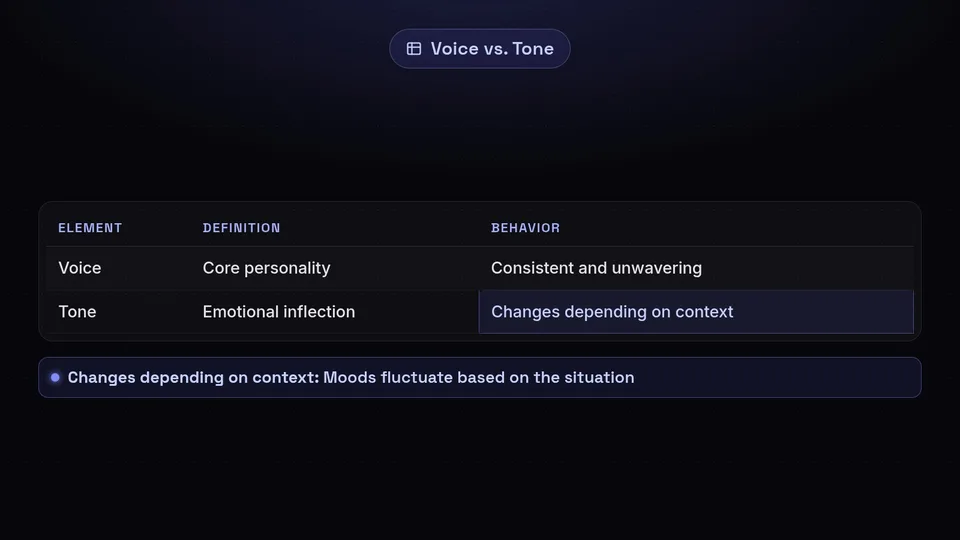
A common pitfall in social media branding is confusing "voice" with "tone." While they are closely related, they serve entirely different functions:
- Voice: This is your brand's core personality. It is consistent, unwavering, and fundamental to your identity. If your brand voice is "innovative and authoritative," it remains so whether you are announcing a product launch or apologizing for a service outage.
- Tone: This is the emotional inflection applied to your voice. Your tone changes depending on the context, the platform, and the audience. You would not use the same enthusiastic tone for a customer complaint as you would for a giveaway announcement, even though the underlying voice remains the same.
"Your brand voice is your personality; your tone is your mood. Personality rarely changes, but moods fluctuate based on the situation."
Why Multi-Platform Consistency Matters

Achieving multi-platform consistency is one of the most difficult yet rewarding aspects of modern marketing. But why is it so critical?
First and foremost, consistency builds trust. When a consumer encounters your brand on LinkedIn, follows you on X (formerly Twitter), and watches your TikToks, they expect a cohesive experience. If your LinkedIn presence is rigid and corporate, but your TikTok is chaotic and filled with Gen-Z slang that doesn't align with your core values, the consumer experiences cognitive dissonance. They begin to wonder: Who is this brand, really?
Furthermore, consistent social media branding accelerates brand recognition. According to marketing studies, presenting a brand consistently across all platforms can increase revenue by up to 23%. When your audience can instantly recognize your posts without even seeing your logo—just by reading the caption—you have achieved the pinnacle of brand voice mastery.
Step 1: Audit Your Current Social Media Branding
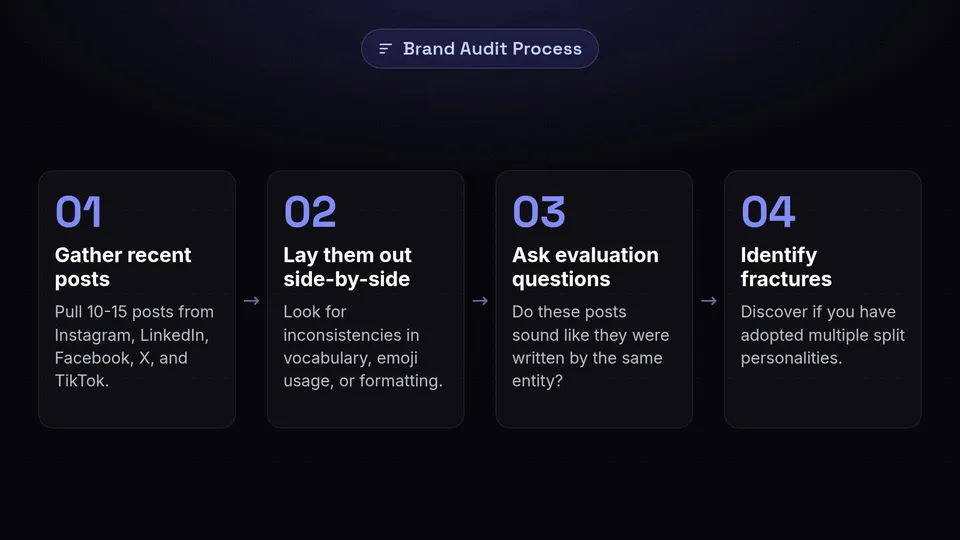
You cannot map a route to your destination without knowing your starting point. Building a unified brand voice requires a thorough audit of your existing social media presence.
Start by gathering a sample of your recent posts from every platform you actively manage. Pull 10-15 posts from Instagram, LinkedIn, Facebook, X, and TikTok. Lay them out side-by-side and ask yourself the following questions:
- Do these posts sound like they were written by the same entity?
- What adjectives would an outsider use to describe the personality behind these posts?
- Are there any glaring inconsistencies in vocabulary, emoji usage, or formatting?
- Which posts generated the most positive engagement, and what was the tone of those specific posts?
Often, brands discover that they have inadvertently adopted multiple split personalities based on whichever social media manager was on duty that day. Identifying these fractures is the first step toward achieving true multi-platform consistency.
Step 2: Define Your Core Brand Voice
Once you have audited your current state, it is time to forge your official brand voice. This requires looking inward at your company's mission, vision, and core values.
The "We Are / We Are Not" Exercise
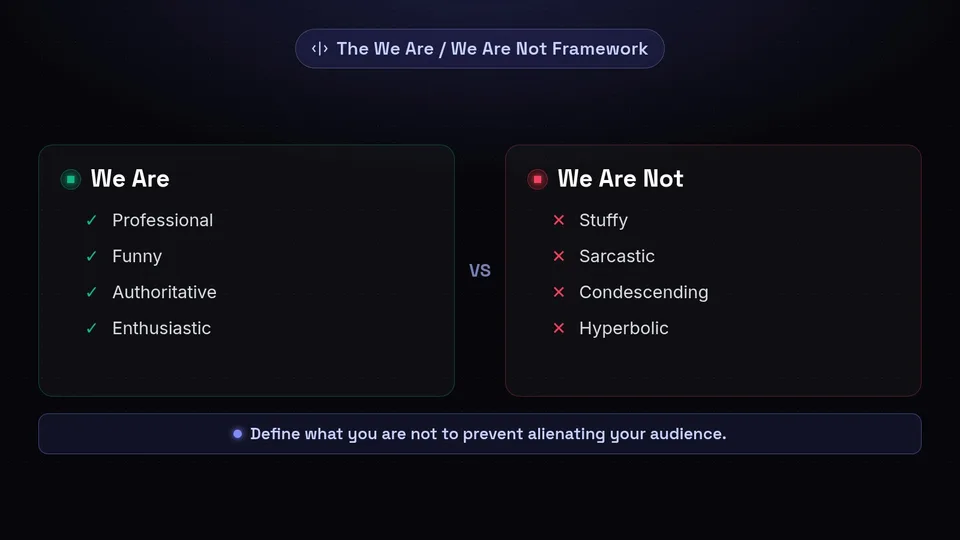
One of the most effective exercises for defining your social media branding is the "We Are / We Are Not" framework. This helps establish clear boundaries for your communications.
- We are professional, but we are not stuffy.
- We are funny, but we are not sarcastic.
- We are authoritative, but we are not condescending.
- We are enthusiastic, but we are not hyperbolic.
By defining what you are not, you prevent your brand voice from crossing the line into territory that could alienate your audience.
Develop a Brand Persona
To make your brand voice tangible for your marketing team, personify your brand. If your brand were a dinner party guest, who would they be? What kind of stories would they tell? How would they react to a disagreement? Creating a detailed persona makes it infinitely easier for content creators to ask, "Would our brand actually say this?"
Step 3: Adapting for Different Social Platforms
This is where the concept of multi-platform consistency meets the reality of platform-native content. Consistency does not mean copying and pasting the exact same caption across five different networks. True social media branding requires you to adapt your tone and format while preserving your core voice.
LinkedIn: The Professional Networker
On LinkedIn, your audience is in a professional, growth-oriented mindset. They are looking for industry insights, career advice, and thought leadership. Your brand voice here should lean into its expertise. Use longer-form text, structured formatting, and industry-relevant data. If your core voice is "playful," you can still be playful on LinkedIn by sharing lighthearted workplace observations, but avoid overly casual internet slang.
X (Twitter): The Quick-Witted Conversationalist
X is fast-paced, news-driven, and highly conversational. Multi-platform consistency here means distilling your brand voice into punchy, easily digestible soundbites. This is the platform for rapid-fire engagement, customer service, and participating in trending topics. If your brand voice is "educational," use X to share concise, high-value threads.
Instagram: The Visual Storyteller
Instagram is heavily aesthetic. Your captions must complement high-quality visuals. The tone here is generally more relaxed, aspirational, and community-focused. Emojis are highly encouraged. Use Instagram to show the "behind-the-scenes" of your brand, allowing your voice to feel more intimate and relatable.
TikTok: The Authentic Entertainer
TikTok demands authenticity above all else. Highly polished, corporate-sounding content will be ignored. To maintain multi-platform consistency on TikTok, you must translate your brand voice into the language of trends, audio bytes, and raw, unpolished video. A B2B software company with an "authoritative" voice can succeed on TikTok by creating straightforward, myth-busting videos that educate users in an engaging, fast-paced format.
Facebook: The Community Hub
Facebook remains a dominant force for community building. The tone here should be conversational and community-oriented. It is an excellent place for storytelling, sharing user-generated content, and fostering discussions in the comments section.
Step 4: Creating a Brand Voice Document
You cannot expect multi-platform consistency if your team does not have a definitive rulebook. A Brand Voice Document is a living, breathing guide that dictates exactly how your brand communicates online.
What to Include in Your Guidelines
Your social media branding guidelines should be comprehensive but easy to digest. Ensure you include:
- Core Identity: A summary of your brand's mission, values, and persona.
- Voice Characteristics: 3-4 adjectives that describe your voice, complete with descriptions of how they manifest in writing.
- Tone Variations: Specific examples of how your tone shifts across different platforms and situations (e.g., product launch vs. customer apology).
- Vocabulary Rules: A list of approved industry terms, brand-specific jargon, and words to explicitly avoid.
- Formatting and Grammar: Rules on emoji usage, capitalization (e.g., do you use title case or sentence case for headlines?), hashtag limits, and punctuation.
- Examples: Provide "Do this" and "Don't do this" examples for real-world scenarios.
Step 5: Common Mistakes to Avoid
As you refine your social media branding, be wary of the common pitfalls that can derail your multi-platform consistency.
Jumping on Every Trend
Not every meme or trending audio is right for your brand. Forcing your brand voice into a trend that contradicts your core identity will come across as inauthentic and desperate. Always ask: "Does this trend align with our brand values?"
Ignoring Platform Demographics
While you want a consistent voice, you must acknowledge that your audience on LinkedIn might be vastly different from your audience on TikTok. Tailor your message to the specific demographic of the platform without compromising your core identity.
Failing to Evolve
A brand voice is not set in stone forever. As your company grows, pivots, or expands its product lines, your voice should mature alongside it. Review your Brand Voice Document annually to ensure it still accurately reflects your current social media branding goals.
Step 6: Scaling with AI and SchedulifyX
Maintaining multi-platform consistency manually is a daunting task, especially for small teams or solo entrepreneurs. This is where artificial intelligence and advanced scheduling tools become indispensable.
With an AI-powered platform like SchedulifyX, you can scale your social media branding effortlessly. SchedulifyX allows you to input your specific brand voice parameters into its AI engine. When you generate content or adapt a single post for multiple platforms, the AI ensures that the core message remains intact while perfectly tailoring the tone, length, and format for LinkedIn, X, Instagram, Facebook, and more.
Furthermore, by using a centralized dashboard, your entire team can collaborate, review, and schedule content, ensuring that no post goes live unless it strictly adheres to your multi-platform consistency guidelines. Automation not only saves time but acts as a safeguard against off-brand messaging.
Measuring Brand Voice Success
How do you know if your efforts in establishing a brand voice are actually working? Unlike follower counts or click-through rates, brand voice can feel subjective. However, there are tangible ways to measure its impact on your social media branding.
1. Sentiment Analysis: Use social listening tools to monitor the sentiment of the comments and mentions you receive. Are people responding positively to your tone? Are they using the same language you use?
2. Engagement Quality: Look beyond mere likes. Are you generating meaningful conversations in the comments? A strong, consistent brand voice naturally encourages higher-quality engagement because it resonates deeply with a specific audience.
3. Brand Mentions: Are people quoting your tweets? Are they sharing your LinkedIn posts? When your voice is distinct and valuable, your audience becomes your biggest advocate, sharing your content because it perfectly articulates their own thoughts or feelings.
Conclusion
Building a compelling brand voice and maintaining multi-platform consistency is not an overnight endeavor. It requires deep introspection, continuous auditing, and a willingness to adapt to the ever-shifting landscape of social media.
By defining your core identity, understanding the nuances of each platform, and documenting your guidelines, you lay the foundation for powerful social media branding. Remember, your voice is the human element of your digital presence. It is what transforms a faceless corporation into a relatable, trustworthy entity.
Ready to take control of your brand's digital narrative? SchedulifyX is the ultimate AI-powered social media scheduling platform designed to help you maintain impeccable multi-platform consistency. With our advanced AI tools, you can seamlessly adapt your brand voice across every network, saving time while maximizing engagement. Sign up for SchedulifyX today and start speaking to your audience with confidence, clarity, and consistency.