Gen Z Social Media in 2026: The Ultimate Marketing Guide
SchedulifyX Team · July 6, 2026
Master Gen Z social media in 2026 with our comprehensive guide. Discover platform trends, content preferences, and strategies to engage this generation.
The year is 2026, and the digital landscape has undergone a seismic shift. Generation Z is no longer the "future" consumer demographic; they are the primary driver of digital culture, commerce, and conversation. For brands looking to thrive, understanding gen z social media behavior is no longer optional—it is the foundational pillar of modern digital strategy. This generation, born between 1997 and 2012, has grown up as digital natives, but their relationship with technology, platforms, and brands continues to evolve at a breakneck pace.
As we navigate through 2026, the old playbooks have been entirely rewritten. The polished, highly curated feeds of the 2010s are relics of the past. Today's Gen Z users demand hyper-authenticity, micro-entertainment, and seamless social commerce integrations. They are highly skeptical of traditional advertising, yet they are the most likely demographic to purchase a product directly from a short-form video. To succeed in marketing to gen z, brands must pivot from broadcasting messages to facilitating communities, embracing raw aesthetics, and leveraging AI-driven personalization.
In this comprehensive guide, we will dissect the intricacies of Gen Z's digital footprint in 2026. From the absolute dominance of short-form video to the rise of niche community platforms, we will explore actionable strategies that resonate with this discerning audience. Whether you are a seasoned social media manager or a business owner looking to revamp your strategy, this article will equip you with the insights needed to master Gen Z marketing.
The State of Gen Z Social Media in 2026
To truly grasp gen z marketing 2026, we must first look at the macro-level shifts in how this demographic interacts with the internet. We have moved past the era of the "social network" and firmly into the era of the "recommendation media" and "digital third places." Gen Z does not log onto social platforms merely to see updates from friends and family; they log on to be entertained, to learn, to shop, and to find their "tribe."
The Shift from Social Graph to Interest Graph
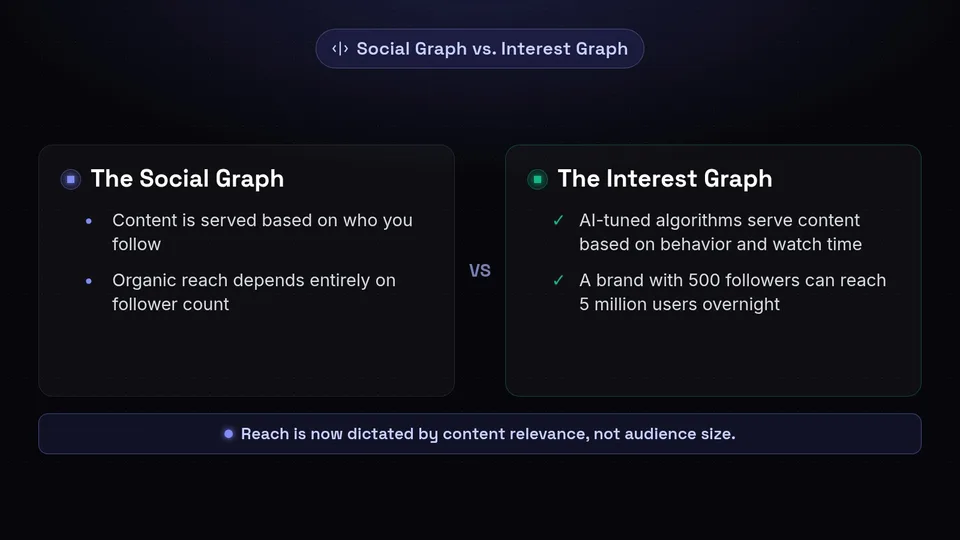
Historically, platforms like Facebook and early Instagram were built on the social graph—showing you content based on who you followed. In 2026, the interest graph reigns supreme. Algorithms are hyper-tuned by AI to serve content based on user behavior, watch time, and micro-interactions, regardless of whether the user follows the creator. This means that for brands, organic reach is entirely dependent on the quality and relevance of the content, rather than the size of your follower count. A brand with 500 followers can reach 5 million Gen Z users overnight if the content hits the right cultural notes.
AI Integration as the New Normal
Artificial Intelligence is no longer a novelty; it is deeply embedded in the Gen Z social experience. From generative AI filters and AI-assisted content creation tools to predictive shopping algorithms, Gen Z embraces AI as a natural extension of their digital lives. They are comfortable with AI-generated influencers and personalized chatbots, provided these tools enhance their experience rather than deceive them.
"In 2026, Gen Z doesn't care if a piece of content was assisted by AI; they care if it is entertaining, relevant, and adds value to their day. The line between human and machine creation is blurred, but the demand for emotional resonance is higher than ever."
Top Gen Z Platform Trends You Can't Ignore
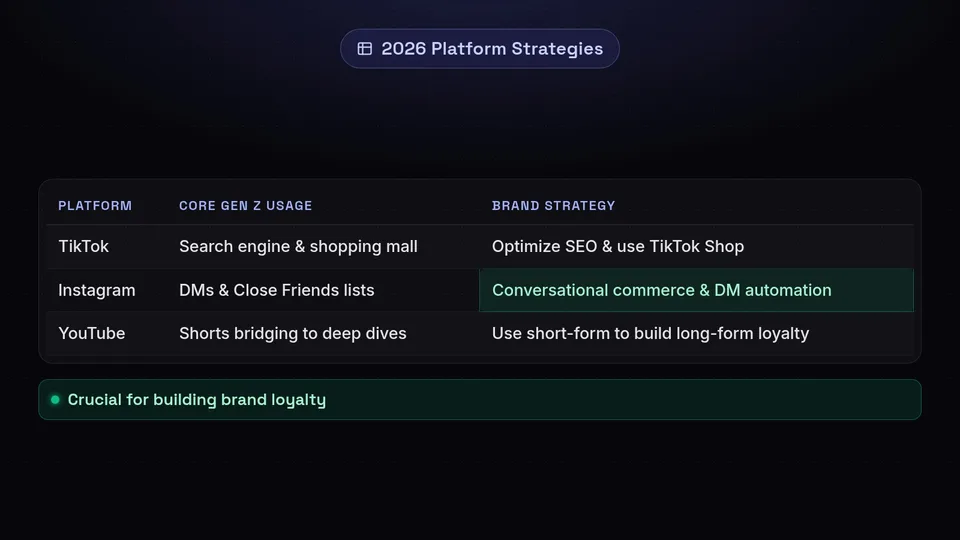
Understanding gen z platform trends is critical for allocating your marketing budget and resources effectively. The "Big Three" (TikTok, Instagram, and YouTube) still dominate screen time, but how Gen Z uses them has fundamentally changed. Additionally, the rise of "dark social" and niche communities cannot be overlooked.
TikTok: The Ultimate Search Engine and Shopping Mall
TikTok has transcended its origins as a lip-syncing app to become the central nervous system of Gen Z culture. In 2026, TikTok is primarily used in two ways: as a search engine and as an e-commerce platform.
- TikTok as Search: Gen Z prefers searching on TikTok over traditional search engines like Google. Whether they are looking for a skincare routine, a local restaurant recommendation, or financial advice, they want visual, bite-sized, and peer-reviewed answers. Brands must optimize their video captions, on-screen text, and hashtags for TikTok SEO.
- TikTok Shop Dominance: Social commerce is seamless. Gen Z users watch a video, click a product link, and check out without ever leaving the app. If your brand is not utilizing TikTok Shop or affiliate creator programs, you are leaving massive amounts of revenue on the table.
Instagram: The Hub for DMs and Close Friends
While Instagram Reels remains a powerful tool for discovery, the core way Gen Z interacts with Instagram has shifted away from the main feed. The feed is largely viewed as a digital portfolio or a place for major life updates. The real engagement happens in Direct Messages (DMs), Stories, and Close Friends lists.
For brands, this means leaning into conversational commerce. Utilizing Instagram automation to reply to DMs, creating exclusive "Close Friends" lists for top customers to offer early product drops, and using interactive Story stickers are the most effective ways to build loyalty on this platform.
YouTube Shorts: The Bridge to Long-Form Loyalty
YouTube has successfully integrated Shorts into its ecosystem, making it a powerhouse for Gen Z attention. While short-form video captures their initial interest, Gen Z still turns to long-form YouTube videos for deep dives, video essays, and parasocial connections with their favorite creators. Brands that can hook Gen Z with a 15-second Short and funnel them into a 15-minute educational or entertaining video will build a level of brand affinity that short-form alone cannot achieve.
The Rise of Niche Communities and Dark Social
In response to algorithm fatigue, Gen Z is retreating into private, niche communities. Platforms like Discord, Reddit, and emerging Geneva alternatives are where true, unfiltered conversations happen. This is known as "dark social"—shares, links, and discussions that happen outside of public feeds and cannot be easily tracked by traditional analytics.
Marketing to Gen Z in these spaces requires a delicate touch. Brands cannot simply buy ads in a private Discord server. Instead, they must create their own community hubs, offer exclusive value, and empower brand ambassadors to advocate for them organically within these private spaces.
Decoding Gen Z Content Preferences
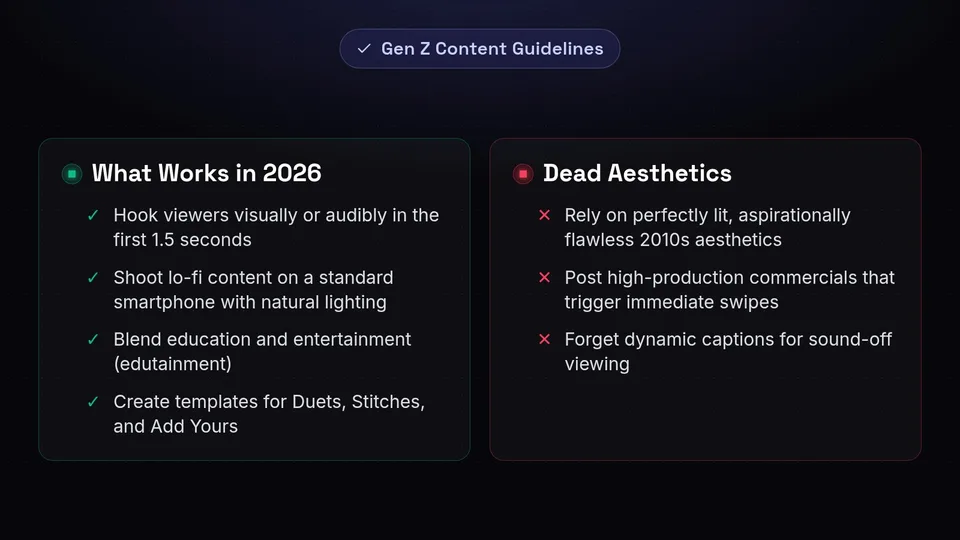
To capture attention in a hyper-saturated market, you must deeply understand gen z content preferences. The aesthetic of the 2010s—perfectly lit, highly edited, and aspirationally flawless—is dead. In its place is a preference for the raw, the real, and the slightly unhinged.
Short-Form Video is the Baseline
It goes without saying that short-form video is the dominant medium. However, the anatomy of a successful short-form video in 2026 has evolved. The first 1.5 seconds are critical. If a video does not immediately present a hook—either visual, auditory, or text-based—it will be swiped away. Gen Z prefers videos that are fast-paced, highly edited with jump cuts, and feature dynamic captions to accommodate "sound-off" viewing.
The "Lo-Fi" and "Ugly" Aesthetic
Gen Z gravitates toward content that feels native to the platform. High-production commercials often trigger an immediate swipe. Instead, brands are finding success with "lo-fi" content—videos shot on a standard smartphone, featuring natural lighting, minimal makeup, and conversational tones. The "ugly" aesthetic, characterized by chaotic editing, deep-fried memes, and absurd humor, is highly effective for breaking the fourth wall and showing that a brand doesn't take itself too seriously.
Edutainment: Learning While Scrolling
Gen Z is highly inquisitive and values self-education. However, they want their information delivered in an engaging, digestible format. "Edutainment"—the intersection of education and entertainment—is a massive trend. Whether a brand is explaining the science behind their skincare ingredients or breaking down complex financial concepts, the delivery must be engaging, visually stimulating, and concise.
Interactive and Co-Created Content
Gen Z doesn't just want to consume content; they want to participate in it. Features like TikTok Duets, Stitches, and Instagram Add Yours templates are wildly popular. Brands that create templates, challenges, or open-ended prompts that encourage users to remix and co-create will see exponentially higher engagement rates.
The Authenticity Mandate: What It Really Means
If there is one buzzword associated with Gen Z, it is "authenticity." But in 2026, authenticity is more than just a buzzword; it is a strict mandate. Gen Z has an incredibly highly tuned radar for corporate nonsense. They can spot a performative marketing campaign from a mile away.
Transparency and Corporate Social Responsibility
For Gen Z, a brand's values are just as important as its products. They expect brands to take a stand on social, environmental, and political issues. However, performative activism (e.g., changing a logo color for a month without taking tangible action) will result in swift backlash. Brands must be transparent about their supply chains, their labor practices, and their carbon footprint. If a brand makes a mistake, Gen Z respects a swift, honest apology and a clear plan for rectification over corporate deflection.
The Rise of De-Influencing
The influencer marketing landscape has shifted. The era of the mega-influencer pushing products they clearly do not use is over. Instead, 2026 has seen the continued rise of "de-influencing"—where creators explicitly tell their audience what *not* to buy. This trend is rooted in a desire for honesty and anti-consumerism.
To navigate this, brands must partner with micro and nano-influencers who have built deep, trust-based relationships with their audiences. These creators are viewed as peers rather than celebrities. When a trusted micro-creator gives a genuine, nuanced review of a product (highlighting both pros and cons), Gen Z is far more likely to convert.
Employee Advocacy and Behind-the-Scenes
One of the most effective ways to showcase authenticity is to pull back the curtain. Gen Z loves behind-the-scenes content. They want to see the people packing the orders, the messy desks of the design team, and the CEO speaking candidly to the camera. Brands that empower their employees to become the face of their social media presence—often leaning into self-deprecating humor about corporate life—build immense goodwill.
Proven Strategies for Marketing to Gen Z
Knowing what Gen Z wants is only half the battle; executing it requires a strategic overhaul. Here are the most effective strategies for marketing to gen z in 2026.
1. Double Down on User-Generated Content (UGC)
UGC is the lifeblood of Gen Z marketing. Consumers trust other consumers more than they trust brands. Instead of spending thousands on a professional photoshoot, allocate that budget to seeding products to hundreds of micro-creators and everyday users. Create campaigns that incentivize your existing customers to post about their purchases. Feature this UGC prominently on your own social channels, your website, and in your paid ads.
2. Adopt an "Unhinged" Brand Voice (When Appropriate)
Many brands have found viral success by adopting an "unhinged" or highly casual brand voice on platforms like TikTok and X (formerly Twitter). This involves participating in meme culture, playfully roasting competitors, and speaking the internet slang of the day.
Caution: This strategy requires a deep understanding of internet culture. If executed poorly, it comes off as "how do you do, fellow kids" and will be mocked. Ensure your social media managers are actually embedded in Gen Z culture and give them the autonomy to post quickly without going through a multi-day approval process.
3. Seamless Social Commerce Integration
Friction is the enemy of conversion. If a Gen Z user has to click a link in a bio, navigate to a clunky mobile website, and manually enter their credit card information, they will abandon the cart. You must utilize native social commerce features. Set up TikTok Shop, Instagram Checkout, and Pinterest Shopping. Utilize one-click payment options like Apple Pay and Shop Pay. Make the journey from discovery to purchase as instantaneous as possible.
4. Build a Community, Not Just an Audience
An audience listens to you; a community talks to each other. Shift your focus from merely broadcasting content to facilitating conversations. Host live streams where you answer questions in real-time. Create a brand Discord server where your top fans can chat about shared interests (not just your products). Reply to comments on your videos with video replies. When Gen Z feels like they are part of an exclusive club, their brand loyalty becomes unshakeable.
5. Leverage Ephemeral and Serialized Content
Gen Z loves a storyline. Instead of posting one-off videos, create serialized content—like a "Part 1, Part 2" series, or a weekly recurring segment. This trains the algorithm to keep showing your content to users who engaged with previous episodes, and it gives users a reason to hit the follow button. Pair this with ephemeral content (Stories that disappear in 24 hours) to create a sense of urgency and FOMO (Fear Of Missing Out).
How to Adapt Your 2026 Marketing Playbook
The pace of change in gen z social media is relentless. What works in January may be obsolete by June. To stay ahead, your marketing playbook must be built on agility and data.
Embrace Agile Marketing
Traditional marketing calendars planned six months in advance do not work for Gen Z. While you should have a macro-level strategy, your day-to-day content creation must be agile. You need to be able to jump on a trending audio track, a viral meme format, or a cultural moment within hours, not days. This requires streamlining your approval processes and trusting your social media team.
Utilize AI for Insights and Scheduling
In 2026, you cannot rely on manual analysis alone. You must utilize AI-powered tools to analyze sentiment, predict trends, and optimize your posting schedule. By understanding exactly when your specific subset of Gen Z followers is online and what type of content they are currently engaging with, you can maximize your reach.
Furthermore, AI tools can help repurpose content across platforms. A long-form YouTube video can be automatically chopped into dozens of optimized TikToks and YouTube Shorts, saving your team countless hours of editing time.
Focus on Micro-Metrics
Vanity metrics like follower count and total likes are becoming less relevant. To truly measure success with Gen Z, focus on micro-metrics: watch time, completion rate, shares, and saves. A video with 1,000 views but a 90% completion rate and 100 shares is far more valuable than a video with 10,000 views that users swiped past after 2 seconds. Shares, in particular, are the ultimate currency in 2026—they indicate that your content resonated so deeply that a user wanted to send it to a friend in dark social.
Conclusion: Future-Proof Your Strategy with SchedulifyX
Mastering gen z social media in 2026 requires a fundamental shift in perspective. It requires abandoning polished perfection in favor of raw authenticity, moving from broadcasting to community building, and embracing the fast-paced, ever-changing nature of short-form video and AI technology. By understanding their platform trends, respecting their content preferences, and adhering to their mandate for transparency, brands can forge deep, lasting connections with this powerful generation.
However, keeping up with these rapid changes, managing multiple platform algorithms, and posting consistently at the optimal times can overwhelm even the most seasoned marketing teams. That is where the right technology becomes your competitive advantage.
SchedulifyX is your ultimate AI-powered social media scheduling platform, designed specifically for the demands of the modern digital landscape. With SchedulifyX, you can seamlessly plan, optimize, and automate your content across TikTok, Instagram, YouTube Shorts, and beyond. Our advanced AI analyzes your audience's behavior to pinpoint the exact moments they are most active, ensuring your highly-crafted Gen Z content never gets lost in the void. Stop guessing and start growing—let SchedulifyX handle the logistics while you focus on creating the authentic, engaging content that Gen Z craves. Start your free trial today and future-proof your social media strategy.