The LinkedIn Algorithm in 2026: What Actually Drives Reach
SchedulifyX Team · July 6, 2026
What is known about how LinkedIn ranks the feed in 2026, and what is only inferred.
Welcome to the new era of professional networking. If you have noticed a sudden drop in your content's visibility, you are not alone. The linkedin algorithm 2026 has undergone a massive evolution, shifting away from superficial vanity metrics and aggressive engagement pods, and moving toward deep, meaningful, and highly contextual human interactions. To maintain and scale your linkedin organic reach, you need a fundamentally updated approach.
In this comprehensive guide, we are breaking down the exact mechanics of the 2026 algorithm. We will explore proven tactics to help you secure 10x more linkedin impressions, master dwell time optimization, leverage advanced comment strategies, design high-performing carousels, and pinpoint the ideal posting times. Whether you are a B2B founder, a corporate creator, or a marketing agency, this guide will serve as the foundation for your ultimate linkedin marketing strategy.
Understanding the 2026 LinkedIn Algorithm
To succeed on LinkedIn today, you must first understand what the platform's AI models are trying to achieve. In 2026, LinkedIn's primary goal is to retain users on the platform by serving them hyper-relevant, knowledge-rich content that sparks genuine professional discourse. The days of going viral with a generic motivational quote or a heavily automated, AI-generated wall of text are over.
The Shift from Engagement to Retention
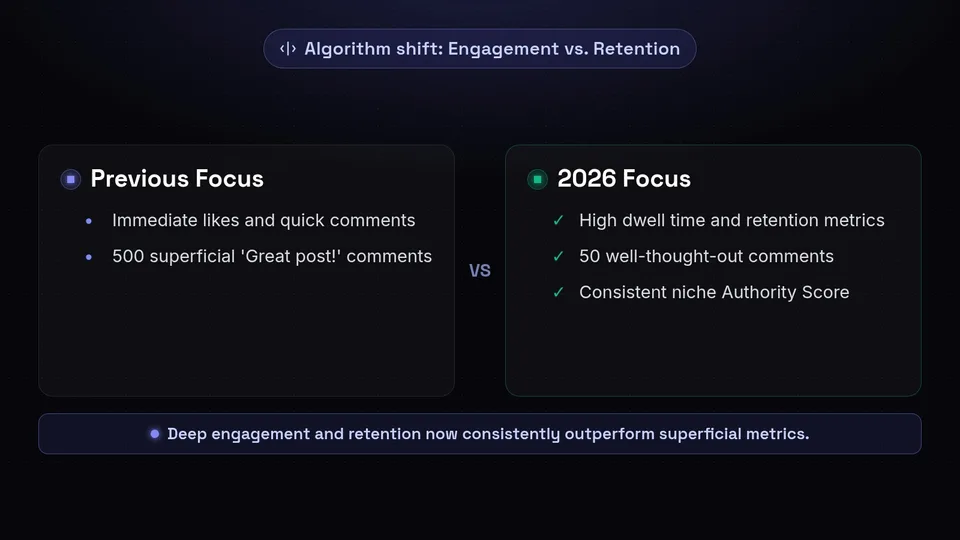
Previously, the algorithm heavily weighted immediate likes and quick comments. While early engagement still matters, the linkedin algorithm 2026 prioritizes retention metrics. The platform measures how long a user stops scrolling to look at your post, whether they click "See more," if they swipe through your entire carousel, and whether they return to the post later to read new comments.
"In 2026, a post with 50 well-thought-out comments and high dwell time will consistently out-perform a post with 500 superficial 'Great post!' comments."
Knowledge and Authority Scoring
LinkedIn now assigns an "Authority Score" to creators based on their niche. If you consistently post about "B2B SaaS Marketing" and your audience (who also works in B2B SaaS) engages deeply with your content, the algorithm tags you as an authority in that specific vertical. When you post outside of your established niche, your linkedin impressions may temporarily dip because the algorithm lacks the historical data to serve that new topic to your core audience effectively.
Dwell Time Optimization: The Hidden Engine of Reach
Dwell time—the amount of time a user spends looking at your post—is arguably the most critical metric for maximizing linkedin impressions in 2026. LinkedIn tracks both "Scroll Dwell Time" (how long someone pauses on your post while scrolling) and "Click Dwell Time" (how long they stay after clicking "See more" or opening an image).
The Anatomy of a High-Dwell-Time Post
To optimize for dwell time, your content must be structured to capture attention immediately and hold it until the very last word. Here are the most effective linkedin engagement tips for structuring your text posts:
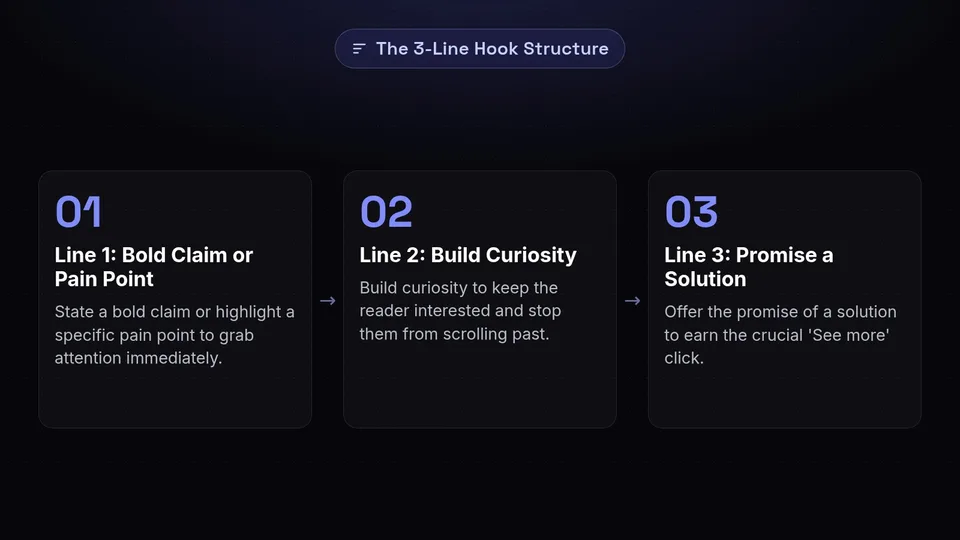
- The 3-Line Hook: Your first three lines are your only chance to earn the "See more" click. Line 1 should state a bold claim or highlight a specific pain point. Line 2 should build curiosity. Line 3 should offer the promise of a solution.
- Whitespace and Formatting: Huge blocks of text intimidate readers and cause them to scroll past. Use short paragraphs (1-3 sentences max). Utilize bullet points and strategic line breaks to create a visual rhythm that pulls the reader down the page.
- Zero-Click Value: Provide the entire value of your insight within the post itself. Do not force users to click an external link to get the payoff. External links heavily penalize your initial reach.
- The "Micro-Story" Framework: Start with a brief, relatable professional anecdote. Transition into the hard data or actionable advice. Conclude with a thought-provoking question that naturally prompts a comment.
Tracking and Improving Your Dwell Time
While LinkedIn doesn't provide a direct "Dwell Time" metric in its native analytics, you can infer it by looking at the ratio of your impressions to your "See more" clicks (if you use tracking links) and the depth of the comments you receive. If your impressions are high but your comments are shallow, your dwell time is likely suffering.
Advanced Comment Strategies for Exponential Growth

Comments are the lifeblood of the linkedin algorithm 2026. However, not all comments are created equal. The algorithm now uses advanced Natural Language Processing (NLP) to evaluate the semantic depth and relevance of every comment left on your post.
The "Golden Hour" and Algorithmic Testing
When you publish a post, LinkedIn pushes it to a small testing pool of your most active followers. The engagement you receive within the first 60 minutes (the "Golden Hour") dictates how widely the post will be distributed to your broader network and 2nd-degree connections. To maximize this window, you must be present and ready to engage.
Author Reply Strategies
Your replies to comments are just as important as the comments themselves. Here is how to optimize your reply strategy:
- The 2x Reply Rule: For every meaningful comment you receive, reply with a statement that adds new value, followed by a clarifying question. This encourages the original commenter to reply again, creating a "comment thread." Deeply threaded conversations signal high content quality to the algorithm.
- Avoid Generic Acknowledgments: Replying with "Thanks for sharing!" or a simple thumbs-up emoji provides zero algorithmic value. Instead, reference a specific part of their comment. For example: "I completely agree with your point about AI integration, Sarah. How is your team handling the transition?"
- Pacing Your Replies: Do not reply to all 20 comments the second they come in. Pace your replies over the first few hours. Each time you reply, the post gets a slight algorithmic bump, keeping it fresh in the feed.
Leaving Meaningful Comments on Other Creators' Posts
Your linkedin marketing strategy cannot be a one-way street. To increase your own linkedin organic reach, you must actively comment on posts from other thought leaders in your industry. A well-crafted, insightful comment on a viral post can drive hundreds of profile views and new followers. Aim to leave 5-10 high-value comments per day on targeted accounts.
Carousel Best Practices for Maximum Impressions
Despite various format changes over the years, document carousels (uploaded as PDFs) remain one of the most powerful tools for generating massive linkedin impressions. Carousels naturally force high dwell time because users must actively swipe or click through multiple slides.
Designing for the 2026 Feed
The standard for carousel design has risen significantly. Users expect polished, easy-to-read, and visually engaging slides. Follow these best practices:
- The 10-12 Slide Sweet Spot: Data from 2026 shows that carousels with 10 to 12 slides perform best. Anything less than 5 slides doesn't generate enough dwell time; anything over 15 slides suffers from high drop-off rates.
- The "Title Slide" Hook: Your first slide must act like a billboard. Use a massive, high-contrast headline. Include a sub-headline that specifies exactly who the carousel is for (e.g., "A Step-by-Step Guide for B2B Marketers").
- One Idea Per Slide: Do not clutter your slides with text. Stick to one core concept, one statistic, or one actionable step per slide. Use large fonts (minimum 40pt) to ensure readability on mobile devices.
- Visual Continuity: Use a progress bar at the bottom of your slides or number them (e.g., "Slide 3 of 10") to show users how far along they are. This subtle psychological trick drastically reduces drop-off rates.
- The Final Call-to-Action (CTA): Your last slide should explicitly tell the user what to do next. Do not ask for too much. Choose one primary CTA: "Follow for more daily tips," "Ring the bell on my profile," or "Leave a comment with your biggest takeaway."
Ideal Posting Times and Algorithmic Windows
Timing your posts correctly ensures that you hit your audience when they are most active, maximizing your chances of a strong "Golden Hour" performance. However, the "best time to post" is highly subjective and depends entirely on your specific audience demographics.
Understanding Algorithmic Windows
In 2026, the LinkedIn feed is less chronological and more algorithmic, but initial velocity still matters. There are generally three peak algorithmic windows for B2B audiences:
- The Morning Commute (7:30 AM - 9:00 AM): Professionals are checking their phones before starting deep work. This is ideal for short, punchy text posts or quick industry news.
- The Lunch Break (12:00 PM - 1:30 PM): Users have more time to consume longer-form content. This is the perfect window for in-depth carousels or detailed analytical posts.
- The Evening Wind-Down (4:30 PM - 6:00 PM): As the workday ends, users are looking for lighter, more conversational content. Personal stories, career reflections, and broader leadership topics perform exceptionally well here.
Time Zones and Global Audiences
If your audience is spread across multiple time zones, you need to find the overlapping sweet spots. For example, posting at 9:00 AM EST means you are catching the East Coast morning crowd, the West Coast early risers (6:00 AM PST), and the European afternoon crowd (2:00 PM GMT). Use analytics tools to determine where the majority of your followers are located and optimize for their local time.
Consistency Over Frequency
The linkedin algorithm 2026 penalizes accounts that post too frequently. Posting three times a day will cannibalize your own reach, as the algorithm will suppress your older posts to show the new ones. The optimal frequency is 1 high-quality post per day, or 4-5 posts per week. Consistency trains the algorithm—and your audience—to expect and look for your content on specific days.
Building a Future-Proof LinkedIn Marketing Strategy
Chasing algorithmic hacks will only get you so far. To build sustainable, long-term linkedin organic reach, you need a cohesive linkedin marketing strategy that aligns with your overarching business goals.
Content Pillars and Thematic Consistency
Develop 3 to 4 core "Content Pillars" that you will consistently talk about. For example, if you run an AI scheduling platform, your pillars might be: 1) Time Management Tactics, 2) The Future of AI in Marketing, 3) Social Media Growth Strategies, and 4) Behind-the-scenes founder stories. Rotating through these pillars ensures your content remains fresh while still signaling your niche authority to the algorithm.
Employee Advocacy Programs
For brands and companies, relying solely on a corporate page is a losing battle. The 2026 algorithm heavily favors personal profiles over company pages. Implement an employee advocacy program where your team members share company insights, culture, and industry news from their personal accounts. When multiple employees engage with each other's content, it creates a network effect that exponentially increases overall brand visibility.
Integrating Video and Audio
While text and carousels are the bread and butter of linkedin impressions, native video is seeing a massive resurgence in 2026. Short-form, vertical videos (under 60 seconds) that offer immediate, actionable advice are being pushed heavily into the feed. Additionally, hosting LinkedIn Audio Events is a fantastic way to build deep community connections and drive highly engaged followers to your profile.
Analyzing and Iterating
A true strategy requires constant refinement. Set aside time at the end of every month to review your analytics. Look beyond simple follower counts. Analyze which topics generated the highest dwell time, which formats sparked the deepest comment threads, and what time of day yielded the best initial velocity. Double down on what works and ruthlessly cut what doesn't.
Conclusion: Scale Your Reach with SchedulifyX
Mastering the linkedin algorithm 2026 requires a delicate balance of art and science. By optimizing for dwell time, engaging in deeply contextual comment threads, designing scroll-stopping carousels, and posting at the optimal times, you can easily unlock 10x more linkedin impressions and build an audience that actually converts.
However, executing this level of strategy manually is exhausting. You need to write compelling hooks, design assets, remember to post at exactly 8:15 AM, and track your analytics across multiple weeks. That is where SchedulifyX comes in.
As the premier AI-powered social media scheduling platform, SchedulifyX takes the guesswork out of your linkedin marketing strategy. With our advanced predictive analytics, we automatically determine the absolute best time for you to post based on your unique audience data. Our AI-driven content suggestions help you craft high-dwell-time hooks, while our seamless carousel and video uploading tools ensure your formatting is always algorithm-friendly.
Don't let the 2026 algorithm changes leave you behind. Take control of your linkedin organic reach, save hours of manual work every week, and watch your impressions skyrocket. Start optimizing your LinkedIn presence today with SchedulifyX, and turn your professional network into your most powerful growth engine.