Privacy-First Marketing: Navigating the Cookieless Era
SchedulifyX Team · May 28, 2026
Discover how to adapt your social media strategy for a cookieless future. Learn actionable privacy-first marketing tactics to build trust and drive results.
The digital marketing ecosystem is undergoing a seismic shift. For over two decades, marketers have relied heavily on third-party cookies to track user behavior, target advertisements, and measure campaign success across the web and social media. However, growing consumer awareness, stringent regulatory frameworks, and major technological updates have ushered in a new era. We are now standing at the precipice of a completely cookieless future, making privacy-first marketing not just a competitive advantage, but a fundamental requirement for survival.
As social media platforms adapt to these sweeping changes, brands and marketers must pivot their strategies. The days of hyper-granular, individualized tracking across different websites and apps are fading. In its place, a new paradigm is emerging—one built on trust, transparency, and direct relationships with consumers. This comprehensive guide will explore the intricacies of data privacy, the impact of the cookieless landscape on social media, and actionable strategies to ensure your marketing efforts continue to thrive.
The Dawn of a Cookieless Social Media Landscape
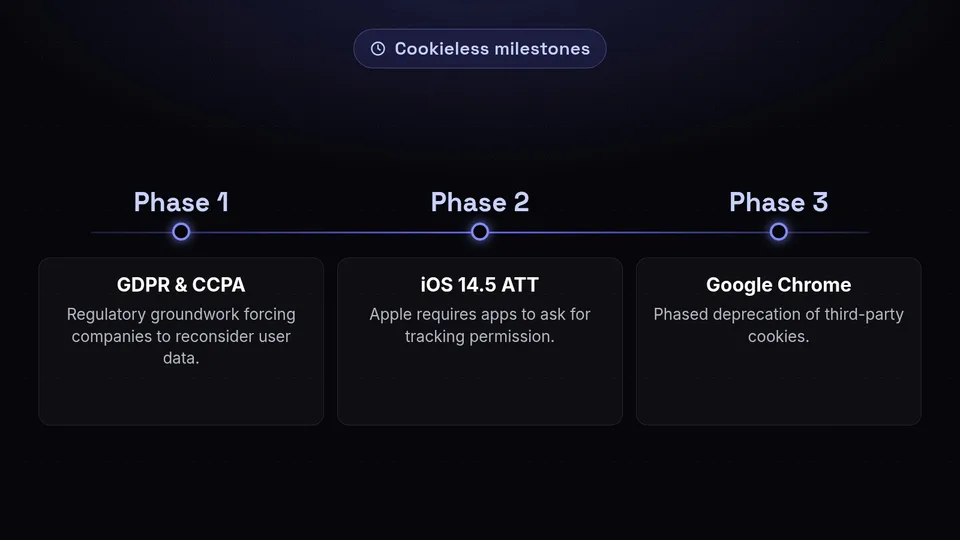
To understand the magnitude of the current shift, we must first look at how we arrived here. The deprecation of third-party cookies didn't happen overnight. It is the culmination of years of escalating concerns regarding user privacy and data exploitation. Regulatory milestones like the General Data Protection Regulation (GDPR) in Europe and the California Consumer Privacy Act (CCPA) set the legal groundwork, forcing companies to reconsider how they collect and process user data.
However, the most significant catalysts for the cookieless landscape have been technological. Apple's introduction of App Tracking Transparency (ATT) in iOS 14.5 was a watershed moment. By requiring apps to explicitly ask users for permission to track them across other apps and websites, Apple severely limited the data flow that social media giants like Meta, X (formerly Twitter), and TikTok relied upon for ad targeting. Following suit, Google’s phased deprecation of third-party cookies in its Chrome browser signaled the final nail in the coffin for traditional web tracking.
For social media marketers, this transition means the loss of critical visibility. When a user clicks an ad on a social platform, visits a brand's website, browses multiple products, and leaves without purchasing, tracking that entire journey to serve a retargeted ad later is becoming increasingly difficult. The cookieless reality demands that marketers find new, compliant ways to understand their audience without relying on invasive surveillance techniques.
What is Privacy-First Marketing?
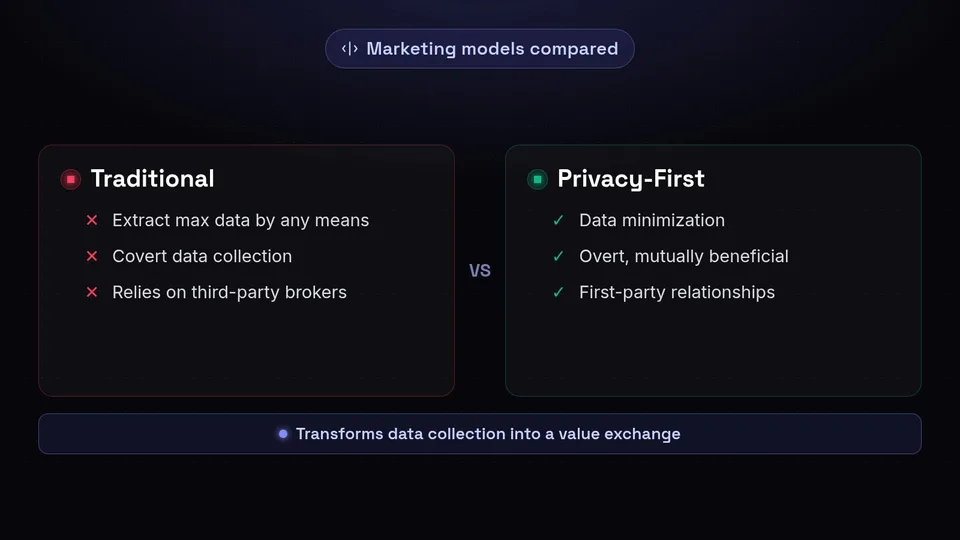
Privacy-first marketing is a strategic approach that prioritizes the protection of consumer data and respects user consent at every touchpoint of the customer journey. Unlike traditional marketing, which often sought to extract as much data as possible by any means necessary, privacy-first marketing operates on the principle of data minimization and transparent value exchange.
"Privacy-first marketing is not about stopping data collection; it is about changing the relationship dynamics. It transforms data collection from a covert operation into an overt, mutually beneficial transaction between the brand and the consumer."
In a privacy-first model, brands only collect data that is strictly necessary, clearly explain how that data will be used, and provide users with easy-to-use controls to manage their preferences. This approach aligns perfectly with the demands of a cookieless world, as it shifts the focus away from third-party data brokers and toward building direct, first-party relationships with the audience.
Key characteristics of privacy-first marketing include:
- Transparency: Clear, jargon-free privacy policies and cookie banners that genuinely inform the user.
- Consent-Driven: No data is collected or processed without explicit, informed consent.
- Value Exchange: Consumers are offered tangible value (e.g., discounts, exclusive content, personalized experiences) in exchange for their data.
- Security: Robust cybersecurity measures to protect the data that is collected.
Why Data Privacy Matters More Than Ever

The emphasis on data privacy is not merely a regulatory hurdle; it is a fundamental shift in consumer psychology. Today's consumers are more digitally literate than ever before. They understand that their personal information has value, and they are increasingly wary of brands that misuse it or fail to protect it.
Several factors highlight why data privacy must be at the core of your social media strategy:
1. Building Brand Trust and Loyalty
Trust is the ultimate currency in the digital age. When a brand demonstrates a genuine commitment to data privacy, it signals respect for the consumer. Studies consistently show that consumers are more likely to purchase from, and remain loyal to, brands they trust with their personal information. Conversely, a data breach or a scandal involving the misuse of user data can cause irreparable damage to a brand's reputation.
2. Compliance and Risk Mitigation
The legal landscape surrounding data privacy is becoming increasingly complex. With new regulations popping up globally, non-compliance can result in severe financial penalties and legal repercussions. A privacy-first marketing strategy ensures that your brand stays ahead of regulatory curves, minimizing risk and avoiding costly fines.
3. Enhanced Data Quality
When consumers willingly share their information because they trust your brand and understand the value exchange, the data you receive is inherently more accurate and reliable than data scraped covertly by third-party cookies. High-quality data leads to better insights, more effective personalization, and ultimately, higher conversion rates.
The Impact of Cookieless Tracking on Social Media
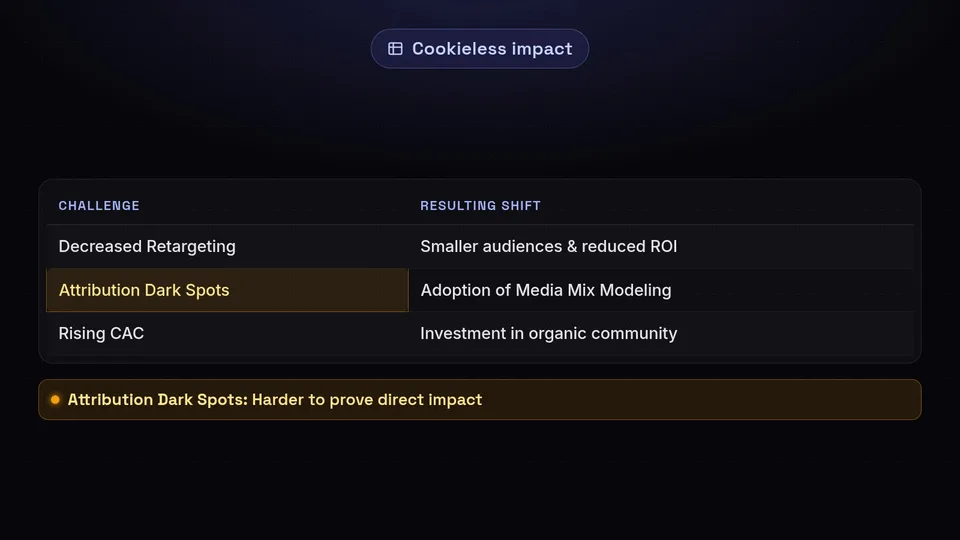
The transition to a cookieless environment has profound implications for social media marketing. The platforms themselves are overhauling their advertising infrastructure, and marketers are feeling the impact across several key areas:
Decreased Retargeting Efficacy
Retargeting—serving ads to users who have previously visited your website—has historically been one of the most cost-effective social media marketing tactics. Without third-party cookies to track users across the web, building these highly specific retargeting audiences is becoming much more difficult. Marketers are seeing smaller audience sizes and reduced ROI on traditional retargeting campaigns.
Attribution Challenges
Attribution—determining which social media touchpoints contributed to a conversion—is inherently reliant on tracking user journeys across different platforms and devices. The loss of third-party cookies creates "dark spots" in the customer journey, making it harder to prove the direct impact of social media campaigns on bottom-line revenue. This forces marketers to adopt more holistic, albeit less precise, measurement models like Media Mix Modeling (MMM).
Rising Customer Acquisition Costs (CAC)
As granular targeting becomes less viable, social media algorithms have to work harder, often relying on broader targeting parameters. This decreased efficiency typically translates to higher Customer Acquisition Costs (CAC). Brands must now invest more in creative quality and organic community building to offset the rising costs of paid social acquisition.
Core Pillars of a Privacy-First Marketing Strategy
To navigate the cookieless landscape successfully, brands must rebuild their marketing strategies upon new, privacy-compliant pillars. These pillars focus on acquiring data ethically and using it responsibly.
Zero-Party Data Collection
Zero-party data is information that a customer intentionally and proactively shares with a brand. This can include preference center data, purchase intentions, personal context, and how the individual wants the brand to recognize them. Because it is given freely, zero-party data is the most valuable and privacy-compliant data available.
To collect zero-party data on social media, brands can utilize interactive formats such as:
- Instagram Stories polls and question stickers.
- Twitter/X polls.
- Interactive quizzes linked from social posts.
- Conversational commerce via chatbots in Facebook Messenger or WhatsApp.
Contextual Targeting
Before the dominance of behavioral targeting (which relies on cookies), contextual targeting was the norm. Contextual targeting involves placing ads based on the content of the webpage or the specific social media environment, rather than the user's past behavior.
For example, instead of tracking a user who previously searched for running shoes and serving them a shoe ad on a completely unrelated social feed, contextual targeting would place the shoe ad alongside a social media post or video about marathon training. This approach is highly relevant to the user's current interests and requires zero personal data tracking.
Transparent Consent Mechanisms
Consent should not be treated as a legal checkbox; it is the first step in building a relationship. Privacy-first marketing requires transparent consent mechanisms that clearly explain what data is being collected and why. On social media, this translates to clear calls-to-action when directing users to landing pages, and ensuring that any lead generation forms native to the platforms clearly state the privacy policy and terms of use.
Shifting from Third-Party to First-Party Data
The most critical strategic pivot in a cookieless world is the shift from relying on third-party data to building a robust first-party data asset. First-party data is information you collect directly from your audience through your own channels—your website, your app, your CRM, and your direct interactions on social media.
Unlike third-party data, which is rented and subject to the whims of platform policy changes and browser updates, first-party data is owned by your brand. It is a proprietary asset that grows in value over time.
To accelerate your first-party data collection through social media, consider the following tactics:
- Lead Generation Campaigns: Utilize native lead generation forms on platforms like LinkedIn and Facebook. These forms auto-populate with the user's platform data (with their consent), reducing friction and increasing conversion rates for newsletter signups or resource downloads.
- Gated Content: Promote high-value content (eBooks, webinars, exclusive reports) on social media that requires an email address to access. Ensure the value of the content matches the perceived 'cost' of the user's email address.
- Community Building: Create private social media groups (e.g., Facebook Groups, LinkedIn Groups, Discord servers) where members must answer entry questions or provide an email address to join. This fosters deep engagement while building your database.
- Loyalty Programs: Promote loyalty program signups via social media. Loyalty programs are the ultimate value exchange, offering tangible rewards in return for ongoing first-party data collection.
How Social Media Algorithms are Adapting
Social media platforms are not standing still as the cookieless wave crashes over them. They are actively re-engineering their algorithms and advertising products to maintain performance in a privacy-compliant manner.
One major adaptation is the shift toward on-platform conversions. Platforms like Instagram and TikTok are heavily investing in native commerce features (e.g., TikTok Shop, Instagram Checkout). By keeping the entire customer journey—from discovery to purchase—within the app, the platforms eliminate the need for cross-site tracking. They retain total visibility over the conversion, allowing their algorithms to optimize effectively without ever needing a third-party cookie.
Additionally, platforms are leveraging advanced machine learning to fill the gaps left by missing data. Using aggregated, anonymized data, platform algorithms can model conversion behaviors. For instance, if the platform knows that a certain demographic engaging with specific video content tends to convert, it can optimize ad delivery based on those broad patterns rather than individual tracking.
Furthermore, platforms are encouraging the use of robust server-to-server integrations, such as the Facebook Conversions API (CAPI). These integrations allow brands to send first-party data directly from their servers to the platform's servers, bypassing the browser and the restrictions of cookie blockers. While this still requires user consent, it provides a more reliable data stream than traditional browser pixels.
Actionable Steps to Future-Proof Your Social Media
Adapting to a privacy-first, cookieless landscape requires proactive steps. Here is a comprehensive action plan to future-proof your social media marketing strategy:
1. Foster Community Engagement
When you can't rely on algorithms to perfectly target individuals based on their browsing history, the strength of your organic community becomes paramount. Focus on creating highly engaging, shareable content that resonates deeply with your core audience. Encourage comments, start discussions, and actively respond to your followers. A highly engaged community provides organic reach and acts as a fertile ground for voluntary zero-party data collection.
2. Leverage AI-Powered Tools
Artificial Intelligence is the antidote to data loss. AI-powered platforms can analyze vast amounts of contextual and historical data to predict trends, optimize posting schedules, and suggest content formats that drive the highest engagement. By utilizing AI, you can maximize the impact of your organic and paid social efforts without needing hyper-granular individual tracking. Tools that offer predictive analytics and automated scheduling are essential for maintaining efficiency.
3. Optimize Content for Native Platforms
Since driving users off-platform is becoming harder to track, focus on maximizing engagement within the social platforms themselves. Create zero-click content—content that provides full value without requiring the user to click a link. Utilize native video formats (Reels, TikToks, YouTube Shorts), carousel posts, and long-form text posts. The longer you keep users engaged with your content on the platform, the more the algorithm will favor your brand.
4. Revamp Your Value Proposition for Data Exchange
Review every touchpoint where you ask for user data. Is the value exchange clear and compelling? If you are asking for an email address, what is the user getting in return? It must be more than just "subscribe to our newsletter." Offer exclusive discounts, early access to products, or highly specialized content. Make the exchange so valuable that the user is eager to provide their data.
5. Implement Server-Side Tracking
Work with your development team to implement server-side tracking solutions like the Meta Conversions API or TikTok Events API. This ensures that when users do consent to tracking, the data is transmitted reliably and securely, improving your campaign optimization and measurement capabilities.
Measuring Success Without Third-Party Cookies
The metrics we use to define success must evolve alongside our strategies. In a cookieless world, obsessing over deterministic, user-level attribution is a losing battle. Instead, marketers must embrace probabilistic measurement and holistic business metrics.
Media Mix Modeling (MMM): MMM is making a massive comeback. This statistical analysis looks at historical aggregate data (spend across different channels, seasonality, economic factors) to determine the overall impact of marketing on sales. It doesn't rely on individual tracking, making it entirely privacy-compliant.
Incrementality Testing: This involves running controlled experiments (e.g., showing ads to a test group and withholding them from a control group) to measure the actual lift in conversions caused by a specific social media campaign. Incrementality testing proves causality without needing to track the individual user journey.
Focus on Engagement and First-Party Growth: Shift your social media KPIs toward metrics that indicate brand health and audience ownership. Track engagement rates, the growth rate of your email subscriber list originating from social channels, and the volume of zero-party data collected through interactive social content.
The Role of AI in Privacy-First Marketing
As granular data disappears, Artificial Intelligence steps in to bridge the gap. AI models do not need to know a user's name, email, or browsing history across the web to be effective. Instead, they excel at recognizing patterns within massive, anonymized datasets.
AI can analyze the performance of thousands of social media posts to determine which emotional triggers, visual elements, and copy structures drive the most engagement for a specific brand. It can predict the optimal times to post based on aggregate audience activity levels. In the realm of advertising, AI powers the predictive modeling that platforms use to optimize ad delivery based on contextual signals rather than personal identity.
Furthermore, Generative AI is revolutionizing content creation. By rapidly generating multiple variations of ad copy and creative assets, AI allows marketers to conduct high-velocity contextual testing. You can quickly deploy dozens of creative variations to see which resonates best within a specific context, optimizing your campaigns without relying on behavioral targeting.
Embracing the Privacy-First Future with SchedulifyX
The transition to a cookieless, privacy-first marketing landscape is not a crisis; it is an evolution. It is a necessary correction that forces brands to abandon lazy, intrusive marketing tactics in favor of building authentic, value-driven relationships with their audiences. By prioritizing data privacy, focusing on first-party data collection, and leveraging contextual targeting, your brand can thrive in this new era.
However, navigating this complex landscape requires the right technology. As organic reach becomes more critical and the need for data-driven, yet privacy-compliant, content strategies intensifies, AI-powered tools are your greatest asset.
This is where SchedulifyX comes in. As an advanced AI-powered social media scheduling platform, SchedulifyX empowers you to maintain a dominant social presence without relying on invasive tracking. Our intelligent algorithms analyze aggregate performance data to suggest optimal posting times, generate engaging, contextually relevant content, and streamline your entire social media workflow. By maximizing your organic engagement and helping you build a robust community, SchedulifyX helps you drive results and collect valuable first-party data the right way.
Embrace the cookieless future with confidence. Adapt your strategy, prioritize your audience's privacy, and let SchedulifyX elevate your social media marketing to new heights.