Social Commerce 2026: Selling Directly on Social Platforms
SchedulifyX Team · May 27, 2026
Discover how social commerce is transforming retail in 2026. Learn top strategies for social selling, Instagram Shopping, and TikTok Shop to boost revenue.
In the fast-paced digital landscape of 2026, the boundaries between socializing, entertainment, and shopping have not just blurred—they have completely disappeared. Welcome to the golden era of social commerce. Gone are the days when social media platforms were merely top-of-funnel discovery engines that redirected users to clunky external websites. Today, the entire customer journey—from the initial spark of discovery to the final tap of a checkout button—happens natively within the apps we use every single day.
For brands, creators, and retailers, this shift represents the most significant retail revolution since the dawn of e-commerce. If your brand is not actively engaging in social selling directly on platforms like Meta, TikTok, and Pinterest, you are leaving substantial revenue on the table. Consumers in 2026 demand frictionless, entertaining, and instant purchasing experiences. They want to see a product in a short-form video, tap the screen, and have it shipped to their doorstep using their pre-saved payment credentials—all without ever pausing the video they were watching.
In this comprehensive guide, we will explore the state of social commerce in 2026, dissect the unstoppable rise of features like Instagram Shopping and TikTok Shop, and provide you with actionable strategies to dominate the social selling landscape. Whether you are a boutique brand or a global enterprise, mastering direct platform sales is the key to future-proofing your business.
The State of Social Commerce in 2026
To understand the magnitude of social commerce in 2026, we must look at the data. Global social commerce sales have officially surpassed the multi-trillion-dollar mark, accounting for nearly a third of all global e-commerce transactions. This astronomical growth is driven by Gen Z and Gen Alpha consumers, whose primary search engines are no longer Google or Bing, but TikTok, Instagram, and YouTube.
From Discovery to Checkout: The Closed-Loop Ecosystem
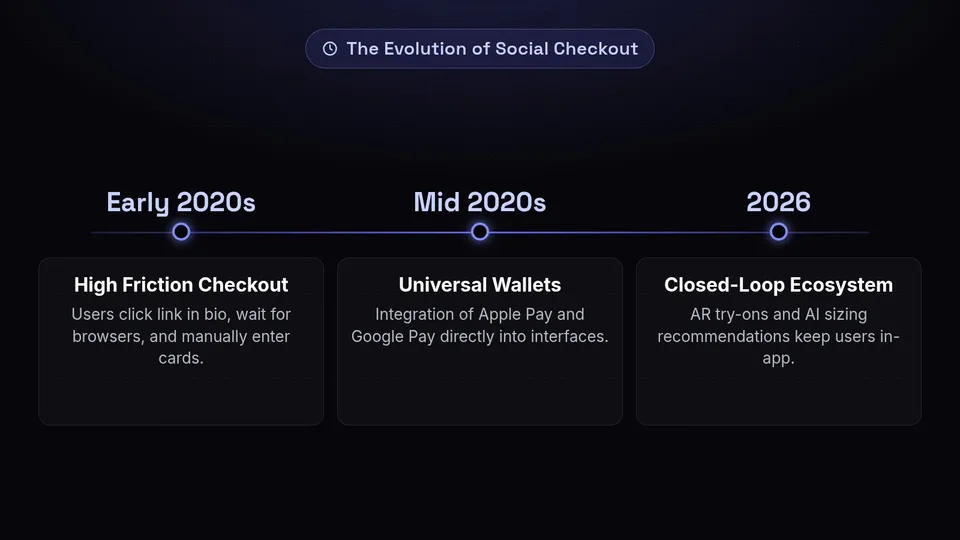
In the early 2020s, social platforms struggled with cart abandonment. Users would discover a product, click a link in a bio, wait for a mobile browser to load, manually enter their credit card information, and inevitably drop off due to friction. In 2026, the ecosystem is a "closed loop." Platforms have integrated universal payment wallets (like Apple Pay, Google Pay, and Meta Pay) directly into their interfaces.
This closed-loop system benefits everyone. Platforms retain user attention and harvest incredibly accurate purchasing data. Brands enjoy conversion rates that dwarf traditional e-commerce metrics. Consumers enjoy unprecedented convenience. Furthermore, advanced augmented reality (AR) try-ons and AI-powered sizing recommendations have drastically reduced return rates, making social commerce more profitable than ever before.
Why Social Selling is Non-Negotiable for Brands
If your marketing strategy still treats social media purely as a brand awareness tool, it is time for a paradigm shift. Social selling is the practice of utilizing social networks to locate, engage with, and sell directly to prospects. Here is why it has become the non-negotiable cornerstone of modern retail.
The Power of Impulse Buying
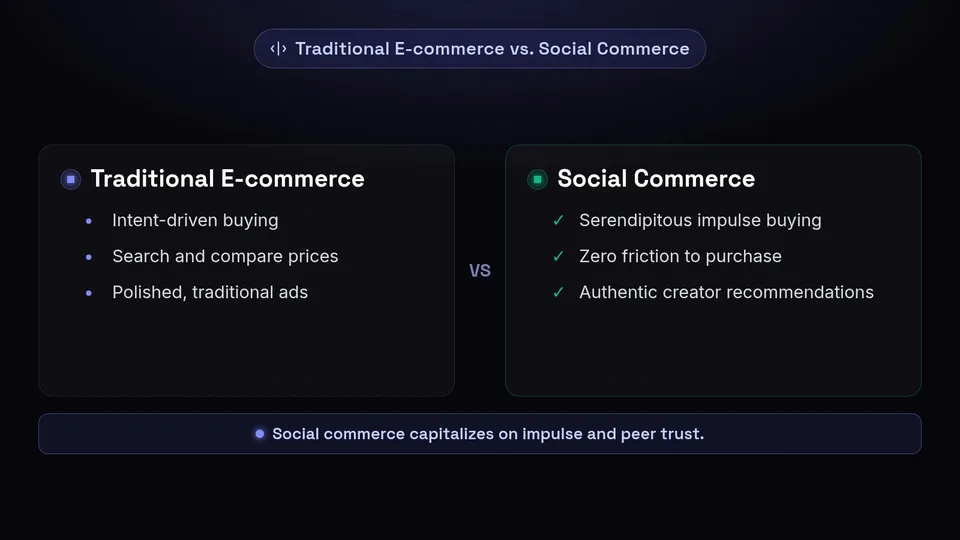
Traditional e-commerce is largely intent-driven. A user realizes they need a new pair of running shoes, searches for them, compares prices, and buys. Social commerce, however, is serendipitous. It capitalizes on impulse. A user is scrolling through their feed to be entertained, sees a highly engaging video of a creator wearing unique running shoes, and buys them instantly because the friction to purchase is practically zero. The emotional high of the content transfers directly to the purchase decision.
Trust, Authenticity, and the Creator Economy
In 2026, consumers are highly skeptical of polished, traditional advertisements. They crave authenticity, which is exactly what social selling provides through the creator economy. When a trusted creator or micro-influencer reviews a product genuinely, their audience listens. Social platforms have built robust affiliate networks that allow creators to tag brand products in their posts, earning a commission on direct sales. This peer-to-peer recommendation model scales trust in a way that traditional ad spend simply cannot replicate.
Hyper-Targeted Personalization
Because social platforms now control the entire funnel—from the content you watch to the products you buy—their algorithms possess a frighteningly accurate understanding of consumer preferences. When a brand participates in social selling natively, their products are served to users who have a mathematically proven propensity to buy, resulting in superior Return on Ad Spend (ROAS).
Mastering Instagram Shopping in the New Era

Meta has continuously evolved Instagram Shopping to remain a dominant force in the social commerce wars. What started as simple product tags on static images has transformed into a highly immersive, multi-format retail experience.
Shoppable Reels and Live Streams
Short-form video remains the king of engagement. Instagram Reels are now fully shoppable, allowing brands to pin product catalogs directly to their viral videos. The key to mastering shoppable Reels in 2026 is "edutainment"—creating content that educates the viewer about the product while entertaining them. Hard selling does not work; storytelling does.
Furthermore, Instagram Live Shopping has matured. Brands now host weekly live events that mimic modern, interactive QVC broadcasts. Viewers can ask questions in real-time, see products demonstrated live, and tap the screen to purchase limited-time drops. These live events create a sense of urgency and community that drives massive sales spikes.
AI-Driven Personalization on Instagram
Instagram's AI now curates a highly personalized "Shop" tab for every user. To ensure your products appear in these coveted spots, brands must optimize their product catalogs with rich metadata, high-quality AR assets, and lifestyle imagery. The algorithm favors products that have high engagement rates, meaning your organic social strategy and your commerce strategy are inextricably linked. Consistent, high-quality posting—managed through platforms like SchedulifyX—is essential to feed the algorithm the data it needs to push your products.
Seamless Meta Pay Integration
The integration of Meta Pay means that users can check out with a single biometric scan (Face ID or fingerprint). To capitalize on this, brands must ensure their Instagram storefronts are fully synced with their backend inventory systems (like Shopify or BigCommerce) to prevent stockouts and provide real-time order updates via Instagram Direct Messages (DMs).
The Unstoppable Rise of TikTok Shop
If Instagram is the digital mall, TikTok Shop is the bustling, chaotic, and incredibly lucrative digital bazaar. TikTok has fundamentally rewired how younger generations shop, turning the viral hashtag #TikTokMadeMeBuyIt into a multi-billion-dollar reality.
Viral Commerce and the #TikTokMadeMeBuyIt Evolution
TikTok Shop allows merchants to showcase and sell products directly within the TikTok app through in-feed videos, LIVEs, and the product showcase tab. The platform's legendary "For You Page" (FYP) algorithm is a masterclass in product discovery. A brand with zero followers can post a compelling product video, go viral, and sell out of months of inventory overnight.
To succeed on TikTok Shop, brands must embrace native content styles. High-production-value commercials will fail. Instead, brands need low-fi, authentic, fast-paced videos featuring real people using the product. Hooks must grab attention within the first 1.5 seconds, and the call-to-action to the native TikTok Shop link must be clear and compelling.
Integrating Creators with Checkout
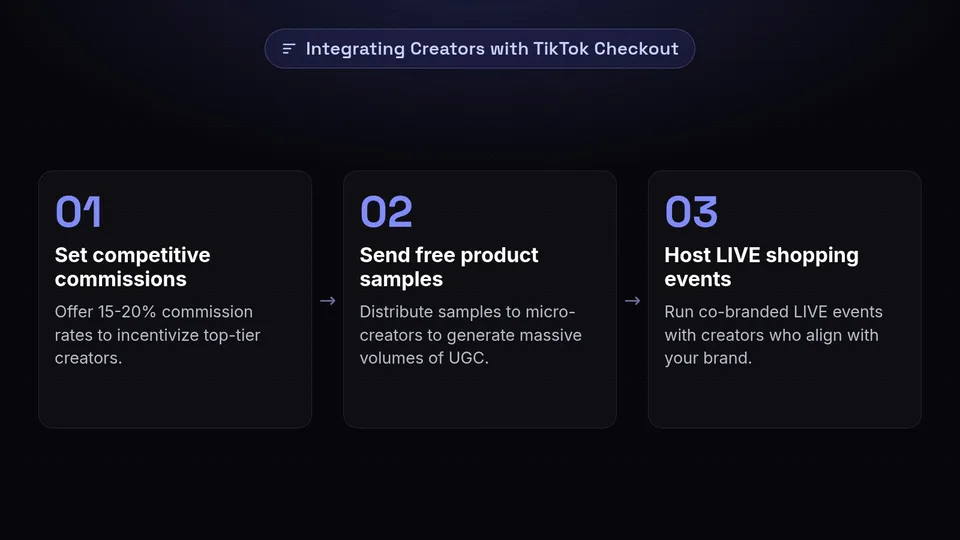
The true superpower of TikTok Shop is its Creator Marketplace and built-in affiliate program. Brands can set commission rates for their products and allow any eligible TikTok creator to sell on their behalf. This turns thousands of creators into a decentralized, commission-only sales force.
- Actionable Tip: Set competitive commission rates (15-20%) to incentivize top-tier creators to pick up your products.
- Actionable Tip: Send free product samples to micro-creators through the TikTok Shop portal to generate a massive volume of User-Generated Content (UGC).
- Actionable Tip: Host co-branded LIVE shopping events with creators who align with your brand values.
The Logistics Engine
By 2026, TikTok has heavily invested in its own fulfillment centers (Fulfilled by TikTok), offering Amazon-like shipping speeds. Brands that utilize TikTok's logistics network are rewarded with higher algorithmic visibility and "Fast Shipping" badges, which significantly boost conversion rates.
Emerging Platforms and Social Commerce Features
While Meta and TikTok dominate the headlines, other platforms are carving out highly profitable niches in the social commerce space.
YouTube Shopping and the Long-Form Advantage
YouTube has integrated native shopping features directly into both Shorts and long-form videos. YouTube Shopping is particularly powerful for high-ticket items or products that require in-depth tutorials (e.g., consumer electronics, complex makeup routines, software). The platform's integration with Shopify allows creators to pin products beneath their videos seamlessly. Because YouTube acts as the world's second-largest search engine, social commerce here benefits from high-intent search traffic.
Pinterest: The Visual Discovery Engine
Pinterest remains the undisputed king of aesthetic planning. Users go to Pinterest with high commercial intent—planning weddings, home renovations, or wardrobe overhauls. In 2026, Pinterest's "Shop the Look" pins and AR try-on features for home decor and beauty are highly advanced. Brands selling visual or lifestyle products must maintain active, optimized Pinterest catalogs. The lifespan of a Pin is months or even years, providing a long-term ROI that outpaces the ephemeral nature of TikTok or Instagram.
Snapchat and Augmented Reality
Snapchat continues to lead in Augmented Reality (AR) commerce. Brands partnering with Snapchat can create highly interactive AR lenses that allow users to virtually "try on" clothing, sneakers, or makeup. If the user likes the look, they can purchase the physical item directly through the lens. This gamification of the shopping experience resonates deeply with Gen Z.
Key Strategies for Selling Directly from Social Platforms
Understanding the platforms is only half the battle. To truly excel at social commerce in 2026, brands must implement robust, cross-platform strategies.
1. Create Frictionless Checkout Experiences
Every additional click in the checkout process reduces your conversion rate by an estimated 10-20%. You must ensure that your native social storefronts are fully optimized. Do not force users to create accounts. Enable biometric payments. Ensure that shipping costs are calculated dynamically and transparently before the final checkout screen. If a user has to leave the app to calculate tax, you have lost the sale.
2. Leverage User-Generated Content (UGC) Relentlessly
Your social commerce storefront should not look like a traditional e-commerce product page with sterile white backgrounds. Replace standard product photos with high-quality UGC. Show real customers wearing or using your product. Video reviews, unboxing clips, and styling tutorials should be front and center on your product listings. UGC acts as powerful social proof, mitigating the risk for first-time buyers.
3. Implement Conversational Commerce via DMs
Customer service has moved out of the email inbox and into the DMs. In 2026, consumers expect real-time answers to their product questions via Instagram Direct, Messenger, or WhatsApp. Brands must deploy AI-powered chatbots capable of answering FAQs, checking inventory, and even processing payments directly within the chat interface. When a customer asks, "Does this come in blue?" the bot should reply, "Yes, here is the link to buy the blue version right now," complete with a one-tap checkout button.
4. Maintain Omnichannel Consistency
While each platform requires a unique content approach, your brand identity, pricing, and inventory must remain consistent across all channels. A customer might discover you on TikTok, research you on Instagram, and finally purchase via Pinterest. If your messaging or pricing is disjointed, trust is broken. Utilizing centralized inventory management and social media scheduling tools is critical for maintaining this consistency.
5. Host Exclusive Social Drops
Scarcity drives action. Use social platforms to host exclusive product drops that are only available to your followers on a specific app. For example, announce that a new limited-edition product will only be available via Instagram Live on Friday at 5 PM. This trains your audience to follow you closely and turn on notifications, drastically increasing your organic reach and baseline engagement.
The Role of AI in Scaling Social Commerce
Managing multiple social storefronts, coordinating with hundreds of creators, and producing a constant stream of content is impossible without the assistance of Artificial Intelligence. In 2026, AI is the silent engine powering the most successful social commerce brands.
Predictive Scheduling and Content Optimization
AI tools can analyze millions of data points to determine exactly when your specific audience is most likely to be online and in a buying mood. Instead of guessing when to post that shoppable Reel, AI-driven platforms like SchedulifyX can predict the optimal posting time down to the minute, maximizing initial reach and algorithmic velocity.
Automated Inventory and Dynamic Pricing
AI algorithms continuously monitor social sentiment, competitor pricing, and your own inventory levels. If a TikTok video featuring your product suddenly goes viral, AI can automatically adjust pricing to maximize margins or pause ad spend on other platforms to prevent overselling inventory. It connects the marketing front-end directly to the supply chain back-end.
Generative AI for Creative Assets
Creating enough content to feed the social commerce beast is a major bottleneck. Generative AI in 2026 allows brands to create infinite variations of product imagery. You can take a single 3D model of a product and use AI to generate lifestyle images of that product in a cozy living room, on a snowy mountain, or in a bustling city street. This allows brands to A/B test visual assets at an unprecedented scale, finding the exact imagery that drives the highest conversion rates for different demographic segments.
AI-Powered Community Management
As your social commerce sales grow, so will your inbound comments and messages. AI community management tools can automatically hide spam, flag negative reviews for human intervention, and reply to comments with personalized, brand-safe responses. If a user comments on a TikTok video asking for the product link, the AI can instantly reply with the exact TikTok Shop link, capturing high-intent leads while they are hot.
Conclusion: Future-Proof Your Strategy with SchedulifyX
The transition to social commerce is no longer a future trend; it is the present reality. In 2026, selling directly from social platforms like Meta, TikTok, and Pinterest is the most efficient, engaging, and profitable way to reach consumers. By eliminating friction, leveraging the authenticity of the creator economy, and embracing native platform features, brands can unlock unprecedented growth.
However, the sheer volume of content, scheduling, and data analysis required to succeed in social selling can be overwhelming. You cannot afford to manage your Instagram Shopping and TikTok Shop strategies manually. You need an intelligent partner to streamline your operations.
That is where SchedulifyX comes in. As an industry-leading AI-powered social media scheduling platform, SchedulifyX empowers brands to effortlessly plan, create, and deploy shoppable content across every major network. With advanced predictive analytics, seamless cross-platform synchronization, and deep AI insights, SchedulifyX ensures your products are put in front of the right buyers at the exact right moment.
Do not let the social commerce revolution pass you by. Stop merely posting, and start selling. Future-proof your revenue and scale your social storefronts today with SchedulifyX.