TikTok Ban Updates: What Marketers Should Prepare For in 2026
SchedulifyX Team · May 22, 2026
Stay ahead of the looming TikTok ban. Discover how evolving social media regulations impact TikTok marketing and learn actionable strategies to pivot your brand.
The digital marketing landscape is notoriously volatile, but few events have sent as many shockwaves through the industry as the ongoing legislative battles surrounding TikTok. What began as a series of localized restrictions on government devices has snowballed into a comprehensive, nationwide legislative crisis for the platform. As we navigate through 2026, the prospect of a total tiktok ban is no longer just a hypothetical scenario debated in political echo chambers—it is a tangible reality that requires immediate, strategic action from brands, agencies, and creators alike.
For years, tiktok marketing has been the holy grail for brands trying to capture the elusive Gen Z and Gen Alpha demographics. The platform's hyper-personalized algorithm, immense viral potential, and robust e-commerce integrations transformed it from a simple lip-syncing app into an indispensable pillar of modern digital marketing. However, escalating concerns over national security and sweeping shifts in social media regulation have forced marketers to confront an uncomfortable question: What happens to our marketing ecosystem if TikTok disappears tomorrow?
In this comprehensive guide, we will dissect the latest TikTok ban updates, analyze the profound impact on digital marketing strategies, explore the broader implications of global social media regulation, and provide an actionable blueprint to future-proof your brand. Plus, we will show you how leveraging AI-powered tools like SchedulifyX can make this turbulent transition seamless.
The Current State of the TikTok Ban
To formulate an effective contingency plan, marketers must first understand the legal and political mechanics driving the current crisis. The conversation surrounding the tiktok ban has evolved significantly, transitioning from abstract threats to concrete legislative mandates.
Legislative Timeline and Key Milestones
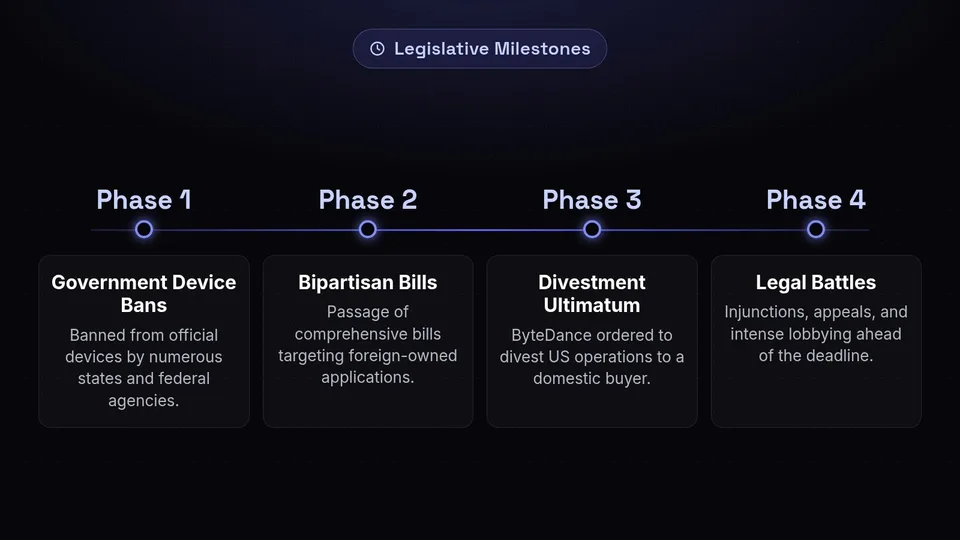
The journey toward a potential ban has been marked by a series of escalating actions. Initially, the focus was strictly on government personnel, with numerous states and federal agencies banning the application from official devices. However, the introduction and subsequent passage of comprehensive bipartisan bills targeting foreign-owned applications marked a point of no return.
Under the current legislative framework, TikTok's parent company, ByteDance, was issued a strict ultimatum: divest its US operations to an approved domestic buyer within a specified timeframe, or face a complete removal from US app stores and domestic web hosting services. As the deadline approaches, legal injunctions, appeals, and intense lobbying efforts have created a chaotic environment. While temporary stays have provided brief reprieves, the overarching trajectory points toward severe operational restrictions, if not an outright ban.
The Core Issues: Data Privacy and National Security
At the heart of the tiktok ban are profound concerns regarding data privacy and national security. Lawmakers argue that the platform's ownership structure leaves sensitive user data vulnerable to foreign government access. Furthermore, there are ongoing debates about algorithmic manipulation and the potential for the platform to be used as a tool for political influence or misinformation.
From a marketer's perspective, these core issues highlight a fundamental shift in how digital platforms are scrutinized. It is no longer just about user experience and ad revenue; it is about geopolitical risk management. Brands must recognize that their association with platforms under heavy federal scrutiny carries its own set of reputational risks. Understanding these underlying issues is crucial for anticipating future social media regulation that could impact other platforms in your marketing mix.
How a TikTok Ban Impacts TikTok Marketing

If the ban takes full effect, the immediate fallout will be unprecedented in the history of digital marketing. TikTok is not just a platform; it is an entire cultural and economic ecosystem. The disruption will impact everything from audience reach to influencer livelihoods and ad spend ROI.
Loss of a Major Demographic Reach
TikTok currently boasts over a billion active users globally, with a massive, highly engaged user base in the United States. For many brands, particularly those in the fashion, beauty, gaming, and fast-moving consumer goods (FMCG) sectors, tiktok marketing is the primary vehicle for reaching consumers under the age of 30. A ban would instantly sever this direct line of communication.
Unlike traditional social networks where users connect with friends, TikTok operates as an entertainment and discovery engine. The "For You" page (FYP) allows brands to achieve massive organic reach without a pre-existing follower base. Losing this capability means brands will have to work significantly harder, and likely spend much more, to achieve the same level of brand awareness and product discovery among younger demographics.
The Influencer Economy Disruption
The creator economy is heavily reliant on TikTok. Countless influencers have built their entire personal brands, businesses, and income streams exclusively on the platform. A tiktok ban would lead to an immediate loss of livelihood for millions of creators and severely disrupt influencer marketing campaigns.
Brands that have long-term contracts with TikTok-native creators will find themselves in complex legal and strategic binds. Furthermore, while many top-tier creators have successfully migrated audiences to YouTube or Instagram, mid-tier and micro-influencers—who often provide the highest ROI for niche marketing campaigns—may struggle to replicate their success on other platforms. This will force brands to completely re-evaluate their influencer vetting, pricing models, and campaign expectations.
Shift in Ad Spend and ROI Expectations
TikTok's advertising platform has become a formidable competitor to Meta and Google, offering highly competitive CPMs (Cost Per Mille) and innovative ad formats like Branded Hashtag Challenges and TopView ads. If TikTok is removed from the equation, billions of dollars in advertising budgets will be abruptly displaced.
This sudden influx of ad spend into alternative platforms like Instagram Reels, YouTube Shorts, and Pinterest will inevitably drive up competition and, consequently, ad costs. Marketers should anticipate higher CPMs and potentially lower initial ROAS (Return on Ad Spend) as algorithms adjust to the massive influx of new advertisers and audiences. Preparing for this financial shockwave is a critical component of any ban survival strategy.
Understanding Social Media Regulation Trends
The tiktok ban is not an isolated incident; it is the most visible symptom of a much larger, global movement toward stringent social media regulation. Governments worldwide are re-evaluating the power of tech giants, focusing heavily on user privacy, algorithmic transparency, and child safety.
Beyond TikTok: A Global Regulatory Shift
While TikTok is currently in the crosshairs due to its ownership, domestic platforms are not immune to the regulatory wave. In the European Union, the Digital Services Act (DSA) and the Digital Markets Act (DMA) have already forced profound changes in how platforms operate, mandate transparency in advertising, and restrict targeted advertising to minors.
In the United States, lawmakers are increasingly pushing for comprehensive federal privacy laws akin to Europe's GDPR or California's CCPA. Furthermore, bipartisan support is growing for legislation aimed at protecting children online, which could severely restrict the addictive design features and algorithmic targeting that make platforms so lucrative for marketers. The precedent set by a tiktok ban will undoubtedly embolden regulators to take aggressive action against other platforms that fail to meet new compliance standards.
What Social Media Regulation Means for Your Data Strategy
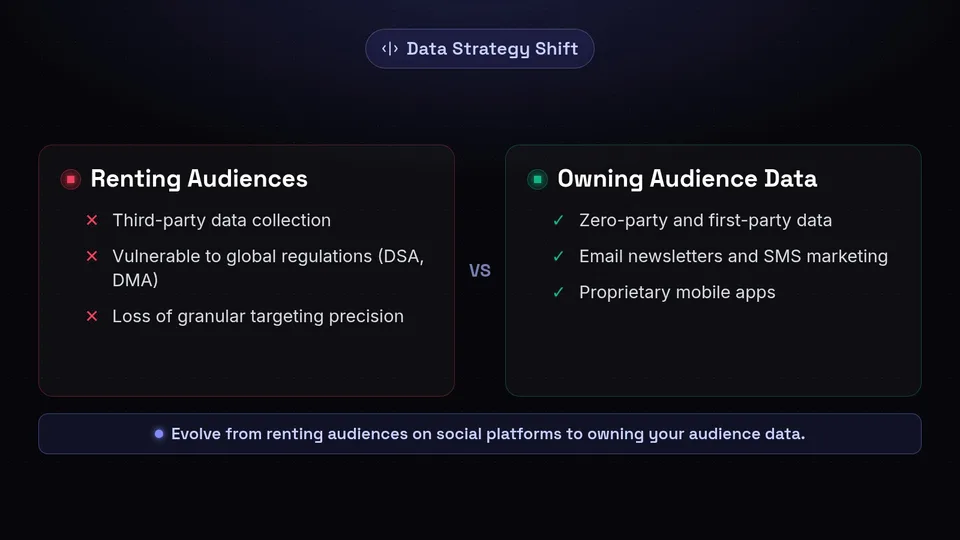
For marketers, the era of unchecked third-party data collection is officially over. Evolving social media regulation demands a fundamental pivot toward privacy-first marketing. As platforms are forced to restrict targeting capabilities and provide users with more control over their data, marketers will lose the granular targeting precision they have relied upon for the past decade.
To survive in this heavily regulated environment, brands must prioritize the collection and utilization of zero-party and first-party data. Building direct relationships with consumers through owned channels—such as email newsletters, SMS marketing, and proprietary mobile apps—will become the most valuable asset in a marketer's toolkit. Your marketing strategy must evolve from "renting" audiences on social platforms to "owning" your audience data.
7 Strategies Marketers Must Prepare For
Panic is not a strategy. While the potential of a tiktok ban is daunting, proactive marketers can use this moment of industry disruption to build a more resilient, diversified, and effective marketing ecosystem. Here are seven critical strategies you must implement to prepare your brand for the uncertain future.
1. Diversify Your Short-Form Video Strategy
If your entire short-form video strategy begins and ends with TikTok, you are in a highly vulnerable position. Short-form video is not going away; consumer preference for bite-sized, engaging content is permanent. You must immediately begin diversifying your presence across all major short-form video surfaces.
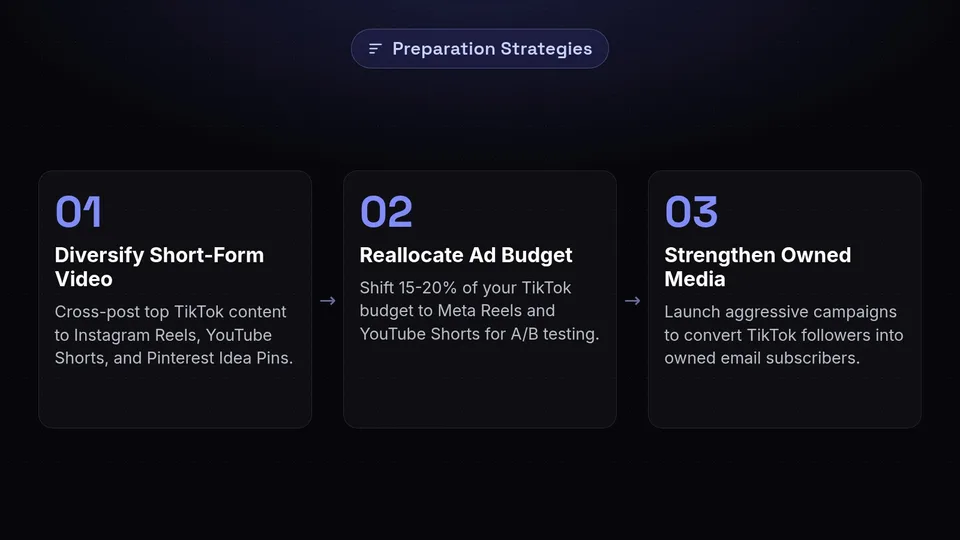
Start cross-posting your top-performing TikTok content to Instagram Reels, YouTube Shorts, and even Pinterest Idea Pins. Analyze how different audiences react to the same content across these platforms. You will likely find that a video that goes viral on TikTok might need slight pacing adjustments or different hook structures to succeed on YouTube Shorts. Building a presence on these alternative platforms now ensures you have a safety net if TikTok goes dark.
2. Reallocate Your Advertising Budget
Do not wait for the ban to take effect before figuring out where your ad dollars will go. Begin running A/B tests on alternative platforms immediately. Shift a percentage of your current tiktok marketing budget (e.g., 15-20%) into Meta Reels ads and YouTube Shorts campaigns.
Use this testing phase to establish baseline metrics for CPM, CPC, and conversion rates on these alternative platforms. This data will be invaluable when you need to quickly reallocate your entire TikTok budget. Additionally, consider investing in upper-funnel brand awareness campaigns on streaming platforms (CTV) or exploring retail media networks, which offer highly targeted advertising based on actual purchase data.
3. Strengthen Owned Media Channels
As social media regulation tightens and platform stability wavers, your owned media channels are your only true safe harbor. A follower on a social platform is merely a rented audience; a subscriber to your email list is an owned asset.
Launch aggressive campaigns to convert your TikTok followers into email subscribers or SMS contacts. Offer exclusive discounts, gated content, or early access to new products in exchange for their contact information. Ensure your website is optimized for conversion and that your email marketing flows are highly personalized and engaging. The stronger your owned channels, the less reliant you are on the whims of social media algorithms and federal legislation.
4. Pivot Influencer Partnerships
Review all current and pending influencer contracts. Ensure that your agreements include clauses that account for platform volatility, such as the ability to shift deliverables to alternative platforms if TikTok becomes unavailable.
Work with your influencer partners to help them diversify their own reach. Encourage them to post sponsored content across multiple platforms simultaneously. Furthermore, start identifying and building relationships with creators who already have strong, multi-platform presences. A creator who commands an audience on TikTok, YouTube, and a personal blog is a much safer investment than a creator who is entirely dependent on the FYP.
5. Focus on Platform-Agnostic Content Creation
Stop creating content that only works on TikTok. While participating in platform-specific trends and utilizing native audio can boost reach, relying solely on these tactics makes your content useless off-platform. Shift your focus toward platform-agnostic content creation.
Create high-quality, narrative-driven short-form videos that rely on strong visual storytelling, clear voiceovers, and universal humor or education. This type of content can be seamlessly distributed across Reels, Shorts, LinkedIn, and your own website without feeling out of place. Invest in robust video editing tools outside of the TikTok app so you retain high-resolution, watermark-free assets for multi-channel distribution.
6. Enhance First-Party Data Collection
With social media regulation threatening traditional ad targeting, you must become a master of first-party data. Implement interactive elements on your website, such as quizzes, polls, and personalized product recommendation engines, to gather zero-party data directly from your customers.
Leverage loyalty programs to track purchasing behavior and customer preferences. By building rich, detailed customer profiles within your own CRM, you can create highly targeted, personalized marketing campaigns across email, SMS, and direct mail, entirely bypassing the need for intrusive third-party social media tracking.
7. Monitor Legislative Updates Closely
The situation surrounding the tiktok ban is fluid, with updates occurring daily. Designate a team member or rely on industry publications to monitor the legal and legislative landscape closely. Understanding the nuances of the legal battles, potential divestiture timelines, and the introduction of new social media regulation bills will allow you to pivot your strategy proactively rather than reacting to breaking news after the fact.
Exploring TikTok Alternatives: Where Does the Audience Go?
If the tiktok ban is enforced, over 150 million US users will suddenly find themselves looking for a new digital home. Understanding where this massive audience will migrate is crucial for reallocating your marketing resources effectively.
Instagram Reels: The Natural Successor?
Meta has aggressively positioned Instagram Reels as the primary alternative to TikTok. With a massive existing user base and a highly sophisticated advertising infrastructure, Reels is the most logical destination for displaced users and advertisers alike.
However, the culture of Reels differs from TikTok. Reels tends to favor highly polished, aesthetically pleasing content over the raw, authentic, and sometimes chaotic energy that thrives on TikTok. Marketers will need to elevate their production value slightly while maintaining the engaging hooks necessary for short-form video success. Expect Meta to roll out aggressive new features and creator monetization programs to capture the fleeing TikTok demographic.
YouTube Shorts: Tapping into Search Intent
YouTube Shorts presents a unique and highly lucrative alternative. Backed by Google's massive search infrastructure, Shorts offers something TikTok and Reels struggle with: long-term discoverability. While a TikTok video might have a lifespan of 48 hours, a well-optimized YouTube Short can continue to generate views and drive traffic for months or even years based on search intent.
Marketers should approach YouTube Shorts with an SEO mindset. Use keyword-rich titles, detailed descriptions, and relevant tags. Educational content, "how-to" videos, and product demonstrations perform exceptionally well on Shorts. Furthermore, YouTube's established monetization ecosystem makes it a highly attractive destination for top-tier creators seeking financial stability.
Snapchat Spotlight and Emerging Platforms
Do not discount Snapchat. The platform has quietly built a massive, highly engaged audience among younger Gen Z and Gen Alpha users. Snapchat Spotlight offers a short-form video experience similar to the FYP, and the platform's robust AR (Augmented Reality) capabilities provide unique interactive marketing opportunities for brands.
Additionally, keep an eye on emerging platforms and decentralized social networks. While none currently possess the scale of TikTok, a ban could serve as the catalyst needed for a new platform to achieve critical mass. Staying agile and willing to experiment on new platforms will give you a significant first-mover advantage.
Navigating the Transition with SchedulifyX
Managing a multi-platform, highly agile social media strategy in the face of a potential tiktok ban requires robust tools. Manual posting and tracking across half a dozen platforms is a recipe for burnout and missed opportunities. This is where SchedulifyX becomes your ultimate strategic partner.
Cross-Platform Scheduling Made Easy
SchedulifyX is designed to handle the complexities of modern social media management. With our intuitive, centralized dashboard, you can seamlessly schedule your short-form video content across Instagram Reels, YouTube Shorts, Pinterest, and Facebook simultaneously. As you diversify your strategy away from single-platform reliance, SchedulifyX ensures your content reaches your audience wherever they migrate, without duplicating your workload.
AI-Powered Content Repurposing
Transitioning from a TikTok-centric strategy to a platform-agnostic approach is daunting, but SchedulifyX's advanced AI capabilities do the heavy lifting for you. Our AI-powered tools can automatically analyze your top-performing videos, suggest optimal posting times for different platforms, and even generate platform-specific captions and hashtags tailored to the unique algorithms of Reels and Shorts.
By leveraging SchedulifyX, you can maintain a high-volume, high-quality content output across multiple channels, ensuring your brand remains visible, relevant, and engaging, regardless of what happens in the halls of Congress.
Conclusion: Agility is Your Best Defense
The looming tiktok ban and the broader wave of social media regulation represent a paradigm shift in the digital marketing industry. The days of relying on a single, unregulated platform for explosive organic growth are drawing to a close. However, this disruption should not be viewed purely as a crisis, but rather as an overdue catalyst for building stronger, more resilient marketing strategies.
By diversifying your short-form video presence, prioritizing first-party data collection, strengthening your owned media channels, and utilizing intelligent automation tools, you can insulate your brand against platform volatility. The marketers who will thrive in this new era are those who remain agile, data-driven, and relentlessly focused on providing value to their audience, regardless of the medium.
Don't wait for the legislative hammer to fall. Start building your multi-platform safety net today. Sign up for SchedulifyX and discover how our AI-powered scheduling and content repurposing tools can help you navigate the uncertain future of social media with confidence and ease.
"In the world of digital marketing, the only constant is change. Platforms will rise and fall, but a strong, adaptable strategy built on owned data and diversified channels will always endure."