Instagram Shields Originals as Streamers Court Creators
SchedulifyX Team · November 18, 2026
18 November 2026: Instagram's Content Protection for original videos, Amazon links in Reels, TikTok creators on Disney+ and YouTube's creator-led slate.
This is the SchedulifyX industry briefing for 18 November 2026, and this week's theme is the creator economy: how creators protect, sell and distribute what they make. Instagram has brought Content Protection, its tool for finding copies of creators' original videos, from Facebook to Instagram, and will test a version that catches copies remade with AI. Creators in the US can now put Amazon affiliate links on Reels and feed posts, not just behind the link in their bio. Disney says videos by TikTok creators about its films and series will start appearing on Disney+ in December, and YouTube has shown a new slate of creator-led series at its annual Creator Premiere in Los Angeles. Further out, YouTube's Partner Program terms change on 1 February 2027, with a deadline for existing partners the day before.
Instagram brings Content Protection to original videos
On 17 November Instagram announced Content Protection for eligible creators. Until now the tool was available only on Facebook. It looks for visual matches of a creator's original videos across Instagram and Facebook, using matching technology like that of Meta's Rights Manager, and alerts the creator when it finds one.
Instagram says eligibility is largely based on posting original content and meeting its integrity standards. Eligible creators get a notification in their activity feed and find the tool in the Home tab, under Tools, in the Your professional tools section. Creators who believe they qualify but have not been contacted can apply. Once a creator is enrolled, every new original video is protected automatically, and older eligible videos can be added by hand.
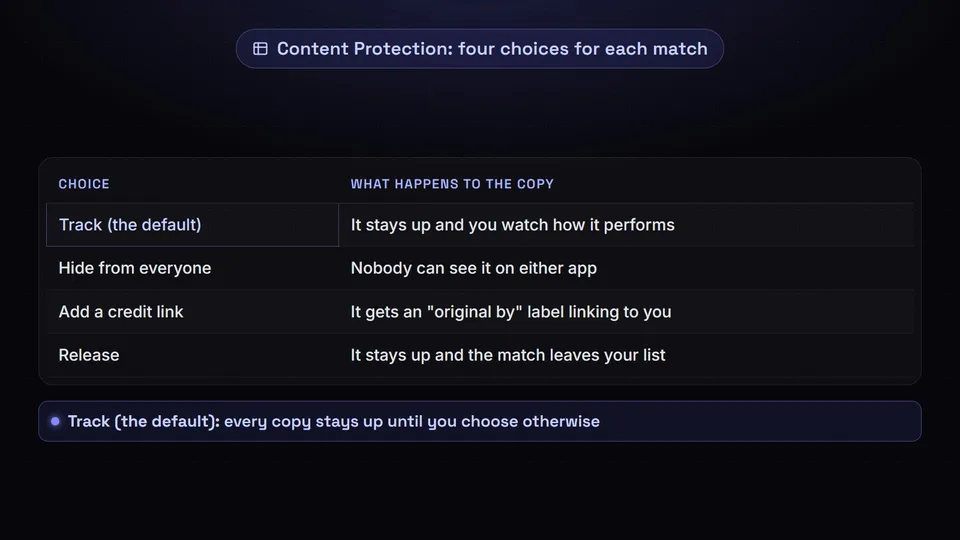
Each match shows how many views the copy has and how many followers the account that posted it has, Net Influencer reported. The creator then chooses one of four responses: track the copy, which is the default; hide it from everyone, so it cannot be seen on Instagram or Facebook; add a credit link, an "original by" label that sends viewers of a copy on Instagram to the original; or release the match and leave the video up. An allow list exempts accounts the creator has given permission, such as a second profile, a collaborator or a brand partner, so their videos are not flagged.
The newer part is aimed at AI. In the coming weeks Instagram will start testing, with a small group of creators, matches based on the spoken words in an original video, so a copy can be caught even when AI has replaced the visuals. Instagram also says it is exploring ways to limit the reach of content and accounts that repeatedly use AI tools to repost other people's work, TechCrunch reported.
For creators whose Reels are regularly re-uploaded by other accounts, this replaces a manual search with an alert and a decision. Brands should note the allow list. If you repost creators' videos with their permission, ask them to add your account to it, so an authorised repost is not flagged, or hidden by mistake.
Amazon affiliate links come to Reels and feed posts
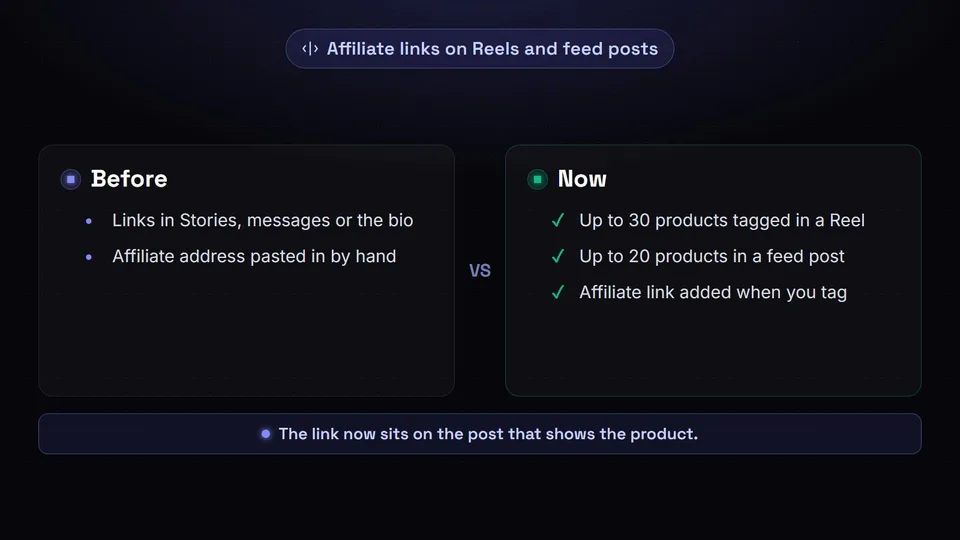
On 16 November Instagram began letting creators add Amazon affiliate links directly to Reels and feed posts, with up to 30 products in a Reel and up to 20 in a feed post, TechCrunch reported. Until now creators shared Amazon links through Stories, direct messages and the link in their bio.
Creators connect their Instagram and Amazon Influencer accounts in the Monetization section of the Professional Dashboard. After that, tagging an Amazon product adds the affiliate link automatically, and with an Amazon Associates account connected, the attribution applies even when the creator pastes an ordinary product link. Creators see each product's estimated commission rate before adding it, and viewers who tap a product are taken to the Amazon Shopping app. Instagram says it takes no commission and charges no transaction fees; Amazon pays the commission, as before.
The Next Web reports that the feature is for creators in the US who are 18 or over, use a professional account and belong to Amazon's influencer programme. It has been on its way for some time: in March, Instagram's creators blog said creators could add up to 30 products to a Reel and that affiliate opportunities with Amazon and Shopee would follow. Meta told TechCrunch that product links on creators' Reels and posts have drawn about twice as many clicks as links in their bios. That is Meta's own figure, so treat it as a claim rather than a benchmark for your account.
The practical change is that the link now sits on the post that shows the product, rather than a tap away on the profile, in the run-up to Black Friday on 27 November. If you brief creators on products sold through Amazon, tell them which listings to tag. The link is still a paid relationship: the FTC's guidance for influencers says to disclose any financial relationship with a brand, and to put the disclosure with the endorsement itself rather than only on a profile page.
TikTok creators' Disney videos head to Disney+
In its fourth-quarter shareholder letter on 17 November, Disney said: "In December we will begin introducing creator content on Disney+ through our agreement with TikTok," Net Influencer reported. Disney's page for the programme, called TikTok on Disney+, says select creator videos will appear in Verts, the vertical video feed in the Disney+ mobile app, as well as on TikTok. The programme is invite-only and "designed for passionate fans who already make content around Disney IP on TikTok", with invitations going out on a rolling basis from November.
Verts arrived in the US Disney+ app in March as a swipeable feed of scenes from Disney's films and series, and Disney and TikTok announced their content deal in August, covering titles from Pixar, Marvel, Star Wars and FX, according to Net Influencer. The timing lines up with Avengers: Doomsday, which opens in cinemas on 18 December.
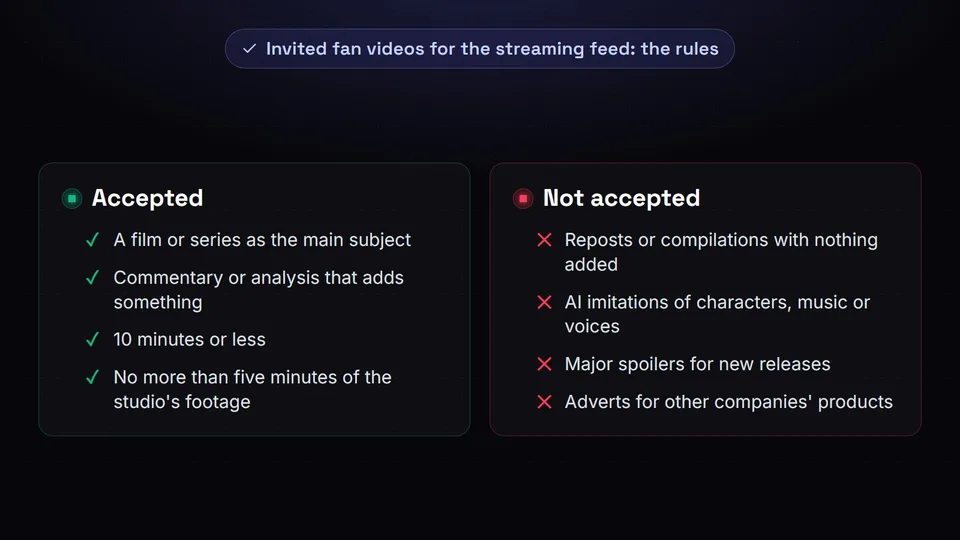
The rules are strict. According to Net Influencer's summary of Disney's guidelines, videos must be 10 minutes or shorter and use no more than five minutes of Disney footage. A Disney film or series must be the main subject, and each video needs a genuine contribution, such as commentary or analysis. Reposts and compilations with nothing added are not accepted, and nor are new storylines for Disney characters, major spoilers for new releases, AI-generated imitations of Disney characters, music or worlds, AI voice cloning, or videos that work as adverts for other companies' products. Disney decides what is published and can remove videos at any time.
For fan creators, a streaming service has become a place to publish short-form commentary, on the rights holder's terms. For brands, the last rule matters most: a video that works as an advert for your product would not qualify. If a creator you work with hopes to be invited, keep sponsored videos separate from their fan commentary.
YouTube shows a new slate of creator-led series
At its annual Creator Premiere this week, held in the Blossom Room of the Hollywood Roosevelt Hotel in Los Angeles, YouTube previewed its next creator-led series and films, and it has published a first look at the slate, written by Sean Downey, Google's president for the Americas and global partners. The line-up includes What Are You Waiting For?, a new ongoing series from Emma Chamberlain; Chef, from Nick DiGiovanni, with short point-of-view episodes released daily and full-length episodes through 2026 and 2027; a docuseries from the tennis player Aryna Sabalenka; Lilly Singh's Eligible Aunties in 2027; a ninth season of Phil Rosenthal's Somebody Feed Phil in spring 2027; and a Thanksgiving special from Ina Garten on 25 November.
The backdrop is competition for creators. Tubefilter notes that Netflix has spent the past year signing creators to development deals for shows that are not on YouTube, and this week Disney set out its own route to creator video. Downey's message, as Tubefilter reported it, was that YouTube creators "are redefining the entire entertainment landscape".
For marketers, the shift is from single posts to programmes. Creator-led series and specials are being presented as long-form entertainment with a release schedule, so a sponsorship can be planned around an episode or a season, with the lead time that implies, rather than bought one video at a time.
What to watch: YouTube Partner Program terms change on 1 February
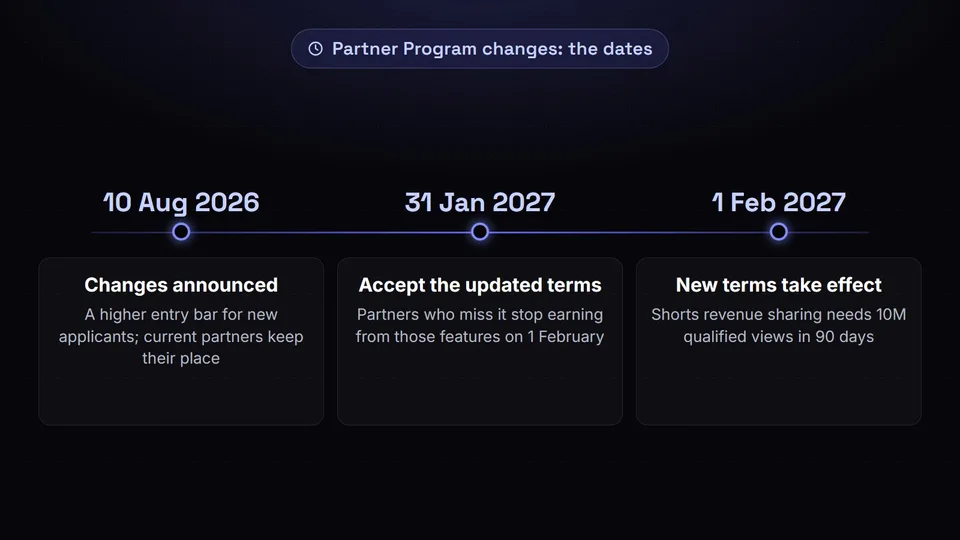
In August YouTube announced changes to the YouTube Partner Program that take effect on 1 February 2027, and they are now close enough to plan around. New applicants will need 8,000 qualified watch hours in the last 365 days, or 20 million qualified Shorts views in the last 90 days, on top of 1,000 subscribers; the current bar is 4,000 hours or 10 million Shorts views. YouTube says the change "won't impact creators already in YPP", and the entry thresholds for fan funding and shopping features stay as they are.
Shorts revenue changes for channels already in the programme too. From 1 February, a channel needs 10 million qualified Shorts views over the last 90 days to share in ads and subscription revenue on Shorts. Channels below that stay in the programme and keep earning on long-form videos, and YouTube says it will introduce incentives for them, including bonuses for YouTube Shopping, incentives for brand deals and earnings boosts for starting and growing trends, with details to follow.
The deadline comes first. Partners review and sign the new terms in YouTube Studio, and Search Engine Journal reports that channels which have not accepted the updated Watch Page, Shorts and, where relevant, Commerce Product modules by 31 January stop earning from those features on 1 February until they do. Their place in the programme is not affected.
What this means for your content
- Enrol in Content Protection when Instagram offers it. If your videos get re-uploaded, it turns finding copies into an alert, and you decide what happens to each one.
- Get your brand onto creators' allow lists. If you repost creators' videos with permission, ask them to add your account so authorised reposts are not flagged.
- Tag products on the post that shows them. Creators in the US who are in Amazon's influencer programme can now tag up to 30 products in a Reel. Disclose the link as a paid relationship, next to the endorsement.
- Keep fan commentary and sponsored work apart. Disney's rules for TikTok on Disney+ exclude videos that work as adverts for other products.
- Put 31 January in the calendar. If you run a monetised YouTube channel, accept the updated modules in YouTube Studio before then, so earnings continue from 1 February.
Conclusion
This week's news points one way: what creators make is being treated as an asset, with its own protection, its own shop links and new places to be shown. Instagram is matching copies of original videos and will test catching AI remakes, affiliate links have moved from the bio to the post, and streaming services are making room for creator video, with Disney+ adding TikTok creators' videos in December while YouTube promotes its own creator-led slate. For brands, that means more structured ways to work with creators, and more rules to read before you do.
SchedulifyX publishes this briefing every week. If you plan posts across several platforms, scheduling in SchedulifyX keeps them on one calendar, so you can check what is due to go out against changes like these.
Sources
Facts checked against the sources below on November 18, 2026.
- Introducing Content Protection (Instagram for Creators)
- Instagram's new tool for creators targets unauthorized reposts and AI-modified videos (TechCrunch)
- Instagram opens Content Protection to creators, will test detection of AI copies (Net Influencer)
- Instagram now lets creators add Amazon affiliate links in reels and feed posts (TechCrunch)
- Instagram creators can now tag 30 Amazon products in a single Reel (The Next Web)
- New ways to earn: making Reels shoppable (Instagram for Creators, March 2026)
- Disclosures 101 for Social Media Influencers (Federal Trade Commission)
- Disney+ will add TikTok creator videos in December (Net Influencer)
- TikTok on Disney+ (The Walt Disney Company)
- Coming soon to YouTube: a first look at the next wave of creator-led entertainment (YouTube Official Blog)
- YouTube hypes its creators' programming at its Premieres event (Tubefilter)
- New opportunities to earn and changes to the YouTube Partner Program (YouTube Official Blog)
- YouTube updates Partner Program terms and Shorts payout rules (Search Engine Journal)
