Pinterest Fresh Pins: What Counts as Fresh in 2026
SchedulifyX Team · October 2, 2026
Discover what exactly counts as Pinterest fresh pins in 2026. Learn how to adapt your repin strategy and master the latest Pinterest algorithm changes.
For digital marketers, content creators, and brand managers, Pinterest remains one of the most powerful visual search engines available. However, the tactics required to maintain visibility on the platform have shifted dramatically over the years. If you are still relying on strategies from a few years ago, you might find your impressions flatlining and your outbound clicks dwindling. At the heart of this evolution is the platform's unwavering emphasis on Pinterest fresh pins.
As we navigate the digital landscape, understanding the mechanics of the Pinterest algorithm 2026 is no longer optional; it is a fundamental requirement for success. The platform has grown increasingly sophisticated, employing advanced visual recognition technology to curate the most relevant, inspiring, and novel content for its users. In this comprehensive guide, we will explore exactly what qualifies as a fresh pin today, how the algorithm evaluates your content, and how you must adapt your repin strategy to maintain sustainable growth.
The Evolution of the Pinterest Algorithm in 2026
To understand why fresh content is so critical, we must first look at how the platform distributes content. Pinterest is fundamentally a discovery engine rather than a traditional social network. Users visit the platform to find inspiration, plan future purchases, and discover new ideas. Consequently, the user experience relies heavily on variety and relevance.
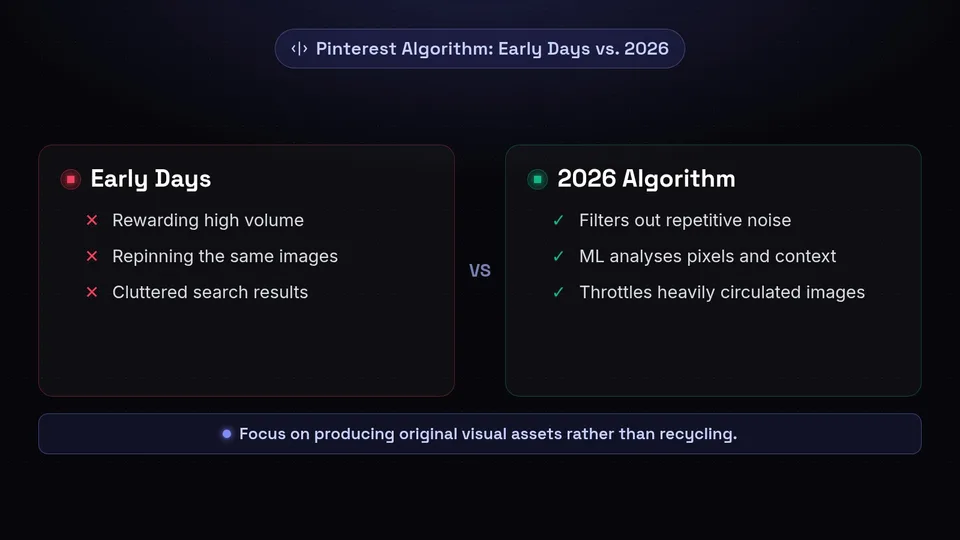
In the early days of Pinterest, the algorithm rewarded volume. Accounts could thrive simply by pinning and repinning the same images to multiple boards, creating a vast web of duplicate content. This led to a cluttered user experience where search results were often saturated with identical images pointing to the same destination.
The Pinterest algorithm 2026 operates on a completely different paradigm. It is designed to filter out repetitive noise and elevate new, high-quality ideas. The algorithm uses complex machine learning models to analyse the pixels of an image, the text overlay, the pin description, the board context, and the destination URL. When the system detects that an image has been circulated heavily, its distribution is deliberately throttled to make way for new content. This shift means that creators must focus on producing original visual assets rather than recycling old ones.
What Exactly Are Pinterest Fresh Pins?
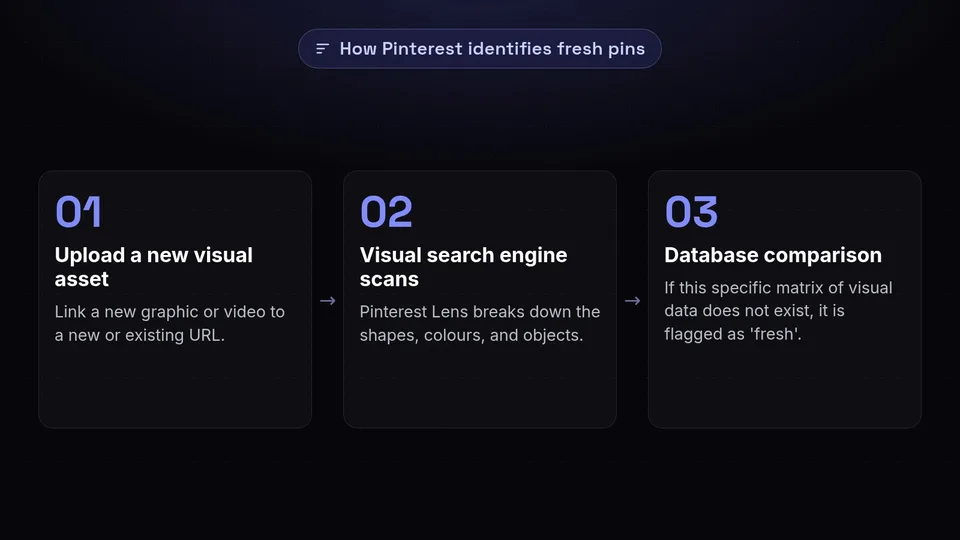
The definition of a fresh pin is stringent. A fresh pin is defined as an image or video that the Pinterest platform has never seen before. It is a completely new visual asset. You can link a fresh pin to a brand-new blog post, a new product page, or an older, existing piece of content. The critical factor is the visual element itself.
When you upload a new graphic or photograph, Pinterest's visual search engine (often referred to as Pinterest Lens technology) scans the image. It breaks down the shapes, colours, and objects within the frame to understand what the image represents. If this specific matrix of visual data does not exist in their current database, the system flags the content as 'fresh'.
New Images for Existing URLs
One of the most effective ways to generate Pinterest fresh pins is to create new graphics for your older, high-performing content. For example, if you have a comprehensive guide on your website that continues to be relevant, you do not need to rewrite the guide to get new traction on Pinterest. Instead, you can design a completely new pin image, write a new title and description, and link it back to that existing URL. The algorithm treats this as a fresh pin, giving it the initial distribution push that new content receives.
New Images for New URLs
Naturally, when you publish a new article, product, or landing page, the first image you create and pin for that URL is a fresh pin. This combination of a new destination link and a new visual asset sends a strong positive signal to the algorithm, indicating that your account is an active source of new ideas.
Video Pins
Video content continues to be a priority for discovery platforms. Uploading original, high-quality video pins constitutes fresh content. Because videos are dynamic, they inherently offer a different user experience than static images, making them highly valuable for engagement and watch time metrics.
What Does NOT Count as Fresh?
As the visual recognition AI has become more sophisticated, the loopholes that creators once used to artificially generate 'fresh' content have been closed. It is crucial to understand what the system recognises as duplicate content to avoid wasting your time and potentially triggering spam filters.
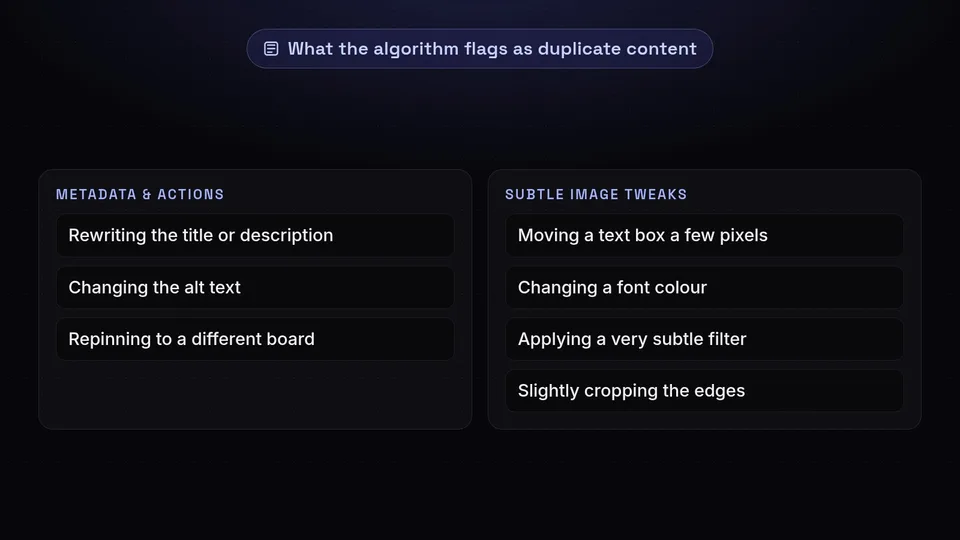
- Changing the Pin Description: Taking an old image that has already been pinned and simply rewriting the title, description, or alt text does not make it a fresh pin. The underlying visual data remains identical.
- Subtle Image Tweaks: Moving a text box a few pixels to the left, changing a font colour from dark blue to black, or applying a very subtle filter over an existing photograph will likely not fool the algorithm. The visual AI looks at the core components of the image; minor cosmetic changes are easily identified as duplicates.
- Slight Cropping: Taking a vertical pin and cropping a few millimetres off the edges will not generate a fresh pin. The primary subject matter and pixel arrangement remain largely the same.
- Repinning to Different Boards: Saving an existing pin to a new board on your profile is a repin, not a fresh pin. While there is a strategic place for this, it does not provide the algorithmic boost of a genuinely new image.
Rethinking Your Repin Strategy for 2026

With the overwhelming emphasis on new visuals, many creators wonder if repinning is completely obsolete. The short answer is no, but your repin strategy must be highly intentional and vastly reduced in volume compared to historical practices.
Repinning serves a purpose in building the contextual relevance of your boards. When you curate high-quality content from other creators alongside your own, you help Pinterest understand the overarching theme and niche of your profile. This contextual data assists the algorithm in categorising your account and serving your pins to the right audience.
The Curated Approach
Instead of mass-saving daily, focus on curation. If you find a pin that perfectly aligns with a specific board's topic and provides genuine value to your target audience, repin it. However, this should make up a small fraction of your overall activity. The majority of your pinning efforts should be dedicated to introducing your own fresh pins to the platform.
Repinning Your Own Content
You can still save your own successful pins to other relevant boards on your profile, but this must be done with caution. If you introduce a fresh pin to your primary board, you might wait several weeks before saving that same pin to a secondary, relevant board. Rapidly saving the same image to ten different boards in a single day is a strong negative signal that resembles spam behaviour. Spacing out these actions ensures that your account remains in good standing while gently extending the lifespan of a successful graphic.
How to Generate Fresh Pins Consistently
The demand for constant new imagery can seem daunting. However, by establishing a streamlined workflow, you can produce multiple fresh pins from a single piece of core content without exhausting your resources.
Varying the Photography and Angles
If you are promoting a physical product or a recipe, capture multiple photographs during your initial shoot. Use different angles, different lighting setups, and different background props. Each distinct photograph can serve as the foundation for a unique fresh pin. Because the visual composition changes with each shot, Pinterest will recognise each one as a new asset.
Targeting Different Demographics
If you use stock photography or lifestyle images, select pictures that appeal to different segments of your audience. For a blog post about financial planning, one pin might feature a young professional, while another features a family, and a third features retirees. By changing the background imagery completely, you create distinct fresh pins that also allow you to test which demographic responds best to your content.
Testing Different Pain Points in Text Overlays
While changing only the text on an identical background might not be enough to count as fresh, pairing completely new background images with different text overlays is a highly effective strategy. Consider the various reasons a user might click through to your link. A single article about home organisation could inspire several different text overlays, such as 'How to Declutter Your Kitchen in 10 Minutes' versus 'The Ultimate Guide to Maximising Small Spaces'. Pair each unique headline with a unique background image to generate a batch of fresh pins.
Utilising Templates
Design templates are essential for efficiency. Create a library of varied layouts—some focusing heavily on typography, some featuring split-screen images, and others highlighting single, striking photographs. When you publish a new URL, you can quickly drop new images and text into these distinct templates, generating a suite of fresh pins in a fraction of the time it would take to design them from scratch.
Understanding Board Relevance and Context
When you introduce Pinterest fresh pins to the platform, the destination matters just as much as the image itself. The very first board you save a new pin to provides the algorithm with its strongest contextual clues about the pin's subject matter.
Ensure that your boards are highly specific, accurately named, and feature robust descriptions containing relevant keywords. If you create a fresh pin about vegan baking, saving it first to a broad, generic board titled 'Food' is less effective than saving it to a highly optimised board titled 'Vegan Dessert Recipes'. The algorithm reads the board title, the board description, and the historical performance of other pins on that board to determine exactly who should see your new content in their home feed and search results.
Managing Your Schedule with SchedulifyX
Creating the content is only half the battle; distributing it correctly is where many strategies fail. Because the Pinterest algorithm 2026 is highly sensitive to spam-like behaviour, dumping a batch of twenty fresh pins onto your boards all at once can actually harm your account's reputation.
Consistency is valued far more than sporadic bursts of high volume. This is where leveraging an AI-powered social media scheduling platform becomes indispensable. With SchedulifyX, you can seamlessly manage your Pinterest presence alongside your other social channels.
SchedulifyX allows you to upload your batch-created fresh pins and distribute them intelligently over time. By utilising AI scheduling capabilities, you can ensure that your fresh pins are published at optimal intervals, signalling to Pinterest that your account provides a steady, reliable stream of high-quality, original content. Instead of manually logging in every day to pin a new image, you can plan weeks of fresh content in advance, allowing the platform to handle the precise timing required to maximise impressions without triggering algorithmic penalties.
Conclusion: Mastering the Visual Landscape
Succeeding on Pinterest today requires a shift in mindset. It is no longer about how many times you can share a single image, but rather how many unique, inspiring visuals you can introduce to the platform. By focusing your efforts on creating genuine Pinterest fresh pins, you align your strategy with the core goals of the Pinterest algorithm 2026: delivering novel, relevant, and engaging content to users.
Remember to evaluate your repin strategy, moving away from mass duplication and towards thoughtful curation. Invest time in developing a streamlined workflow for capturing new images, designing varied templates, and addressing different audience pain points through your visual assets.
Finally, protect the hard work you put into content creation by distributing it wisely. A consistent, spaced-out publishing schedule is the key to maintaining algorithmic favour. Take control of your visual marketing strategy and ensure your fresh content reaches its maximum potential by planning your campaigns with SchedulifyX.