A Realistic 30-60-90 Day Plan for Your New Social Media Role
SchedulifyX Team · October 12, 2026
Master your new role with a practical social media 90 day plan. Learn how to audit, strategise, and execute for long-term success in your first ninety days.
Stepping into a new social media management role is an exciting milestone, but it often comes with a deluge of information, expectations, and immediate demands. Without a clear roadmap, it is easy to become overwhelmed by the daily grind of content creation and community management, losing sight of the broader strategic goals. This is where a well-structured social media 90 day plan becomes your most valuable asset.
Whether you are joining an established enterprise or a growing startup, your first ninety days dictate the trajectory of your tenure. A phased approach allows you to absorb the company culture, understand the audience, and systematically implement changes without causing unnecessary disruption. In this guide, we will break down a realistic, actionable 30-60-90 day framework to help you build a robust new smm job plan from the ground up.
The Purpose of the 30-60-90 Day Framework
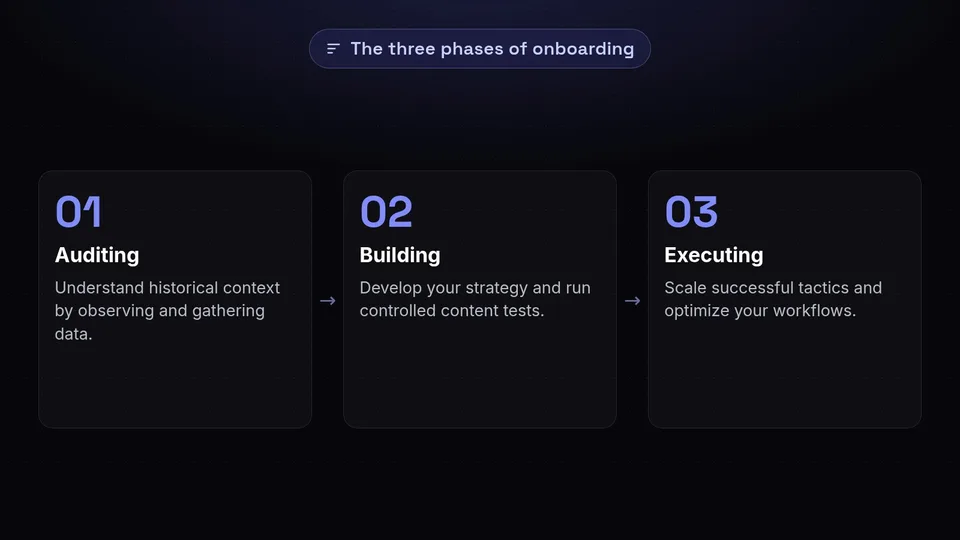
A 30-60-90 day plan is not a rigid set of rules; rather, it is a strategic pacing mechanism. It prevents the common mistake of making drastic changes before fully understanding the historical context of a brand's digital presence. By dividing your onboarding into three distinct phases—auditing, building, and executing—you ensure that every decision is backed by data and aligned with overarching business objectives.
Days 1 to 30: Audit and Absorb (The Sponge Phase)
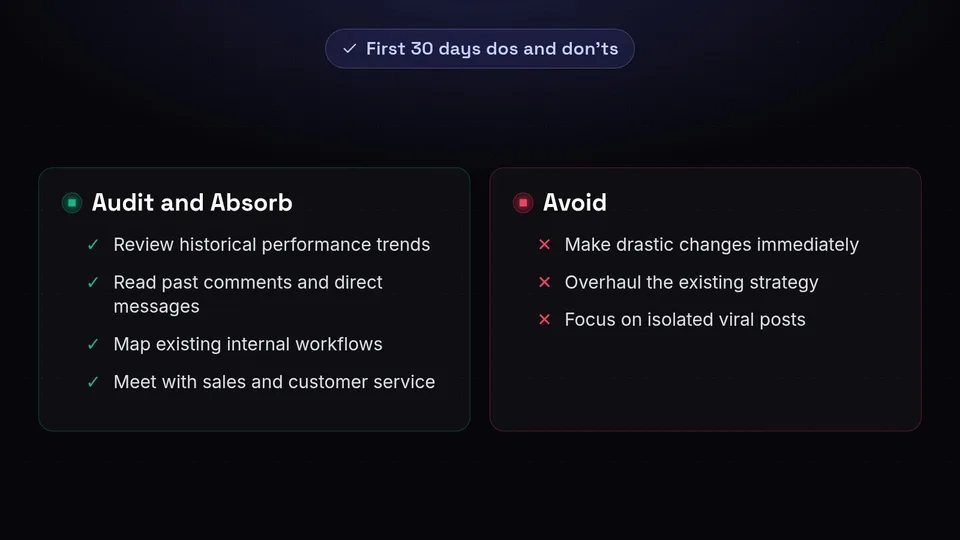
Your primary goal during the first thirty days is observation. Resist the urge to overhaul the existing strategy immediately. Instead, focus on gathering as much information as possible about the brand, its audience, and the internal processes that drive content creation.
Conduct a Comprehensive Social Media Audit
Begin by reviewing the historical performance of all active social media channels. Dive into the native analytics provided by platforms like Meta Business Suite, LinkedIn Analytics, and X (formerly Twitter). Look for overarching trends rather than isolated viral posts. Identify which content formats consistently generate engagement and which fall flat. Document the current posting cadence, the tone of voice being used, and the visual identity.
Understand the Audience and Sentiment
Numbers only tell part of the story; qualitative data is equally important. Spend time reading through past comments, direct messages, and brand mentions. This will give you a clear picture of audience sentiment. What are the common questions customers ask? What pain points do they express? Understanding these nuances is a critical component of any new smm job plan, as it allows you to craft content that genuinely resonates with your target demographic.
Map Internal Workflows and Meet Stakeholders
Social media does not operate in a vacuum. Schedule introductory meetings with key stakeholders across the business, including sales, customer service, and product development teams. Learn how social media currently supports their objectives. Additionally, map out the existing content approval process. Note any bottlenecks or inefficiencies in how content moves from ideation to publication.
Days 31 to 60: Strategy Formulation and Testing (The Building Phase)

With a solid foundation of knowledge from your first month, the second phase of your social media 90 day plan involves developing your strategy and running controlled tests. This is where you begin to leave your mark.
Drafting the Core Strategy
Based on your audit, begin defining the strategic pillars that will guide your content. If you noticed that educational content performs well but is underutilised, make it a core pillar. Establish clear, measurable Key Performance Indicators (KPIs) that align with business goals. Instead of relying on generic industry benchmarks, use the historical data you gathered to set realistic growth targets for reach, engagement, and conversion.
Implementing Controlled A/B Testing
Before rolling out sweeping changes, test your hypotheses. Introduce slight variations into the content calendar. You might test short-form video against static imagery, experiment with different caption lengths, or adjust the timing of your posts. Because algorithmic preferences generally favour consistent, high-quality engagement, these small tests will help you understand how the platforms respond to your specific brand's new tactics.
Streamlining the Content Calendar
During this phase, begin refining the operational side of your role. If the previous content calendar was disorganised, implement a structured system. Categorise posts by content pillar, specify the required assets, and clarify the approval chain. A well-organised calendar reduces daily friction and frees up your time to focus on high-level strategy and community engagement.
Days 61 to 90: Execution and Optimisation (The Scaling Phase)

As you enter the final stretch of your first ninety days, you transition from testing to full execution. You now have the data, the strategy, and the internal alignment necessary to take complete ownership of the brand's social media presence.
Scaling Successful Tactics
Review the results of the tests you conducted in the previous month. Identify the formats, topics, and posting schedules that yielded the best results and scale them. If a particular style of behind-the-scenes video generated above-average engagement, integrate it into your regular weekly rotation. This phase is about leaning heavily into what works and quietly phasing out the tactics that do not serve your KPIs.
Establishing a Reporting Rhythm
Transparency is vital for long-term success in any new smm job plan. Develop a comprehensive reporting template that highlights the metrics most relevant to your stakeholders. Move beyond vanity metrics like follower count; focus on metrics that demonstrate business value, such as link clicks, engagement rates, and shareability. Present your first quarterly review to leadership, showcasing the insights you have gained and the tangible improvements made since your arrival.
Integrating Advanced Tools
With the strategy firmly in place, evaluate the tools you use to execute it. Manual posting and disjointed workflows are unsustainable as you scale your efforts. Now is the time to implement robust scheduling solutions that allow you to plan weeks in advance, ensuring a consistent presence across all channels even when you are focused on other projects.
Setting Yourself Up for Long-Term Success
The conclusion of your first ninety days is not the end of your strategic planning; it is merely the foundation of your ongoing work. By systematically auditing the landscape, carefully testing new strategies, and confidently scaling what works, you establish yourself as a strategic asset to your organisation.
A realistic social media 90 day plan removes the guesswork from starting a new role. It provides a structured environment where creativity can thrive alongside data-driven decision-making. As you move forward, continue to iterate on your strategy, staying adaptable to platform changes and shifting audience behaviours.
When you are ready to put your strategy into seamless action, SchedulifyX provides the AI-powered social media scheduling infrastructure you need to maintain consistency and reclaim your time. By automating the operational heavy lifting, you can focus on what truly matters: crafting compelling narratives and building a thriving digital community.