Why TikTok Views Stall at 200: Retention Fixes That Matter
SchedulifyX Team · September 24, 2026
Stuck in the TikTok 200 view jail? Discover why your TikTok views drop and how to master your TikTok retention rate to break through algorithmic limits.
If you have been creating content on TikTok for any length of time, you have likely encountered one of the most frustrating phenomena on the platform: publishing a video you are incredibly proud of, only to watch it sprint to a couple of hundred views and then suddenly flatline. This abrupt halt is often referred to by creators as the dreaded TikTok 200 view jail. It can feel as though the algorithm has arbitrarily decided to suppress your content, leading to confusion, frustration, and a desperate search for answers.
However, a sudden TikTok views drop is rarely an accident, nor is it a sign that your account has been shadowbanned or blacklisted. Instead, it is a direct reflection of how the platform's recommendation engine tests, categorises, and distributes content. The algorithm is a highly efficient machine designed with one primary goal: to keep users on the app for as long as possible. To achieve this, it relies heavily on specific user behaviour metrics, the most critical of which is the TikTok retention rate.
In this comprehensive guide, we will dismantle the mechanics behind the 200-view plateau. We will explore exactly why your views stall, how the initial algorithmic testing phase works, and, most importantly, the actionable, verifiable retention fixes you can implement to ensure your future videos break through the testing phase and reach the wider audience they deserve.
Understanding the TikTok 200 View Jail
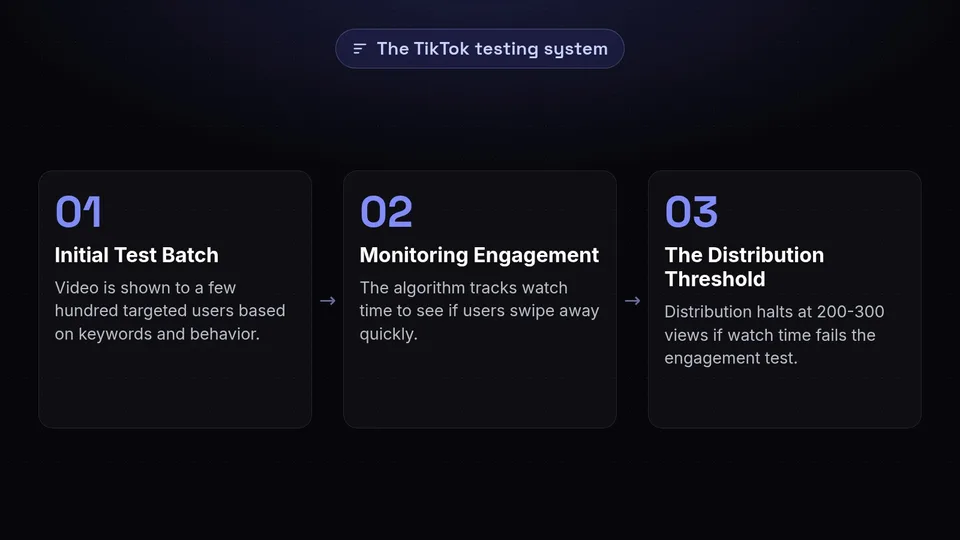
To understand why your views stall, you must first understand how TikTok distributes content to the For You Page (FYP). When you hit publish, TikTok does not immediately push your video to thousands of people, regardless of your follower count. Instead, it employs a tiered testing system.
In the initial phase, your video is shown to a small, highly targeted test group. This group typically consists of a few hundred users. These users are selected based on their past behaviour, the keywords in your caption, the text on your screen, and the visual elements the algorithm has identified in your video. This initial batch is your proving ground. This is where the concept of the TikTok 200 view jail originates.
The Role of the Initial Test Batch
During this first phase, the algorithm is intensely monitoring how this small group of users interacts with your video. It is looking for specific signals of engagement. While likes, comments, and shares are valuable, they are secondary to the most crucial metric: watch time. If the users in this initial batch scroll past your video within the first few seconds, the algorithm registers a negative signal. If enough users swipe away quickly, the algorithm concludes that your video is not engaging enough to hold attention.
When this happens, the distribution is immediately halted. The algorithm will not push a video to a larger tier of users if it failed to engage the initial test group. This is the exact moment you experience a TikTok views drop. Your video reaches 200 or 300 views, the testing phase concludes with poor results, and the algorithmic push ends. You are not in 'jail' in a punitive sense; your video simply did not pass the engagement threshold required to unlock the next level of distribution.
Why It Feels Like a Penalty
The reason this feels like a penalty is due to the stark contrast between the initial burst of activity and the subsequent silence. The algorithm serves your video to the test batch relatively quickly, resulting in a rapid accumulation of those first few hundred views. When the distribution stops, it stops completely. This sudden cessation of views leads many creators to mistakenly believe their account is restricted. In reality, the algorithm is functioning exactly as intended, filtering out content that does not maximise user retention.
The Mechanics of a Sudden TikTok Views Drop
A TikTok views drop can happen at various stages of a video's lifecycle, but it is most noticeable when a video seems to be gaining traction and then suddenly dies. To troubleshoot this, we must look at the specific metrics that trigger the algorithm to pull the plug on distribution.
The Completion Rate Threshold
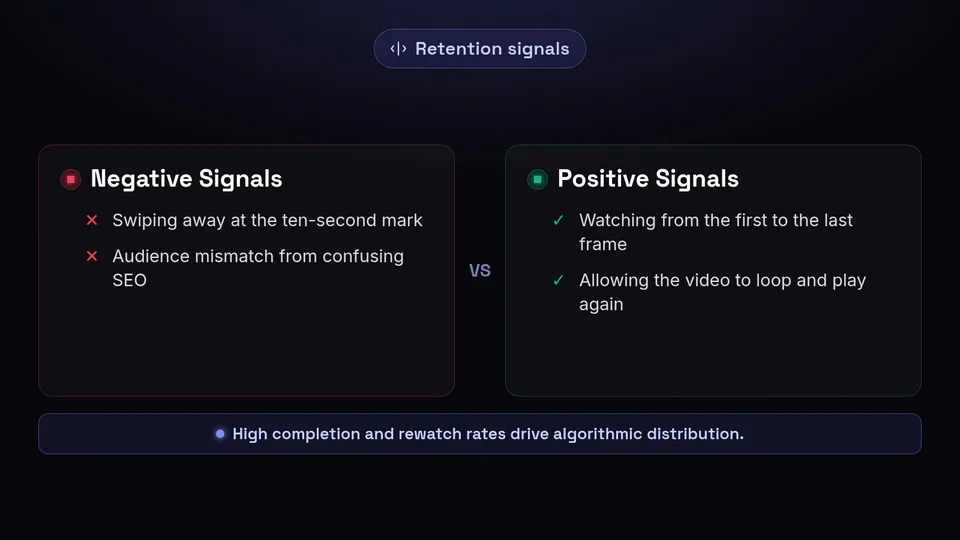
One of the primary drivers of distribution is the completion rate. This is the percentage of viewers who watch your video from the very first frame to the very last. TikTok heavily favours content that users watch in its entirety. If your video is thirty seconds long, but the vast majority of your initial test batch swipes away at the ten-second mark, your completion rate will be abysmal. The algorithm interprets this as a sign that the video did not deliver on the promise of its premise.
The Rewatch Rate
Even more powerful than the completion rate is the rewatch rate. If a user reaches the end of your video and allows it to loop and play again, this sends a massive positive signal to the algorithm. It indicates that the content was so engaging, informative, or entertaining that a single viewing was insufficient. Videos that successfully break out of the initial testing tiers often boast high rewatch rates. Conversely, a lack of rewatches, combined with a low completion rate, guarantees a swift TikTok views drop.
Audience Mismatch
Sometimes, a views drop occurs not because the video is inherently poor, but because it was served to the wrong initial audience. If your SEO (Search Engine Optimisation) on the platform is confusing—for example, if your hashtags, captions, and on-screen text send mixed signals—TikTok may test your video with an audience that has no interest in your niche. If you post a highly technical tutorial on software development, but your keywords accidentally categorise it alongside gaming memes, the gaming audience will immediately swipe away. This audience mismatch results in terrible retention metrics, killing the video's momentum before it can find its true target audience.
Decoding the TikTok Retention Rate
To escape the plateau, you must become obsessed with your TikTok retention rate. This is not a vague concept; it is a measurable, trackable metric available within your TikTok analytics dashboard. Understanding how to read and interpret your retention graph is the single most important skill for a creator looking to scale their viewership.
Accessing and Reading the Retention Graph
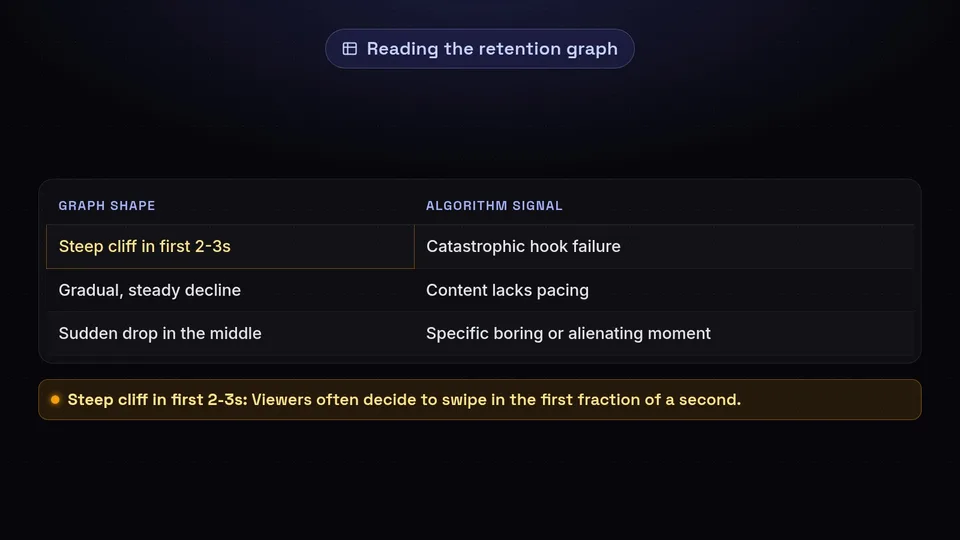
When you open the analytics for a specific video, you will find a line graph that illustrates viewer retention over the duration of the video. The horizontal axis represents the time in seconds, and the vertical axis represents the percentage of viewers still watching. Every video starts at 100% at second zero. As the video progresses, the line invariably slopes downward as viewers swipe away.
The shape of this curve tells you everything you need to know about why your video succeeded or failed. A steep cliff in the first two to three seconds indicates a catastrophic failure of your hook. A gradual, steady decline suggests that your content is generally okay, but perhaps lacks the pacing required to maintain peak interest. A sudden drop-off in the middle of the video points to a specific moment that bored or alienated your audience.
The Three-Second Rule (Which is Actually the One-Second Rule)
Conventional wisdom in social media marketing dictates that you have three seconds to capture a viewer's attention. On modern TikTok, this is overly optimistic. The reality of user behaviour is that the decision to stay or swipe is often made in the first fraction of a second. If the first frame of your video is visually unappealing, if the audio is silent or jarring, or if the subject matter is not immediately obvious, the user will scroll before you even have a chance to deliver your three-second hook.
Therefore, your retention strategy must begin at frame one. The visual information presented the moment the video appears on the screen must be compelling enough to pause the user's scrolling thumb. Only then does your actual spoken or textual hook come into play.
Why Your Videos Fail the Initial Test Phase
If you find yourself consistently trapped in the TikTok 200 view jail, it is time to critically evaluate your content against the metrics that matter. There are several common pitfalls that practically guarantee a low TikTok retention rate and a subsequent views drop.
Weak or Confusing Hooks
The most common reason for a failed video is a weak hook. A hook is the initial promise you make to the viewer. It tells them exactly what value they will gain by watching the rest of the video. If your video starts with a generic greeting, a long pause, or a rambling introduction, you are wasting the most valuable real estate in your content.
Every second spent not delivering value in the beginning of a short-form video is a second where you are actively encouraging the viewer to leave.
A confusing hook is equally detrimental. If you promise one thing in the first three seconds but deliver something entirely different, viewers will feel misled and swipe away, severely damaging your completion rate.
Poor Pacing and Dead Air
TikTok is a fast-paced environment. Users have been conditioned to expect rapid delivery of information and entertainment. If your video is plagued by slow pacing, long pauses between sentences, or unnecessary filler content, viewers will lose patience. Dead air—moments where nothing of substance is happening visually or audibly—is a primary trigger for drop-offs. If your retention graph shows a steady decline, poor pacing is likely the culprit.
Lack of Visual Hierarchy
When a viewer lands on your video, their eyes need to know where to look. If your framing is cluttered, if your on-screen text is placed haphazardly, or if the lighting makes it difficult to see the main subject, the viewer experiences cognitive friction. Rather than working to figure out what is happening, they will take the path of least resistance and scroll to the next video. A clear visual hierarchy ensures that the most important elements of your video are immediately identifiable.
Mismatched Audio and Visual Cues
Audio is a massive component of the TikTok experience. If your audio is out of sync, if the background music overpowers your voice, or if the tone of the audio does not match the visual content, it creates a jarring experience. Viewers are highly sensitive to poor audio quality. Even if your visual content is excellent, terrible audio will lead to an immediate and steep drop in retention.
Strategies to Improve Your TikTok Retention Rate
Now that we have identified why videos fail, we can focus on the actionable strategies required to fix them. Improving your TikTok retention rate requires a deliberate, analytical approach to content creation. You must design your videos specifically to hold attention from the first frame to the last.
Mastering the Multi-Sensory Hook
A strong hook is not just about what you say; it is about what the viewer sees, hears, and reads simultaneously. To maximise retention in those critical early seconds, employ a multi-sensory approach:
- The Auditory Hook: Start speaking immediately. Do not leave a one-second pause at the beginning of your clip. Use a tone of voice that implies urgency, excitement, or intrigue.
- The Visual Hook: Ensure the first frame is visually striking. Use movement to catch the eye. If you are sitting at a desk, consider starting the video by leaning into the frame or holding up an object relevant to the topic.
- The Textual Hook: Always include on-screen text in the first few seconds. This caters to viewers who watch with the sound off and provides immediate context for the algorithm. The text should clearly state the premise of the video.
Implementing Pattern Interrupts
Human attention naturally wanes over time, especially when staring at a static image. To combat this, you must use pattern interrupts. A pattern interrupt is any sudden change in the visual or auditory flow of the video that forces the viewer's brain to refocus.
Effective pattern interrupts include:
- Changing camera angles or zooming in and out.
- Adding sound effects (like a 'whoosh' or a 'pop') accompanied by visual elements.
- Using B-roll footage or relevant images to break up a continuous shot of you speaking.
- Introducing dynamic text animations that emphasise key points.
By inserting a pattern interrupt every three to five seconds, you continuously reset the viewer's attention span, significantly improving your overall retention rate.
Utilising the Open Loop Framework
The open loop is a storytelling technique designed to create curiosity that can only be satisfied by watching the entire video. You open a loop by posing a question, teasing a surprising fact, or introducing a conflict at the beginning of the video. You then deliberately delay the resolution—closing the loop—until the very end.
For example, if you are sharing a recipe, do not show the finished dish in the first frame. Instead, show a highly unusual ingredient and say, 'You will never guess how this transforms an ordinary cake.' The viewer now has an open loop in their mind. They need to know what happens, which compels them to watch until the end, thereby boosting your completion rate.
The Art of the Seamless Loop
As mentioned earlier, a high rewatch rate is algorithmic gold. One of the most effective ways to generate rewatches is to create a seamless loop. This involves scripting and editing your video so that the final sentence flows perfectly into the first sentence, making it difficult for the viewer to distinguish where the video ends and begins.
If a viewer accidentally watches the first few seconds of your video a second time because they didn't realise it had restarted, the algorithm registers this as a rewatch. This technique requires careful planning and precise editing, but the payoff in algorithmic distribution can be substantial.
Analysing Your Metrics to Escape the Plateau
Improving your retention rate is an iterative process. You cannot simply guess what works; you must rely on the data provided by the platform. Regularly analysing your metrics is the only way to identify patterns and refine your strategy.
Identifying the Exact Drop-Off Second
When you review your retention graph, do not just look at the overall shape. Pinpoint the exact second where the steepest drop-offs occur. Did you lose 20% of your audience at the four-second mark? Go back and watch the video at that precise timestamp. What happened? Did you pause to take a breath? Did you transition to a less interesting topic? Did the visual framing become static?
By correlating the drop-offs on the graph with the on-screen action, you can identify your specific weaknesses as a creator. Once you know what causes your audience to leave, you can actively avoid making those same mistakes in future videos.
A/B Testing Your Hooks
Because the hook is so critical, it is the most important element to test. If you have a concept you believe in, try filming two or three different variations of the hook. You can post these variations on different days (ensuring you space them out to avoid spamming your feed) and compare the retention graphs.
Did a question-based hook perform better than a statement-based hook? Did starting with a provocative claim retain more viewers than starting with a visual demonstration? This empirical approach to content creation allows you to build a personal playbook of strategies that are proven to work for your specific audience.
Content Formats That Naturally Drive Retention
While you can optimise any video for retention, certain content formats inherently lend themselves to higher completion rates due to human psychology and viewing habits. Incorporating these formats into your strategy can help you establish a higher baseline of views and avoid the TikTok views drop.
Educational Step-by-Step Guides
Tutorials and step-by-step guides are highly effective because they promise a specific outcome. If a viewer wants to learn the skill you are teaching, they are highly motivated to watch the entire process. To maximise retention in this format, clearly outline the steps at the beginning, use on-screen numbering to track progress, and ensure the final result is satisfying and clearly demonstrated.
Storytimes with Immediate Stakes
Storytelling is a fundamental human communication tool. However, on TikTok, a slow-burn story will fail. To succeed with storytime content, you must establish the stakes immediately. The viewer needs to know why the story matters within the first few seconds. Use the open loop technique to tease the climax, and maintain a brisk pace throughout the narrative. Avoid unnecessary tangents or overly detailed background information that slows down the plot.
Satisfying Process Videos
There is a massive audience for videos that show a chaotic or messy situation being resolved into order. This includes cleaning videos, organisation transformations, art creation, and restoration projects. These videos tap into a psychological desire for completion. Viewers will often watch to the end simply to experience the satisfaction of seeing the finished product. The key here is to show a stark contrast between the 'before' and the 'after', and to keep the visual pacing dynamic during the process phase.
Technical Fixes to Prevent a TikTok Views Drop
Beyond content strategy, there are foundational technical elements that must be correct. Failing to adhere to these basic standards introduces unnecessary friction, leading to premature swiping and poor retention metrics.
Lighting and Audio Clarity
The algorithm can analyse the visual quality of your video. Dark, grainy, or blurry footage is often deprioritised. Ensure your subject is well-lit, preferably with natural light or a dedicated key light. Similarly, audio clarity is non-negotiable. If you are filming in a noisy environment, use a dedicated microphone. Viewers will not strain their eyes or ears to consume your content; they will simply move on.
Respecting the Text Safe Zones
TikTok overlays its own user interface (UI) on top of your video. This includes the profile picture, the like and comment buttons on the right side, and the caption and music information at the bottom. If you place your crucial on-screen text or visual elements underneath these UI elements, they become unreadable.
This frustrates viewers and causes them to scroll away. Always preview your video before posting to ensure all important information is within the 'safe zones'—typically the centre and upper-middle portions of the screen.
Captioning for Silent Scrollers
A significant portion of users consume short-form video with the sound off, particularly when in public spaces or commuting. If your video relies entirely on spoken word and lacks captions, you are instantly alienating this entire demographic. This results in an immediate drop in retention from silent viewers. Always use native or third-party captioning tools to ensure your content is accessible to everyone, regardless of their audio settings.
Consistency and Algorithmic Trust
Finally, escaping the 200 view jail is not just about optimising a single video; it is about building algorithmic trust over time. The platform favours creators who consistently produce high-quality, engaging content. If you post sporadically, the algorithm has a harder time categorising your account and determining your ideal audience.
The Impact of Posting Frequency
Maintaining a consistent posting schedule helps establish a baseline of data for the algorithm. The more data points the system has regarding how users interact with your content, the more accurately it can serve your future videos to the right initial test batches. A consistent schedule also signals to the platform that you are an active, committed creator, which can positively influence your overall account standing.
Maintaining Consistency Without Burnout
The challenge for many creators is maintaining this required consistency while also dedicating the necessary time to script, film, and edit high-retention content. This is where strategic workflow management becomes essential. Batch creating content and utilising scheduling tools allows you to maintain a steady presence on the platform without the daily stress of manual posting.
By planning your content calendar in advance, you ensure that your audience—and the algorithm—receives a predictable stream of videos. This consistency helps to slowly raise your baseline views, making the 200 view jail a thing of the past as your account gains authority and trust within your specific niche.
Conclusion: Breaking Free and Scaling Up
Experiencing a sudden TikTok views drop and finding yourself stuck in the 200 view jail is a frustrating rite of passage for almost every creator. However, by shifting your perspective, you can view this not as a punishment, but as valuable feedback from the algorithm. The platform is telling you exactly what it wants: content that captures attention immediately and holds it until the very end.
By mastering your TikTok retention rate, you take control of your growth. Focus on crafting multi-sensory hooks, implementing pattern interrupts, and ruthlessly eliminating dead air. Analyse your retention graphs to understand your audience's behaviour, and refine your technical execution to remove any friction that might cause a viewer to swipe away.
Escaping the plateau requires strategy, analysis, and unwavering consistency. To help you maintain that crucial posting schedule while you focus on creating high-retention content, consider leveraging AI-powered tools. SchedulifyX allows you to seamlessly plan and schedule your social media presence, ensuring your optimized videos hit the platform at the right time, every time, without the daily manual grind. Start focusing on your retention strategy today, and watch as you break through algorithmic limits and scale your audience to new heights.