Cross-Platform Content Repurposing: Publish Everywhere
SchedulifyX Team · April 11, 2026
Master cross-platform content repurposing. Learn how to post once, publish everywhere, and maximize your social media efficiency with actionable strategies.
Introduction: The Content Creation Treadmill

In the hyper-competitive landscape of digital marketing, content is undeniably king. However, the relentless demand to produce fresh, engaging, and high-quality content on a daily basis has led many marketers, creators, and business owners onto what is commonly known as the "content creation treadmill." You spend hours, sometimes days, researching, writing, recording, and editing a masterpiece—be it a comprehensive blog post, a deeply informative podcast episode, or a high-production YouTube video. You hit publish, promote it for a day or two, and then the cycle violently resets. The algorithm demands more, and you are back to square one.
This traditional approach to content creation is not just exhausting; it is fundamentally inefficient. It leads to creative burnout, diminishing returns on your time investment, and a fragmented brand presence. But what if there was a way to step off this treadmill? What if you could take that single piece of high-effort content and extract weeks, or even months, of value from it across every major digital channel?
Enter the art and science of content repurposing and cross-platform posting. By adopting a "Post Once, Publish Everywhere" methodology, you can exponentially increase your reach, reinforce your brand messaging, and achieve unparalleled social media efficiency. In this comprehensive guide, we will deconstruct the strategies, psychological nuances, and technical workflows required to transform a single pillar piece of content into a multi-platform empire, ultimately saving you time while multiplying your digital impact.
What is Content Repurposing?

Before diving into the operational tactics, it is crucial to establish a clear definition of what content repurposing actually entails—and equally important, what it is not.
Repurposing vs. Cross-Posting
A common misconception in digital marketing is conflating content repurposing with simple cross-posting. Cross-posting is the act of taking the exact same piece of content—the same image, the same caption, the same hashtags—and distributing it simultaneously across Facebook, Instagram, Twitter, and LinkedIn. While this technically qualifies as cross-platform posting, it is the lowest tier of social media strategy. It ignores the unique cultures, formatting requirements, and audience expectations of each distinct platform.
Content repurposing, on the other hand, is the strategic adaptation of a core message into various formats tailored for specific platforms. It is the process of deconstructing a large, comprehensive piece of content (often referred to as "pillar content") into smaller, digestible micro-content pieces (or "splinter content").
"Content repurposing is not about repeating yourself loudly; it is about translating your core value proposition into the native dialects of different digital communities."
The Anatomy of Repurposed Content
Imagine you have hosted a highly successful, one-hour webinar on "The Future of Artificial Intelligence in Retail." If you merely upload the recording to YouTube and share the link on Twitter, you are doing your content a disservice. Through strategic content repurposing, that single webinar becomes:
- A comprehensive SEO blog post detailing the key takeaways.
- An engaging podcast episode by extracting the polished audio.
- A 10-slide LinkedIn Carousel summarizing the most surprising statistics.
- A 5-part Twitter/X thread debating a controversial point raised during the Q&A.
- Three to five short-form vertical videos (Reels/TikToks/Shorts) highlighting the most impactful soundbites.
- An email newsletter summarizing the event for your subscribers.
By transforming the format while retaining the core value, you ensure that your message resonates with audiences regardless of how they prefer to consume information.
The Psychology of Content Consumption Across Platforms
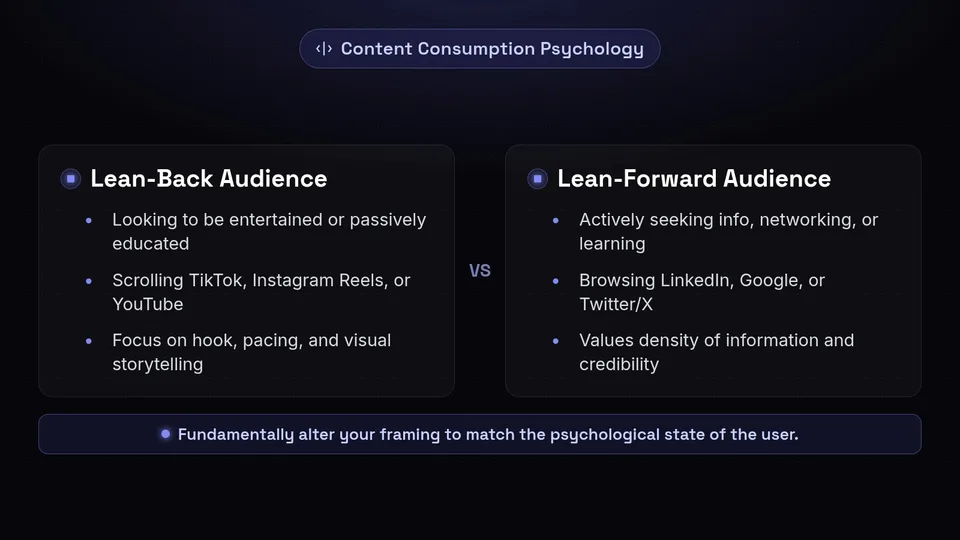
To truly master cross-platform posting, one must understand the underlying psychology of the user on each platform. People do not open TikTok for the same reasons they open LinkedIn, and your repurposed content must reflect these divergent psychological states.
The "Lean-Back" vs. "Lean-Forward" Audience
Content consumption generally falls into two distinct categories: lean-back and lean-forward.
Lean-back consumption occurs when users are looking to be entertained or passively educated. They are relaxing on the couch, scrolling through TikTok, Instagram Reels, or watching a long-form YouTube video on their smart TV. They want high-quality visuals, engaging narratives, and emotional resonance. When repurposing content for these platforms, the focus must be on the hook, the pacing, and the visual storytelling.
Lean-forward consumption happens when users are actively seeking information, networking, or engaging in professional development. They are sitting at their desks browsing LinkedIn, searching for specific queries on Google (reading your blog), or hunting for real-time news and opinions on Twitter/X. Here, the audience values density of information, actionable takeaways, and professional credibility.
Platform Intent and Contextual Adaptation
- LinkedIn: The intent is career advancement, networking, and industry learning. Repurposed content here should highlight leadership, strategic thinking, and professional milestones.
- TikTok/Instagram Reels: The intent is quick entertainment, trend participation, and discovery. Content must be visually arresting within the first three seconds, often utilizing native text overlays and trending audio.
- Twitter/X: The intent is real-time conversation, debate, and news gathering. Repurposed content should be punchy, opinionated, and invite discourse.
- Pinterest: The intent is inspiration and future planning. Repurposing here requires highly aesthetic, vertical imagery that links back to longer-form resources.
Understanding these psychological drivers ensures that when you repurpose your content, you are not just changing the dimensions of a video or the length of a text post; you are fundamentally altering the framing to match the user's mindset.
The Power of Cross-Platform Posting
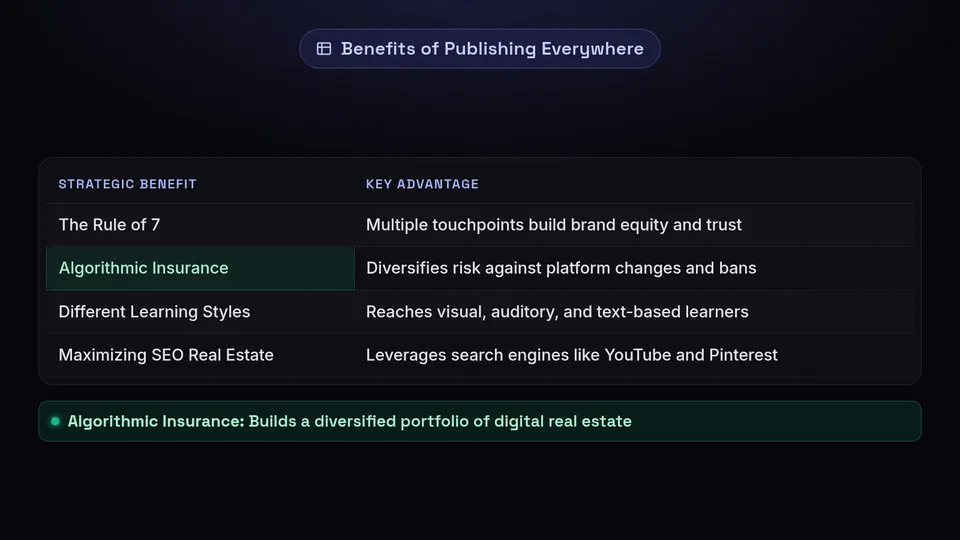
Implementing a robust content repurposing strategy yields compounding benefits that stretch far beyond simple time savings. Let us explore the multifaceted power of publishing everywhere.
1. The Marketing Rule of 7
A foundational principle in marketing is the "Rule of 7," which suggests that a prospect needs to "hear" the advertiser's message at least seven times before they will take action to buy that product or service. In the modern digital age, with shortening attention spans and algorithmic feeds, that number is likely much higher. Cross-platform posting allows you to hit these multiple touchpoints seamlessly. A user might see your tweet on Tuesday, watch your Reel on Thursday, and finally read your deep-dive LinkedIn article on Saturday. Each interaction builds brand equity and trust, moving them further down your funnel.
2. Algorithmic Insurance and Diversification
Relying on a single platform for your audience reach is incredibly risky. Algorithms change overnight, accounts get shadowbanned, and platform demographics shift (as seen with the aging user base of Facebook or the regulatory threats to TikTok). By repurposing your content across multiple channels, you are essentially building a diversified portfolio of digital real estate. If your organic reach dips on Instagram due to an algorithm update, your SEO blog posts and YouTube Shorts can pick up the slack.
3. Reaching Different Learning Styles
Human beings process information differently. Some are visual learners who prefer infographics and videos. Others are auditory learners who absorb information best through podcasts. Still, others prefer reading comprehensive, text-based articles. When you post a single piece of content in only one format, you are alienating a massive segment of your potential audience. Repurposing ensures that your core message is accessible to everyone, regardless of their preferred learning style.
4. Maximizing SEO Real Estate
Search Engine Optimization (SEO) is not limited to your website's blog. YouTube is the world's second-largest search engine. Pinterest functions primarily as a visual search engine. Even platforms like TikTok and Instagram are heavily investing in keyword-based search capabilities. By distributing repurposed content across all these platforms, you increase the likelihood of dominating search engine results pages (SERPs) for your target keywords. A search for your brand or topic could yield your blog post, your YouTube video, and your LinkedIn article, effectively crowding out competitors.
Why Social Media Efficiency Matters in 2026
As we navigate 2026, the digital landscape is more saturated than ever. The barrier to entry for content creation has dropped to near zero, thanks to the proliferation of generative AI tools. As a result, the sheer volume of content being published daily is staggering. In this environment, social media efficiency is no longer just a nice-to-have; it is a critical survival metric for businesses and creators alike.
The ROI of Time
Consider the traditional content creation workflow. If it takes you 10 hours to research, write, and publish a comprehensive blog post, and you only share it once on Facebook and Twitter, the return on your time investment is severely limited. However, if you spend an additional 2 hours repurposing that blog post into a podcast script, 5 short-form videos, and a week's worth of social media text posts, you have exponentially increased the output and potential reach of that initial 10-hour investment. Social media efficiency is about maximizing the output-to-input ratio.
Combating Creator Burnout
Creator burnout is a documented epidemic. The pressure to feed the algorithmic beast leads to fatigue, a drop in content quality, and ultimately, inconsistency—the death knell of any digital strategy. Efficient content repurposing acts as a pressure release valve. It allows you to maintain a high-frequency posting schedule—giving the algorithms what they want—without requiring you to generate net-new ideas every single day. You can take a week off from "creating" while still "publishing" daily.
Resource Allocation for Growth
When your social media operations become efficient, you free up valuable resources—both mental bandwidth and financial capital. Instead of spending 40 hours a week on content creation, you can spend 20 hours on creation and repurposing, and reallocate the remaining 20 hours to community engagement, strategic partnerships, product development, or analyzing your metrics to refine your strategy further.
The "Post Once, Publish Everywhere" (POPE) Strategy
The core framework for achieving ultimate social media efficiency is the "Post Once, Publish Everywhere" (POPE) strategy. This is not about literal simultaneous posting of identical content, but rather a systematic waterfall approach to content distribution. It relies on the concept of "Pillar Content."
Level 1: The Pillar Content
Pillar content is the foundation of your POPE strategy. It is long-form, deeply researched, and highly valuable content that requires significant effort to produce. Examples of pillar content include:
- A 2,000+ word ultimate guide or whitepaper.
- A 45-minute podcast interview with an industry expert.
- A 20-minute, highly edited YouTube video.
- A comprehensive webinar or live keynote presentation.
You only need to create one piece of pillar content per week (or even bi-weekly) to fuel your entire social media calendar.
Level 2: Micro-Content
Once the pillar content is created, it is time to deconstruct it into micro-content. These are medium-form pieces that are native to specific platforms but still carry substantial value on their own. For example, from a 20-minute YouTube video, you might extract:
- A 1,000-word SEO-optimized blog post summarizing the video.
- An audio-only version uploaded to podcast hosting platforms.
- A detailed, 10-slide carousel for LinkedIn and Instagram.
- A long-form, story-driven post for Facebook.
Level 3: Nano-Content
Nano-content is the smallest, most easily consumable unit of content. It is designed for maximum virality, engagement, and driving traffic back to the micro or pillar content. From your micro-content, you generate:
- 15-to-60-second vertical videos (TikToks, Reels, Shorts) highlighting a single "aha!" moment.
- Punchy, single-sentence quotes visualized as graphics for Instagram and Pinterest.
- Polls or questions posted on Twitter/X or LinkedIn based on the topic.
- Short text threads or single tweets extracting specific statistics or facts.
By following this waterfall approach, a single piece of pillar content can effortlessly spawn 20 to 30 unique pieces of content, providing you with a robust, multi-platform presence for weeks.
Platform-Specific Tweaks: One Core Message, Multiple Formats
The magic of the POPE strategy lies in the execution of platform-specific tweaks. To truly optimize your cross-platform posting, you must understand the native language of each channel. Here is a detailed breakdown of how to adapt your core message across the major platforms.
1. LinkedIn: The Professional Network
LinkedIn thrives on professional growth, industry insights, and personal storytelling related to career journeys. When repurposing content for LinkedIn:
- Format: Carousels (PDF uploads) perform exceptionally well as they keep users swiping and increase dwell time. Long-form text posts with generous line breaks (the "broetry" style) also drive high engagement.
- Tone: Professional, authoritative, yet vulnerable. Share the "lessons learned" or the "business impact" of your pillar content.
- Tweak: If your pillar content is a YouTube video about productivity, repurpose it into a text post detailing a personal story of burnout, followed by the 3 actionable productivity tips from the video, ending with a question to prompt comments.
2. Twitter / X: The Global Town Square
Twitter/X is about real-time conversation, debate, and concise value. Attention spans here are the shortest.
- Format: Threads (a series of connected posts) are the best way to repurpose long-form content. Single, provocative statements or statistics also work well.
- Tone: Punchy, opinionated, and conversational. Do not be afraid to take a strong stance.
- Tweak: Take the 5 main headers from your SEO blog post and turn them into a 6-part thread. The first tweet must be a powerful hook (e.g., "99% of marketers are doing SEO wrong. Here is the 5-step framework that actually works in 2026:").
3. Instagram: The Visual Portfolio
Instagram remains a highly visual platform, divided between the static/carousel feed, ephemeral Stories, and algorithmic Reels.
- Format: High-quality graphics, aesthetically pleasing carousels, and vertical video Reels. Stories should be used for behind-the-scenes content or direct links.
- Tone: Aspirational, visual, and community-focused.
- Tweak: Turn a quote from your podcast into a beautifully designed graphic. Use the caption to expand on the quote, and use Instagram Stories to post a short video of you talking about the quote, utilizing the "Link" sticker to drive traffic to the full episode.
4. TikTok: The Entertainment Engine
TikTok is driven by authenticity, trends, and the "For You" algorithm, which serves content based on interest, not just follower graphs.
- Format: Vertical video only (9:16). Fast-paced editing, native text overlays, and trending audio are essential.
- Tone: Raw, authentic, entertaining, and educational ("edutainment"). High production value is less important than a strong hook and relatable delivery.
- Tweak: Do not just upload a polished clip from your webinar. Instead, use the "Green Screen" effect to put an article or a chart from your webinar behind you, and point to it while enthusiastically explaining the concept in under 60 seconds.
5. YouTube Shorts: The Discovery Funnel
YouTube Shorts are a powerful way to drive subscribers to your main, long-form YouTube channel.
- Format: Vertical video (under 60 seconds).
- Tone: Highly engaging, loopable, and value-dense.
- Tweak: Extract the most surprising or controversial 45 seconds of your long-form video. Ensure the video loops seamlessly (the end sentence flows naturally into the beginning sentence) to increase watch time metrics.
Step-by-Step Guide to Content Repurposing
Ready to implement this system? Follow this step-by-step guide to build your own cross-platform content repurposing machine.
Step 1: Conduct a Content Audit
You likely already have a goldmine of content sitting dormant. Review your past blog posts, webinars, videos, and popular social media updates. Look for "evergreen" content—topics that remain relevant regardless of the season or current news cycle. Identify your top-performing pieces based on analytics (views, engagement, conversions). These proven winners are your best candidates for repurposing.
Step 2: Identify and Create Your Pillar Content
If you are starting fresh, decide on your preferred medium for pillar content. Play to your strengths. If you are a great writer, make your pillar a comprehensive blog post. If you are charismatic on camera, make it a YouTube video. Commit to a realistic schedule, whether that is once a week or twice a month. Focus entirely on delivering immense value in this single piece.
Step 3: Deconstruct and Map Out the Splinters
Once the pillar is created, map out your repurposing plan. Create a standardized checklist. For example:
- [ ] Extract audio for Podcast.
- [ ] Write SEO Blog Post.
- [ ] Design 1x LinkedIn Carousel.
- [ ] Write 1x Twitter Thread.
- [ ] Edit 3x YouTube Shorts / Reels / TikToks.
- [ ] Draft 1x Email Newsletter.
This checklist ensures you extract maximum value from every pillar piece without having to reinvent your strategy each time.
Step 4: Optimize for the Native Platform
This is where you apply the platform-specific tweaks discussed earlier. Resize your videos to 9:16 for mobile platforms and 1:1 or 4:5 for feed posts. Rewrite your captions. Add platform-native features like polls on LinkedIn or specific trending audio on TikTok. Never just copy and paste.
Step 5: Schedule and Automate
To truly achieve social media efficiency, you must separate the act of creation from the act of publishing. Dedicate one day a week to batch-creating and repurposing your content. Then, use an advanced scheduling tool to drip this content out over the coming weeks. This ensures a consistent presence across all platforms while freeing you up to focus on other business tasks.
Measuring Success: Analytics and KPIs
A strategy is only as good as the data that supports it. When executing a cross-platform repurposing strategy, tracking the right Key Performance Indicators (KPIs) is essential to understand what is working and where you need to pivot.
Platform-Specific Metrics
Because each platform serves a different purpose, you must measure success differently across your channels:
- Short-Form Video (TikTok/Reels/Shorts): Focus on Watch Time, Average View Duration, and Shares. A high share rate indicates that your content resonated deeply enough for someone to pass it on to a friend.
- LinkedIn/Twitter (Text/Carousels): Focus on Comments, Reposts/Retweets, and Profile Clicks. Deep, insightful comments are the gold standard for thought leadership.
- Pillar Content (Blog/YouTube): Focus on Organic Search Traffic, Time on Page, and Subscriber/Follower Conversion Rate.
The "Halo Effect"
When measuring the success of repurposed content, look for the "Halo Effect." This occurs when a viral piece of micro-content on one platform drives a measurable lift in your pillar content on another. For example, if a YouTube Short goes viral, you should track whether there is a corresponding spike in views on the original 20-minute video, or an increase in your email newsletter sign-ups. Use UTM parameters on your links to track exactly where your traffic is coming from.
Common Pitfalls to Avoid
While content repurposing is a powerful strategy, it is easy to make mistakes that can dilute your brand or alienate your audience. Here are the most common pitfalls to avoid:
1. The "Copy-Paste" Trap
As emphasized throughout this guide, simply copy-pasting the exact same text and video across all platforms is a recipe for low engagement. A caption that says "Link in bio!" makes sense on Instagram but looks amateurish on Facebook or LinkedIn where you can post clickable links directly in the post or comments.
2. Ignoring Aspect Ratios and Formatting
Uploading a horizontal (16:9) video to TikTok or Instagram Reels without formatting it for vertical (9:16) viewing creates an awful user experience. The video will be tiny, surrounded by massive black bars, and users will scroll past it instantly. Always take the time to crop and reframe your visual content for the specific platform.
3. Forgetting to Update Tags and Mentions
If you mention another creator or brand in your content, their handle will likely be different across platforms. Tagging "@JohnDoe" on Twitter might work perfectly, but on Instagram, his handle might be "@JohnDoeOfficial". Failing to update these tags breaks the link, prevents the tagged person from being notified, and looks unprofessional.
4. Over-Saturating Your Audience
While publishing everywhere is the goal, be mindful of users who follow you across multiple platforms. If they see the exact same repurposed video on TikTok, Instagram, and YouTube Shorts on the exact same day, they may experience brand fatigue. Stagger your publishing schedule. Post the Reel on Monday, the TikTok on Wednesday, and the Short on Friday.
Conclusion: Scale Your Strategy with SchedulifyX
The content creation treadmill is a game you cannot win by simply running faster. To truly build a scalable, impactful digital presence, you must work smarter. By embracing content repurposing and the "Post Once, Publish Everywhere" strategy, you transform your hard work into a compounding asset. You reach new audiences, reinforce your messaging, and achieve a level of social media efficiency that leaves your competitors scrambling to keep up.
However, managing the logistics of cross-platform posting—tailoring captions, optimizing formats, and scheduling dozens of posts across various networks—can be overwhelming. That is where technology bridges the gap.
SchedulifyX is an AI-powered social media scheduling platform designed specifically for the modern creator and marketer. With SchedulifyX, you can seamlessly upload your pillar content and let our AI assist in generating platform-specific captions, optimizing hashtags, and scheduling your micro-content across every major social network from a single, intuitive dashboard. Stop logging into five different apps just to publish your content. Centralize your strategy, automate your workflow, and reclaim your time.
Ready to step off the treadmill and start publishing everywhere? Start your free trial of SchedulifyX today and experience the future of social media efficiency.