100 Essential Social Media Marketing Terms for 2026: A Full Glossary
SchedulifyX Team · August 30, 2026
Master the language of digital marketing with our 2026 social media glossary. 100 essential terms defined with practical examples to boost your strategy.
Introduction: Why the Social Media Glossary Matters in 2026

The digital landscape of 2026 is vastly different from the early days of simple status updates. Today, social media marketing is a complex intersection of artificial intelligence, decentralized platforms, and highly sophisticated consumer behavior. To navigate this world, marketers must speak the language. Whether you are a seasoned CMO or a burgeoning creator, understanding social media terms 2026 is no longer optional—it is a prerequisite for survival.
This social media glossary is designed to be your definitive guide. We have curated 100 essential terms that define the current era of marketing. From the rise of "Zero-Click Content" to the nuances of "Dark Social," this guide provides plain-English definitions and practical examples to help you optimize your strategy. By mastering this marketing terminology, you will be better equipped to communicate with your team, interpret social media definitions in your analytics reports, and ultimately drive higher ROI for your brand.
A - C: Algorithms, AI, and Community

1. Algorithm
The mathematical set of rules a platform uses to determine which content to show to which users. In 2026, algorithms have shifted from "Social Graphs" (who you follow) to "Interest Graphs" (what you actually enjoy). Example: TikTok’s algorithm shows you cooking videos because you watched a 60-second pasta tutorial twice, even if you don't follow any chefs.
2. AI-Generated Content (AIGC)
Content created partially or entirely by artificial intelligence. This includes text, images, and videos. Example: Using an AI tool to generate five variations of a LinkedIn post based on one blog link.
3. Alt Text
Hidden text descriptions for images that help visually impaired users understand the content and improve SEO. Example: Writing "A golden retriever wearing a blue party hat" in the alt text field of an Instagram post.
4. Analytics
The systematic computational analysis of data or statistics. It helps marketers understand performance. Example: Checking your monthly dashboard to see which posts had the highest conversion rate.
5. API (Application Programming Interface)
The bridge that allows different software programs to talk to each other. Example: SchedulifyX uses the Instagram API to post your scheduled content automatically.
6. Avatar
A digital representation of a user. In 2026, this often refers to 3D models used in metaverse environments. Example: A brand creating a custom avatar to host a virtual product launch on Roblox.
7. Audience Segmentation
Dividing a broad target market into subsets of consumers who have common needs or characteristics. Example: Creating separate ad campaigns for "Stay-at-home parents" and "Working professionals."
8. A/B Testing
A method of comparing two versions of a post or ad to see which performs better. Example: Testing a red "Buy Now" button versus a blue one to see which gets more clicks.
9. Attribution
The process of identifying which marketing touchpoints lead to a sale. Example: Using UTM parameters to see that a customer saw a tweet, then a Facebook ad, before finally purchasing.
10. Archive
Moving a post off your public feed without deleting it. Example: Archiving seasonal holiday posts once the promotion is over to keep your grid clean.
11. Bio
A short descriptive section on a social media profile. Example: A bakery's Instagram bio might include their location, hours, and a link to order online.
12. Bitly (Shortlinks)
A service used to shorten long URLs to save space and track clicks. Example: Turning a 100-character product link into bit.ly/SummerSale2026.
13. Boosted Post
A form of paid advertising where a brand pays to show an existing organic post to a wider audience. Example: Boosting a high-performing organic video to reach people who don't follow you yet.
14. Brand Awareness
The extent to which consumers are familiar with the qualities or image of a particular brand. Example: A user recognizing your logo in their feed even if they haven't bought from you yet.
15. B2B (Business to Business)
Marketing focused on selling products or services to other businesses. Example: SchedulifyX marketing its scheduling platform to digital agencies.
16. B2C (Business to Consumer)
Marketing focused on selling directly to individual consumers. Example: Nike selling sneakers to athletes via Instagram Shopping.
17. Benchmark
A standard or point of reference against which things may be compared. Example: Comparing your current engagement rate to the industry average for beauty brands.
18. Bio Link
The single clickable URL allowed in social profiles. Example: Using a "Linktree" to provide multiple destinations from your Instagram bio.
19. Block
A platform feature that prevents a specific user from seeing your content or interacting with you. Example: Blocking a bot account that is spamming your comments.
20. Brand Voice
The distinct personality a brand takes on in its communications. Example: Wendy’s is known for a sassy, humorous brand voice on X (formerly Twitter).
21. CTA (Call to Action)
An instruction to the audience designed to provoke an immediate response. Example: "Click the link in bio to download our free guide!"
22. CTR (Click-Through Rate)
The percentage of people who clicked on a link out of the total number of people who saw it. Example: If 1,000 people see an ad and 50 click, the CTR is 5%.
23. Community Management
The process of building and nurturing relationships with your followers. Example: Replying to every comment on your latest YouTube video to build loyalty.
24. Conversion
When a user completes a desired action, such as making a purchase or signing up for a newsletter. Example: A follower clicking your ad and buying a $50 subscription.
25. Creator Economy
The ecosystem of independent content creators who monetize their skills and audiences. Example: A travel vlogger earning money through brand deals, platform ad-share, and digital products.
D - F: Dark Social, Discovery, and Feed Dynamics
26. Dark Social
Social sharing that cannot be accurately tracked by web analytics tools because it happens in private channels. Example: Copying a link and pasting it into a WhatsApp group chat.
27. Dashboard
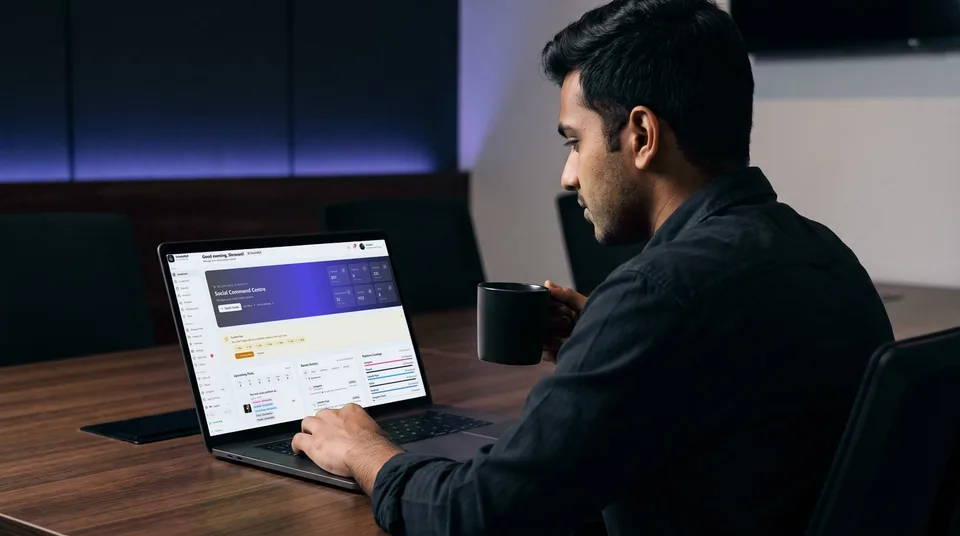
A centralized interface that provides a summary of social media performance and management tools. Example: The SchedulifyX dashboard showing your upcoming posts and recent engagement trends.
28. DM (Direct Message)
A private communication between two or more users on a social platform. Example: A customer DMing a brand to ask about a shipping delay.
29. Discovery Engine
The modern iteration of the social feed that prioritizes content discovery over social connection. Example: The Instagram Explore page, which introduces you to new accounts based on your interests.
30. Distribution
The process of getting your content in front of as many relevant eyes as possible. Example: Sharing a blog post across LinkedIn, X, and Facebook to maximize reach.
31. Digital Footprint
The trail of data you leave behind on the internet. Example: Every post, comment, and like a brand makes contributes to its digital footprint.
32. Direct Response
Marketing designed to generate an immediate action from the consumer. Example: An Instagram ad with a "Shop Now" button and a 24-hour discount code.
33. Disruption
Content that breaks the pattern of a user's scrolling behavior. Example: Using a bright, high-contrast thumbnail in a sea of muted colors to grab attention.
34. Dwell Time
The amount of time a user spends looking at a post before scrolling past. Example: A long-form LinkedIn post that keeps a user reading for 45 seconds.
35. Dynamic Content
Content that changes based on the user's behavior, preferences, or location. Example: An ad that shows winter coats to users in New York and swimsuits to users in Miami.
36. Engagement Rate
A metric used to gauge the level of interaction an audience has with a piece of content. Example: (Likes + Comments + Shares) / Total Followers * 100.
37. Evergreen Content
Content that remains relevant and useful for a long period. Example: A blog post titled "How to Set Up a Social Media Strategy" that is still accurate two years later.
38. Employee Advocacy
When employees promote their company's brand on their personal social media accounts. Example: A software engineer sharing a "Life at the Office" video on LinkedIn.
39. Earned Media
Publicity gained through promotional efforts other than paid advertising. Example: A customer tweeting a rave review of your product without being asked.
40. Emoji
Small digital icons used to express an idea or emotion. Example: Using the 🔥 emoji to signify that a new product launch is "hot."
41. Ephemeral Content
Content that is only available for a short period. Example: Instagram Stories that disappear after 24 hours.
42. Ethics (AI)
The moral principles governing the use of AI in marketing. Example: Disclosing that a model in an ad was generated by AI rather than being a real person.
43. Event Tracking
Monitoring specific actions users take on a website after clicking a social link. Example: Tracking how many people added an item to their cart after clicking an Instagram ad.
44. Exit Rate
The percentage of users who leave a website from a specific page. Example: Seeing that 80% of social traffic leaves after visiting the "Pricing" page.
45. Feed
The constantly updating list of content on a social media platform. Example: Your Facebook newsfeed showing posts from friends and sponsored ads.
46. FOMO (Fear Of Missing Out)
A psychological trigger used in marketing to encourage quick action. Example: "Only 5 spots left for our webinar!"
47. Follower
A user who has subscribed to see your updates in their feed. Example: A brand having 10,000 followers on TikTok.
48. Frequency
The number of times a specific user sees your ad over a period. Example: An ad frequency of 3 means the average user saw your ad three times.
49. Filter
A software effect applied to photos or videos to change their appearance. Example: Using an AR filter on Instagram to make it look like you're wearing digital makeup.
50. First-Party Data
Information a company collects directly from its customers. Example: Email addresses collected through a sign-up form on your social profile.
G - I: Growth Hacking, Hashtags, and Insights
51. Geotag
An electronic tag that assigns a geographical location to a piece of content. Example: Tagging "Paris, France" in your travel vlog to reach people searching for that location.
52. GIF
A lossless format for image files that supports both animated and static images. Example: Sending a funny animated GIF in response to a customer's tweet.
53. Gated Content
Valuable content that is hidden behind a lead capture form. Example: A "Social Media Guide" that requires an email address to download.
54. Growth Hacking
A subfield of marketing focused on rapid growth through low-cost, creative strategies. Example: Creating a viral referral loop where users get a discount for inviting three friends to follow the brand.
55. Gamification
The application of game-design elements in non-game contexts. Example: A brand creating a "Social Media Scavenger Hunt" where followers find clues in different posts.
56. Generation Alpha
The demographic cohort following Generation Z, born roughly between 2010 and 2025. Example: Marketing toys or educational apps specifically for children who are digital natives.
57. Geofencing
Using GPS technology to create a virtual geographic boundary, enabling software to trigger a response when a mobile device enters or leaves a particular area. Example: Sending a social media ad notification when a user walks within 500 meters of your store.
58. Goal
A specific, measurable objective for your social media strategy. Example: "Increase website traffic by 20% in Q3."
59. Greenwashing (Social)
The practice of making misleading claims about the environmental benefits of a product or company on social media. Example: A fast-fashion brand claiming to be "eco-friendly" while using non-sustainable materials.
60. Grid
The layout of a user's profile, specifically on Instagram. Example: Planning your posts so that they create a cohesive visual pattern on your grid.
61. Hashtag
A word or phrase preceded by a hash sign (#), used to identify messages on a specific topic. Example: Using #SocialMediaGlossary to categorize your educational posts.
62. Handle
A user's unique username on a social media platform. Example: @SchedulifyX is our handle on all major platforms.
63. Hook
The first few seconds of a video or the first line of a caption designed to grab attention. Example: "Stop scrolling if you want to double your followers!"
64. Hybrid Events
Events that combine a physical location with a virtual social media component. Example: A conference happening in London that is also live-streamed on LinkedIn.
65. Handoff
The moment a social media lead is passed to a sales representative. Example: A customer asking for a quote in DMs and being connected to an account manager.
66. Hard Sell
An aggressive way of selling that is direct and insistent. Example: A post that says "BUY NOW OR MISS OUT FOREVER!"
67. Header
The large banner image at the top of a social media profile. Example: A LinkedIn header showing a company's team and mission statement.
68. Heatmap
A data visualization tool that shows where users click or hover on a page. Example: Using a heatmap to see that most users click the "Contact" link in your bio.
69. High-Value Content
Content that provides significant utility, education, or entertainment to the audience. Example: A 2000-word social media vocabulary guide.
70. Human-Centric Marketing
Marketing that focuses on the human experience rather than just the product features. Example: Sharing stories about the people who make your products.
71. Impressions
The total number of times a piece of content was displayed, regardless of whether it was clicked. Example: Your ad being shown 5,000 times means it has 5,000 impressions.
72. Influencer Marketing
Partnering with individuals who have a dedicated social following to promote products. Example: A fitness brand paying a popular YouTuber to use their protein powder in a video.
73. Insights
The native analytics tools provided by platforms like Instagram and Facebook. Example: Checking "Instagram Insights" to see your most popular post of the week.
74. In-feed
Content that appears directly within the main scrolling area of a platform. Example: An in-feed video ad on TikTok that looks like a regular user post.
75. Inbound Marketing
A technique for drawing customers to products and services via content marketing and social media. Example: Writing helpful tips on LinkedIn so people naturally discover your brand.
J - L: Journeys, KPIs, and Listening
76. J-Curve
A trend line that shows a sharp increase after a period of little to no growth. Example: A new TikTok account that has 100 followers for months then suddenly hits 100k after one viral video.
77. Journey (Customer)
The complete experience a customer has with a brand, from first touchpoint to purchase. Example: Seeing an ad, following the page, reading a blog, and then buying.
78. Joint Venture
A social media collaboration between two brands for mutual benefit. Example: SchedulifyX partnering with a graphic design tool for a combined webinar.
79. KPI (Key Performance Indicator)
A quantifiable measure used to evaluate the success of an organization in meeting objectives. Example: "Cost Per Lead" is a common KPI for social media ad managers.
80. Keyword
A specific word or phrase used in social media bios and captions to improve discoverability. Example: Using "AI Social Media Tool" as a keyword in your profile name.
81. KOL (Key Opinion Leader)
An expert in a specific field whose opinion is trusted by their audience. Example: A dermatologist reviewing skincare products on TikTok.
82. Knowledge Graph
A programmatic way platforms connect entities (people, places, things) to provide better search results. Example: Google showing your brand's social profiles in a sidebar when someone searches your name.
83. Lookalike Audience
An advertising audience composed of people who share characteristics with your existing customers. Example: Creating a Facebook audience that "looks like" people who have already purchased from your site.
84. Social Listening
The process of monitoring social media channels for mentions of your brand, competitors, and industry keywords. Example: Setting up an alert for your brand name to catch customer complaints before they go viral.
85. Live Streaming
Broadcasting live video content to an audience in real-time. Example: Hosting a live Q&A session on Instagram Live.
M - O: Metaverse, Metrics, and Optimization
86. Mention
Using the @ symbol to tag another user in a post or comment. Example: "Thanks for the shoutout @SchedulifyX!"
87. Metric
A system or standard of measurement. Example: "Follower growth" is a metric used to track brand popularity.
88. Micro-Influencer
An influencer with a smaller but highly engaged audience (typically 10k-50k followers). Example: A local foodie who has 15,000 followers and high comment engagement.
89. Metaverse Social
Interacting with others in a persistent, shared 3D virtual space. Example: Attending a brand's virtual store opening in Decentraland.
90. Meme
An image, video, or piece of text, typically humorous in nature, that is copied and spread rapidly by internet users. Example: A brand using a trending "Distracted Boyfriend" meme to explain their product's benefits.
91. Native Advertising
Ads that match the look, feel, and function of the media format in which they appear. Example: A sponsored article on Buzzfeed that looks like a regular listicle.
92. Newsfeed
The central system through which users see content from their connections. Example: Scrolling through your LinkedIn newsfeed to see industry updates.
93. Niche
A specialized segment of the market for a particular kind of product or service. Example: A social media account dedicated entirely to "Vegan Baking for Beginners."
94. Organic Reach
The number of people who see your content without you paying for it. Example: A post reaching 500 people naturally through shares and the algorithm.
95. Owned Media
Communication channels that are within one's control, such as a website or a blog. Example: Your brand's official Facebook page.
96. Optimization
The process of making a social media profile or post as effective as possible. Example: Tweaking your bio keywords to show up higher in search results.
97. Omnichannel
A multi-channel approach to sales that seeks to provide the customer with a seamless shopping experience. Example: A customer seeing a product on Instagram, receiving an email about it, and then buying it in-store.
98. On-page SEO
Optimizing elements on a specific webpage to rank higher in search engines. Example: Including your focus keyword in the H1 tag of your blog post.
99. Open Graph
A protocol that allows any web page to become a rich object in a social graph. Example: Ensuring the right image and title appear when someone shares your website link on Facebook.
100. Opt-in
The action of a user agreeing to receive communications from a brand. Example: A follower signing up for your newsletter via a link in your bio.
P - R: Paid Media, Reach, and Retargeting
As we move into the middle of our social media glossary, it's important to recognize that organic strategies must be paired with paid efforts. Terms like "Paid Media" and "Retargeting" are essential for scaling your brand in 2026. Paid media refers to any marketing you pay for, such as social ads or sponsored content. Retargeting is the practice of showing ads to people who have already interacted with your brand, keeping you top-of-mind.
S - U: Social Commerce, SchedulifyX, and UGC
The latter half of the decade has seen the explosion of Social Commerce—the ability to buy products directly within social apps. This is where SchedulifyX shines. By using an AI-powered scheduling platform, you can ensure your shoppable posts are going live when your audience is most active. Additionally, User-Generated Content (UGC) remains the "gold standard" for social proof. When your customers post about your product, it carries more weight than any traditional advertisement could.
V - Z: Viral Loops, Web 3.0, and Zero-Click Content
Finally, we reach the end of our social media terms 2026 guide. Zero-Click Content is perhaps the most important concept to master this year. Platforms like LinkedIn and X are increasingly penalizing posts that try to drive traffic away from their site. To win, you must provide value on the platform. A viral loop is a mechanism where each new user invites more users, creating exponential growth. Understanding Web 3.0 is also vital, as decentralized social networks begin to challenge the dominance of traditional tech giants.
Conclusion: Staying Ahead with SchedulifyX
Mastering this social media glossary is the first step toward becoming a world-class marketer in 2026. However, knowing the terms is only half the battle; you also need the right tools to execute your strategy efficiently. This is where SchedulifyX comes in.
SchedulifyX is an AI-powered social media scheduling platform designed for the modern marketer. It helps you manage your marketing terminology by automating your content calendar, optimizing your posting times for maximum engagement rate, and providing deep insights into your performance. Whether you are dealing with Dark Social or trying to maximize Organic Reach, SchedulifyX provides the data and automation you need to succeed.
Ready to put your social media vocabulary into practice? Start your free trial with SchedulifyX today and take the guesswork out of your social media marketing strategy.