10 Social Media Trends Shaping Q4 2026 and the Road into 2027
SchedulifyX Team · August 26, 2026
Explore the top 10 social media trends shaping Q4 2026. From AI co-creation to spatial computing, discover how to future-proof your strategy for 2027.
As we approach the final quarter of 2026, the digital landscape is undergoing a massive paradigm shift. The convergence of advanced artificial intelligence, immersive hardware, and shifting user behaviors is rewriting the rules of digital engagement. For brands, marketers, and creators, staying ahead of social media trends Q4 2026 is no longer just about maintaining relevance—it is about survival in an increasingly fragmented and highly competitive ecosystem.
The future of social media is evolving rapidly. We are moving away from passive scrolling and broadcasting toward hyper-personalized, immersive, and co-created experiences. In this comprehensive guide, we will explore the top 10 trends that will dominate the end of 2026 and set the foundation for 2027. Whether you are looking for the latest marketing trends 2026 or actionable social media predictions, this article will equip you with the insights needed to adapt and thrive.
1. The Rise of AI Co-Creation in Content Generation
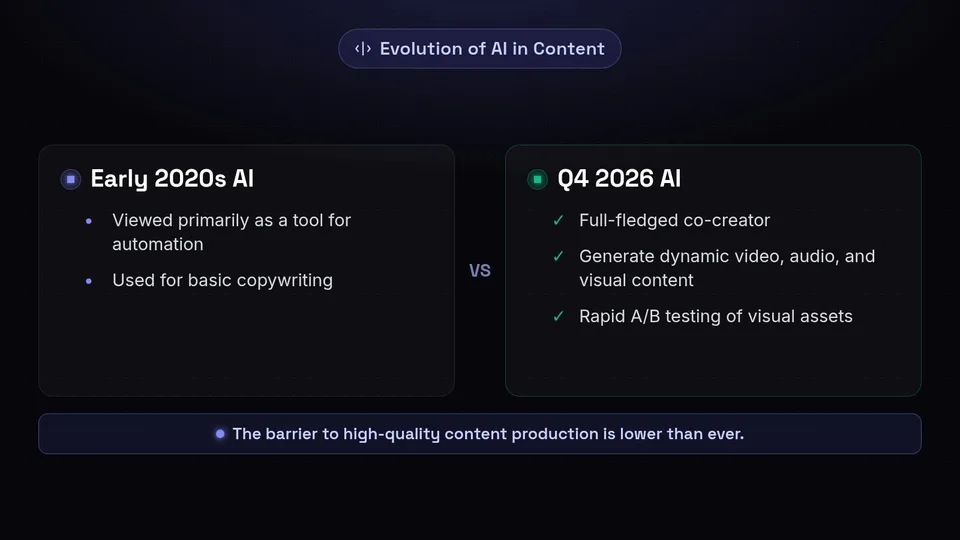
In the early 2020s, AI was viewed primarily as a tool for automation and basic copywriting. As we look at social media trends Q4 2026, AI has evolved from a simple assistant into a full-fledged co-creator. Social platforms have deeply integrated generative AI directly into their creation suites, allowing users to collaborate with AI in real-time to produce dynamic video, audio, and visual content.
This shift means that the barrier to high-quality content production is lower than ever. Brands are now leveraging AI to generate multiple variations of a single campaign, tailored instantly to different demographics, cultural nuances, and platform formats. The focus has shifted from how to create content to what unique perspective the human creator brings to the AI collaboration.
Actionable Strategies for Brands
- Embrace Native AI Tools: Utilize platform-specific AI generation tools for rapid A/B testing of visual assets.
- Focus on Prompt Engineering: Train your social media teams in advanced prompt engineering to ensure your brand voice remains consistent even when AI is doing the heavy lifting.
- Maintain Human Oversight: While AI can generate the bulk of the content, human empathy, humor, and cultural context are necessary to prevent content from feeling sterile.
2. Spatial Computing Content Takes Center Stage

With the widespread adoption of next-generation mixed reality headsets and AR glasses, spatial computing is fundamentally altering how users consume social media. Traditional 2D feeds are making way for 3D, immersive environments. Platforms are rolling out features that allow users to "step into" a post, explore a 3D product model, or attend a virtual live stream as if they were in the front row.
This is one of the most critical marketing trends 2026. Brands that continue to rely solely on flat images and standard video will find their engagement rates dropping. Spatial content offers unprecedented levels of interaction, allowing users to manipulate virtual objects, try on digital clothing, and interact with brand mascots in their physical space via augmented reality.
Actionable Strategies for Brands
- Invest in 3D Asset Creation: Begin converting your top-selling products into 3D models compatible with major spatial computing platforms.
- Create Immersive Experiences: Develop AR filters and spatial environments that tell a story rather than just displaying a product.
- Partner with Spatial Creators: Collaborate with influencers who specialize in mixed reality content to reach early adopters in this space.
3. Hyper-Personalized Feeds Driven by Predictive AI
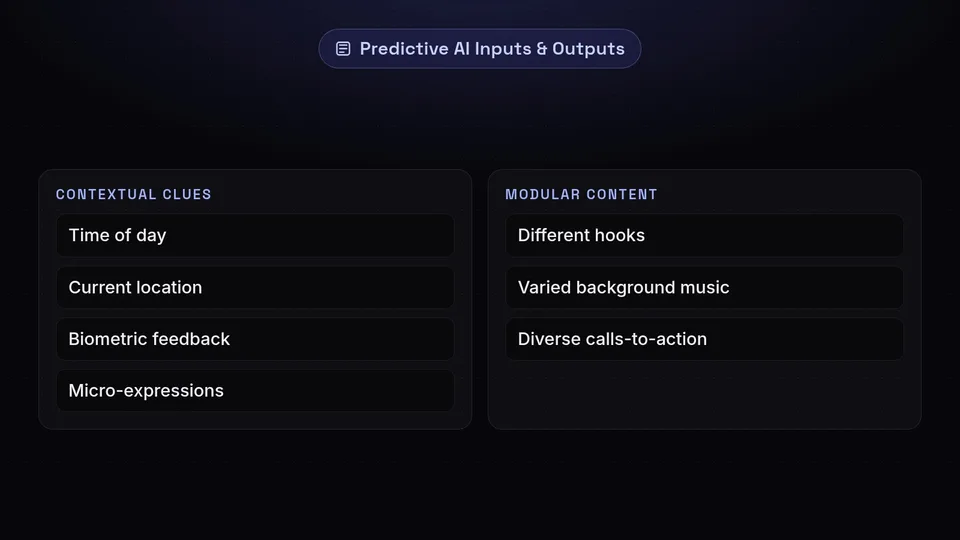
The era of the chronological feed is long gone, and even the engagement-based algorithm is getting a massive upgrade. In Q4 2026, predictive AI is taking personalization to a hyper-individualized level. Algorithms are no longer just reacting to past behavior; they are predicting future desires based on contextual clues such as time of day, current location, biometric feedback (via smart wearables), and even micro-expressions captured by front-facing cameras.
This level of hyper-personalization means that no two users will ever see the same version of a brand's campaign. The future of social media lies in dynamic content assembly, where a single post might display different imagery, music, and copy depending on the exact emotional state and context of the viewer.
Actionable Strategies for Brands
- Develop Modular Content: Create campaigns with interchangeable elements (different hooks, varied background music, diverse calls-to-action) that algorithms can mix and match.
- Leverage Contextual Marketing: Tailor your messaging to align with micro-moments, such as commuting, working out, or relaxing at home.
- Prioritize Emotional Resonance: Since algorithms are optimizing for emotional engagement, ensure your content evokes a strong, clear feeling.
4. Voice-First Social and Audio Interactions
Visual fatigue is a real phenomenon in 2026. As a result, voice-first social interactions have surged in popularity. Driven by the ubiquity of smart hearables and screenless smart devices, users are increasingly turning to audio-only social networks, voice notes in direct messages, and interactive podcasts.
Voice interactions offer a level of intimacy and nuance that text simply cannot convey. Brands are beginning to realize that their "sonic identity" is just as important as their visual logo. From custom brand voices generated by AI to interactive voice-activated campaigns, audio is a massive frontier for the end of 2026.
Actionable Strategies for Brands
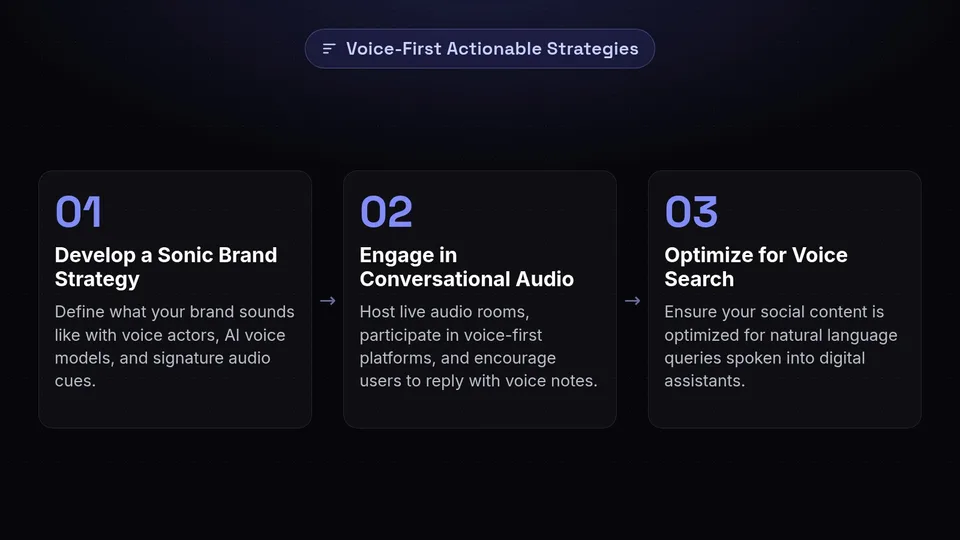
- Develop a Sonic Brand Strategy: Define what your brand sounds like. This includes voice actors, AI voice models, and signature audio cues.
- Engage in Conversational Audio: Host live audio rooms, participate in voice-first platforms, and encourage users to reply with voice notes.
- Optimize for Voice Search: Ensure your social content and profiles are optimized for natural language queries spoken into digital assistants.
5. The Mainstream Adoption of Decentralized Platforms
One of the most significant social media predictions realized in 2026 is the mainstreaming of decentralized social networks. Users, frustrated by algorithmic manipulation, data privacy concerns, and sudden platform policy changes, have migrated en masse to the Fediverse and other blockchain-based or federated networks.
These emerging social platforms operate on open protocols, giving users ownership of their data and the ability to move their audience seamlessly between different apps. For marketers, this presents a unique challenge: there is no central authority to buy ads from. Instead, marketing on decentralized platforms requires authentic community building, organic engagement, and a deep understanding of distinct server cultures.
Actionable Strategies for Brands
- Establish a Federated Presence: Claim your brand's identity on major decentralized protocols and begin building a native presence.
- Focus on Organic Value: Since traditional paid advertising is limited or non-existent on these platforms, your growth must be driven by providing genuine value, education, or entertainment.
- Respect Micro-Cultures: Decentralized networks are often fractured into highly specific communities. Tailor your approach to respect the norms of each instance or server.
6. Community-Commerce Convergence
Social commerce has evolved beyond simple "buy buttons" on posts. In Q4 2026, we are witnessing the complete convergence of community and commerce. Purchasing decisions are now highly collaborative, driven by real-time group chats, interactive live streams, and community-curated storefronts.
This trend is characterized by "group-buy" mechanics, where communities unlock discounts by purchasing together, and "creator-led micro-brands," where influencers co-create products with their audience in real-time. The transaction is no longer the end of the funnel; it is a shared social event that strengthens community bonds.
Actionable Strategies for Brands
- Implement Group Purchasing Incentives: Offer tiered discounts based on how many members of a specific social community purchase a product.
- Host Interactive Shopping Events: Move beyond static product catalogs and host live, interactive shopping streams where viewers can influence product features or bundles.
- Empower Community Curators: Allow your top fans to create personalized digital storefronts of your products, rewarding them with a share of the revenue.
7. The Shift Toward Ephemeral Micro-Communities
The era of broadcasting to millions is losing its appeal for the average user. Instead, there is a massive shift toward "ephemeral micro-communities"—small, highly engaged groups that form around a specific topic, event, or shared interest, and then dissolve once their purpose is fulfilled.
These communities exist in direct messages, private group chats, and temporary server spaces. They are characterized by high trust, intense engagement, and a lack of algorithmic interference. For brands, penetrating these "dark social" spaces requires a shift from public broadcasting to facilitating private conversations.
Actionable Strategies for Brands
- Create Exclusive Spaces: Host private, invite-only digital spaces for your most loyal customers, offering them early access and behind-the-scenes content.
- Facilitate, Don't Dictate: Provide the tools, topics, and incentives for users to talk about your brand in their private chats, rather than trying to force public shares.
- Leverage Ephemeral Content: Use disappearing content to create a sense of urgency and exclusivity that encourages immediate discussion in micro-communities.
8. Zero-Click Content and Native Value Delivery
Social media platforms in 2026 are more aggressive than ever about keeping users within their ecosystems. Algorithms actively penalize posts containing external links. Consequently, "zero-click content"—content that delivers its full value natively within the feed without requiring the user to click away—has become the gold standard.
This requires a fundamental shift in how marketers measure success. If driving traffic to a website is no longer viable, the focus must shift to building brand equity, capturing leads natively, and driving in-app conversions. Long-form text posts, comprehensive native videos, and interactive carousels are essential tools for zero-click strategies.
Actionable Strategies for Brands
- Deliver the Punchline Upfront: Don't tease information; give the audience the full story, framework, or solution directly in the post.
- Utilize Native Lead Gen: Use platform-native forms and direct messaging automation to capture leads without forcing users to a landing page.
- Redefine KPIs: Shift your metrics from click-through rates (CTR) to native engagement, watch time, and in-app sentiment analysis.
9. Authenticity Verification and Deepfake Labels
With the explosion of AI-generated content, consumer trust is at an all-time low. In Q4 2026, authenticity is a premium currency. Users are demanding transparency, and platforms are responding by implementing rigorous authenticity verification protocols, blockchain-based content stamping, and mandatory "AI-generated" labels.
Brands must navigate this landscape carefully. While AI is a powerful tool for creation, attempting to pass off synthetic content as real human interaction will result in severe backlash. Establishing a "chain of trust" and proving the human element behind the brand is critical for maintaining credibility.
Actionable Strategies for Brands
- Embrace Transparency: Voluntarily label AI-assisted content. Consumers appreciate honesty more than they dislike synthetic media.
- Highlight Behind-the-Scenes: Show the messy, unpolished, and distinctly human side of your business. Real human faces and unscripted moments build trust.
- Adopt Content Credentials: Utilize cryptographic watermarking and content credentials to prove the origin and authenticity of your brand's original assets.
10. Gamified Social Loyalty Programs
Traditional points-based loyalty programs are being replaced by gamified social experiences. Brands are turning engagement into a game, where users earn digital collectibles, exclusive badges, and status within the community by interacting with content, participating in challenges, and co-creating with the brand.
These gamified systems tap into the human desire for achievement and recognition. By integrating these mechanics directly into social platforms, brands can turn passive followers into active advocates, driving sustained engagement over long periods.
Actionable Strategies for Brands
- Introduce Digital Collectibles: Offer limited-edition digital assets or badges for users who attend live events, share campaigns, or provide valuable feedback.
- Create Social Challenges: Launch interactive challenges with leaderboards, encouraging users to compete for recognition and exclusive rewards.
- Reward Co-Creation: Provide tangible benefits to users who submit user-generated content or help ideate new products.
How to Prepare Your Strategy for 2027
The transition from Q4 2026 into 2027 will not be marked by a single disruptive event, but rather the compounding effect of these ten trends. To future-proof your strategy, you must stop viewing social media as a static billboard and start treating it as a dynamic, interactive ecosystem.
"The brands that win in 2027 will be those that seamlessly blend AI efficiency with profound human empathy, operating effortlessly across 2D feeds, spatial environments, and decentralized networks."
Begin by auditing your current content pipeline. Are you overly reliant on external links? Is your content strictly two-dimensional? Are you treating AI as a cheap shortcut rather than a creative collaborator? Answering these questions honestly will highlight your vulnerabilities and provide a roadmap for adaptation.
Furthermore, invest in continuous learning for your team. The tools and platforms dominating the emerging social platforms landscape today require new skill sets, from 3D modeling and spatial design to prompt engineering and community moderation.
Conclusion: Future-Proofing with SchedulifyX
Navigating the complex web of social media trends Q4 2026 can feel overwhelming. From managing spatial content to maintaining a presence across decentralized networks and hyper-personalized algorithms, the demands on marketers have never been higher.
This is where having the right technology stack becomes your ultimate competitive advantage. SchedulifyX is an AI-powered social media scheduling platform designed specifically for the future of digital marketing. With built-in predictive analytics, seamless integration with emerging spatial and decentralized platforms, and advanced AI co-creation tools, SchedulifyX empowers you to execute complex, multi-dimensional campaigns with ease.
Don't let the future of social media leave your brand behind. Embrace these trends, adapt your strategies, and leverage the power of SchedulifyX to dominate the digital landscape in 2027 and beyond. Start your journey today and transform how you connect with your audience.