What is Reach vs Impressions? Definition, Examples & Importance
Confused about what is reach vs impressions? Discover clear definitions, real-world examples, and why tracking both matters for your social media strategy.
SchedulifyX is the AI-powered social media command center built for creators, businesses, and agencies. Schedule posts across 10+ platforms, generate content with 9 specialized AI agents, collaborate with your team using approval workflows, analyze performance with deep analytics, and manage all social engagement from a unified inbox. Trusted by professionals worldwide — free plan available, paid plans from
Navigating the landscape of social media analytics can often feel like learning a new language. For marketers, content creators, and business owners, understanding exactly how your audience interacts with your content is paramount. Yet, two of the most foundational metrics are frequently conflated, leading many to ask: what is reach vs impressions? Definition, examples and why it matters form the bedrock of any successful digital strategy.
While both metrics provide insight into your content's visibility, they measure fundamentally different aspects of user behaviour. Grasping this distinction is essential for accurately interpreting your analytics, refining your content calendar, and ultimately driving meaningful engagement across your social channels.
Core Definitions
Defining Reach and Impressions
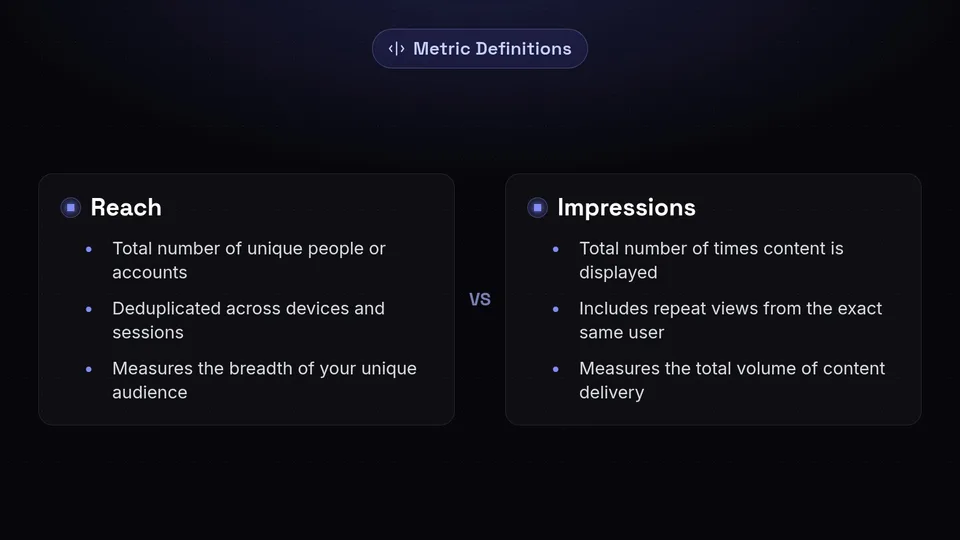
To establish a solid foundation, we must first look at the precise definitions of these two metrics. While social media platforms occasionally update their measurement policies, the core distinction between reach and impressions remains consistent across the industry.
What is Reach?
Reach is defined as the total number of unique people or accounts that see your content or an ad on their screen at least once. Crucially, this metric is deduplicated across devices and sessions.
For example, as noted in a December 2024 update by Nextdoor Business, Instagram specifically defines reach as "the number of unique accounts that have seen your content on screen at least once". It measures the breadth of your unique audience.
What are Impressions?
Impressions represent the total number of times your content or an ad is displayed on a screen. This includes repeat views from the exact same user, regardless of whether the content is actually clicked or interacted with.
Impressions measure the total volume of content delivery. Every single time your post renders on a device, an impression is logged, making it a measure of frequency rather than unique viewership.
Practical Application
Real-World Examples of Reach vs Impressions
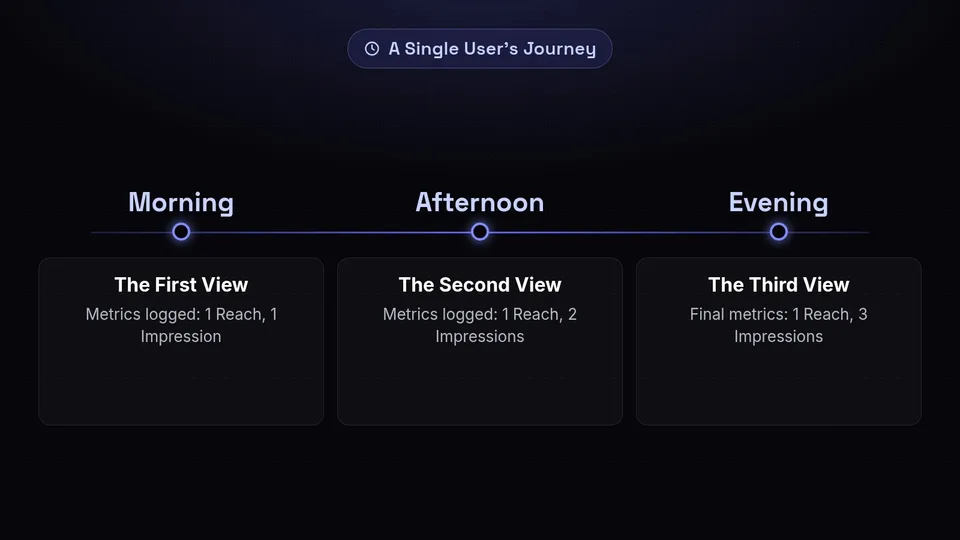
The easiest way to understand the relationship between these two metrics is through a practical display mechanism. Let us examine how a single user's interaction translates into your analytics dashboard.
The First View
A user scrolls through their feed on their morning commute and pauses on your latest post. At this moment, your analytics log 1 Reach (one unique account) and 1 Impression (one display).
The Second View
Later that afternoon, the same user opens the app again. The algorithm serves them your post a second time. Because they have already been counted as a unique viewer, your Reach remains at 1. However, your Impressions increase to 2.
The Third View
In the evening, the user searches for your profile to show the post to a friend. The post is displayed again. Your final metrics for this single user's journey will log a Reach of 1 unique account and an Impression count of 3.
Key Takeaway
Your impression count will always be equal to or greater than your reach. It is mathematically impossible to have a higher reach than impressions, as every unique view (reach) inherently generates at least one display (impression).
Metric Variations
Organic vs. Paid Reach

When diving deeper into your metrics, particularly if you are running comprehensive campaigns, you will encounter the distinction between organic and paid reach. Understanding this split is vital for evaluating the return on investment of your marketing budget.
- Organic Reach: This counts the unique users who see your unpaid content naturally in their feeds. It is a strong indicator of algorithmic favourability and the baseline health of your audience engagement.
- Paid Reach: This counts the unique users who see your content because it was served to them via paid advertising or boosted posts.
By monitoring both through robust analytics, you can determine whether your budget is genuinely expanding your audience or simply serving content to users who would have seen it organically anyway.
Strategic Importance
Why Tracking Both Metrics Matters

Now that we have established the definitions and mechanics, we must address the strategic question: why does this matter for your social media growth?
Why Reach Matters
Reach is your primary barometer for brand awareness. It gauges the total spread and breadth of your message. If your goal is to acquire new customers, expand your brand footprint, or launch a new product, increasing your reach is essential. It tells you exactly how many individual people are being exposed to your messaging, making it a critical metric for measuring new audience growth.
Why Impressions Matter
Impressions track how frequently your content is served. While it might seem less valuable than unique reach, frequency is a vital component of marketing psychology. Users often need to see a message multiple times before taking action. Furthermore, impressions provide critical feedback on algorithmic performance and content placement.
Master Your Social Media Metrics
Stop guessing about your content's performance. Use SchedulifyX's unified analytics to track reach, impressions, and engagement across all your platforms in one intuitive dashboard.
Start Your Free Trial →Data Analysis
The Reach-to-Impression Ratio
Evaluating reach and impressions in isolation only tells half the story. The true analytical power comes from comparing the two metrics to understand audience behaviour and content resonance.
An informal industry benchmark (frequently discussed in digital marketing communities as recently as April 2026) notes a specific ratio mechanism: when impressions reach 1.5 times the reach metric, content exhibits significant repeat viewings by the same audience.
Interpreting the Data
Understanding this ratio helps you diagnose the health of your engagement rates:
- High Reach, Low Impressions (Ratio close to 1:1): Your content is spreading widely to new users, but they are only viewing it once. This is excellent for initial brand awareness but may indicate the content isn't compelling enough to warrant a second look or share.
- High Impressions, Low Reach (Ratio of 1:2 or higher): A smaller, dedicated group of users is seeing your content multiple times.
Pro Tip: Pay close attention to high impressions paired with low engagement. As noted by analytics experts, if users are repeatedly exposed to your content (high impressions) but are not clicking, liking, or commenting, it indicates that your audience is experiencing ad fatigue or that the content is failing to inspire action despite being highly visible.
Platform Nuances
How Different Platforms Handle These Metrics
While the fundamental definitions of reach and impressions remain constant, the way different platforms prioritise and display this data can vary. Whether you are scheduling content to Facebook, LinkedIn, or TikTok, understanding the platform context is vital.
For instance, video-centric platforms like YouTube place a heavy emphasis on impressions to calculate Click-Through Rate (CTR). An impression is logged when a thumbnail is shown to a user, and the CTR measures how often those impressions result in a view. Conversely, platforms like Instagram often highlight Reach in their primary insights dashboards, as unique account visibility is highly prized by creators and brands alike.
| Metric Characteristic | Reach | Impressions |
|---|---|---|
| Measures Unique Users | ✔ | ✗ |
| Counts Repeat Views | ✗ | ✔ |
| Best for measuring Awareness | ✔ | ✗ |
| Best for measuring Frequency | ✗ | ✔ |
Actionable Strategy
Optimising Your Strategy Using Reach and Impressions
Understanding "what is reach vs impressions? definition, examples and why it matters" is only the first step. The true value lies in applying this knowledge to your scheduling and content strategies.
- Analyse Peak Times: Use your impression data to determine when your content is served most frequently. Align your posting schedule with these high-velocity windows to maximise initial visibility.
- Monitor Ad Fatigue: If you are running paid campaigns and notice your impression-to-reach ratio climbing rapidly without a corresponding increase in conversions, it is time to refresh your creatives in your media library.
- Tailor Content for Shareability: To increase organic reach, focus on creating content that users want to share with their own networks. Shares bypass algorithmic limitations, exposing your brand to entirely new, unique accounts.
- Leverage Team Insights: Use team collaboration tools to share these metric insights across your marketing department. Ensure everyone understands the difference so that KPIs are set accurately.
By clearly distinguishing between the unique audience you are acquiring (reach) and the volume of times your message is being delivered (impressions), you can make informed, data-driven decisions that propel your social media presence forward. Whether you are reporting to stakeholders via a client portal or adjusting your daily strategy, these two metrics remain the most vital signs of your digital health.
Sources
Facts checked against the sources below on October 15, 2026.
Get started free — no credit card required.