Authentic Social Media in 2026: The Unfiltered Content Trend
SchedulifyX Team · August 2, 2026
Explore the authentic social media movement of 2026. Learn how the unfiltered content trend impacts brand strategy and balance real vs polished content.
Introduction: The Death of the Highlight Reel
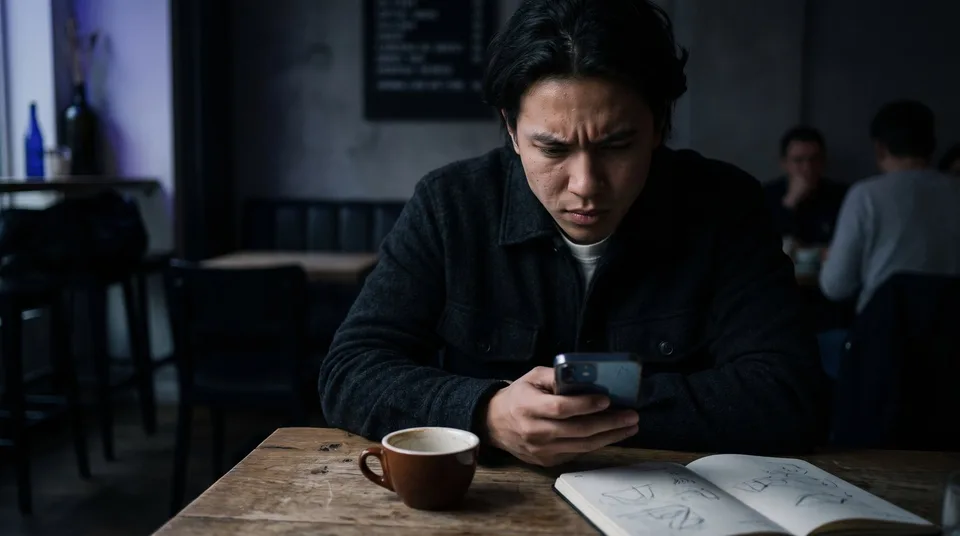
As we navigate the digital landscape of 2026, the era of the perfectly curated, hyper-edited social media feed is largely behind us. For over a decade, platforms like Instagram and Pinterest conditioned users and brands alike to present a flawless, aspirational version of reality. This "highlight reel" approach dictated marketing budgets, content strategies, and consumer expectations. However, a seismic shift has occurred. The authentic social media movement, catalyzed by platforms like BeReal in the early 2020s, has matured from a fleeting Gen Z fad into the foundational pillar of modern digital communication.
Today, audiences crave rawness, vulnerability, and truth. The unfiltered content trend has fundamentally rewired how users interact with digital platforms, demanding that brands step down from their pedestals and engage in eye-level, genuine conversations. In 2026, social media authenticity is no longer just a buzzword; it is a measurable metric of brand equity. Consumers are equipped with highly sensitive "BS detectors," instantly scrolling past anything that feels overly manufactured, heavily scripted, or artificially glossed over.
This comprehensive analysis explores the trajectory of this movement, examining how the unfiltered content trend is actively reshaping brand strategy. We will dive deep into the nuances of BeReal marketing, analyze the psychological drivers behind social media authenticity in 2026, and definitively answer the burning question keeping marketers awake at night: in the battle of real vs polished content, does traditional, high-production marketing still have a place?
The Evolution of the Authentic Social Media Movement
From Aspirational to Relatable
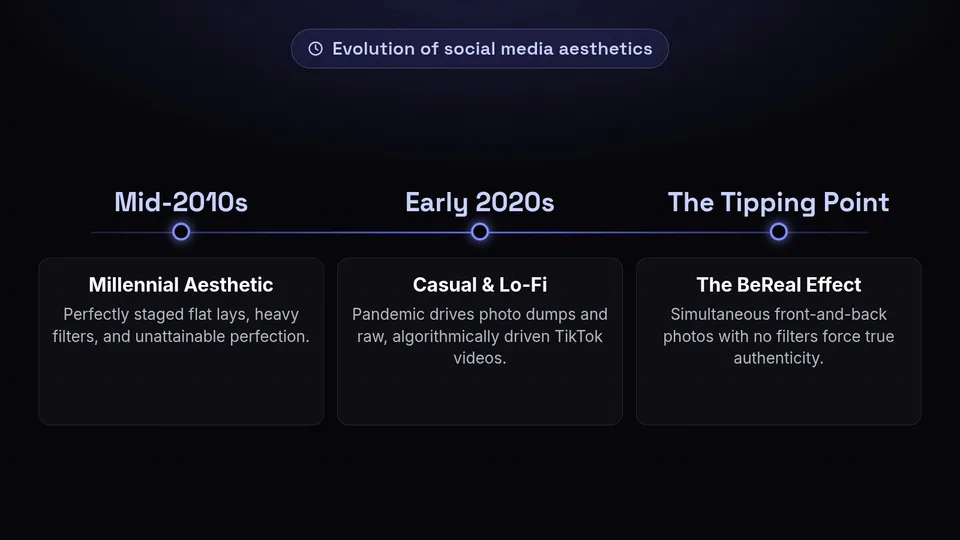
To understand the current state of authentic social media, we must look at how we got here. The mid-2010s were defined by the "Millennial Aesthetic"—think perfectly staged flat lays, cohesive grid colors, heavy filters, and an overarching sense of unattainable perfection. Brands spent millions replicating this aesthetic, hiring professional photographers and utilizing high-end editing software for every single post.
However, as the 2020s dawned, a collective fatigue set in. The pandemic accelerated a desire for human connection over superficial perfection. People were stuck in their homes, dealing with real-world crises, and the polished influencer lifestyle suddenly felt tone-deaf and alienating. Enter the "casual Instagram" trend, photo dumps, and the meteoric rise of TikTok, which prioritized algorithmically driven entertainment and raw, low-fi video over aesthetic perfection.
The BeReal Effect: A Paradigm Shift
The true tipping point, however, was the explosion of BeReal. By prompting users to post a simultaneous front-and-back photo within a random two-minute window each day—with no filters and no editing—BeReal forced authenticity. It stripped away the ability to curate.
"BeReal didn't just introduce a new app feature; it introduced a new digital philosophy. It proved that millions of users actively wanted to consume and create content that was mundane, unedited, and unapologetically real." - Digital Sociologist, 2026
While BeReal itself has evolved, the "BeReal Effect" permanently altered the ecosystem. Competitors scrambled to integrate dual-camera features and spontaneous posting prompts. More importantly, it changed consumer expectations. If users were sharing their unwashed hair and messy bedrooms with their friends, they no longer wanted to see brands pretending to exist in a flawless, plastic universe. The authentic social media movement had officially taken over the mainstream.
Understanding the Unfiltered Content Trend in 2026
The Consumer Psychology of 2026
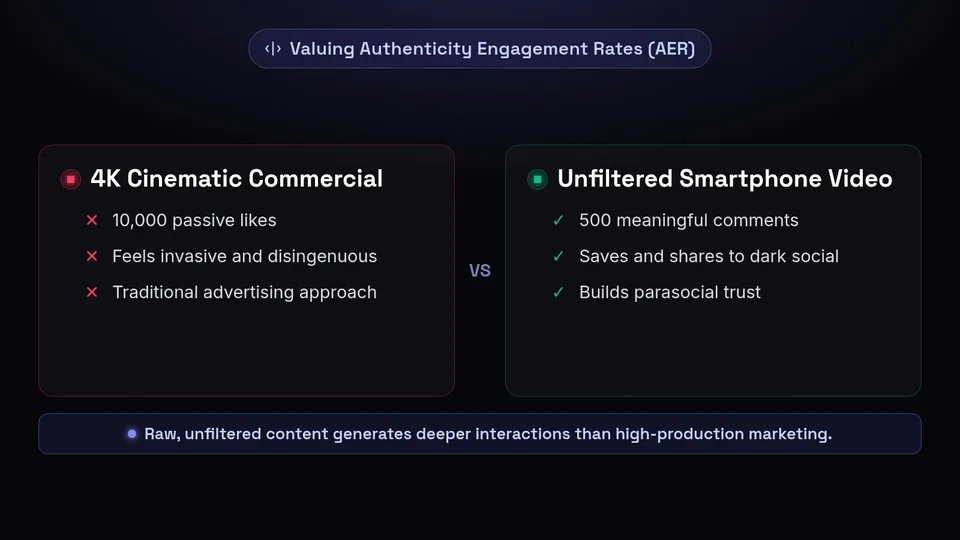
In 2026, the unfiltered content trend is driven by a complex web of psychological and sociological factors. Gen Z, now fully integrated into the adult workforce and holding massive purchasing power, alongside the emerging Gen Alpha, have grown up as digital natives. They are acutely aware of how media is manipulated. To them, traditional advertising feels invasive and disingenuous.
The unfiltered trend satisfies a deep psychological need for trust. When a brand posts a behind-the-scenes video showing a product failing a quality test before being fixed, or a CEO speaking directly to the camera without a script about a supply chain issue, it builds parasocial trust. The consumer feels respected. They are being shown the reality, flaws and all, which paradoxically makes the brand appear more competent and trustworthy.
Metrics of Authenticity
Social media authenticity 2026 is measured differently than the vanity metrics of the past. It's no longer just about likes and follower counts. Today, brands measure "Authenticity Engagement Rates" (AER), which track deep interactions: saves, long-form comments, shares to private dark social channels (like DMs and group chats), and user-generated content (UGC) responses. An unfiltered, slightly grainy video shot on a smartphone that generates 500 meaningful comments is now valued exponentially higher than a 4K cinematic commercial that receives 10,000 passive likes.
BeReal Marketing: How Brands Are Adapting
The Anti-Marketing Marketing Strategy
BeReal marketing—and marketing on similar authenticity-first platforms—presents a unique paradox: how do you market on a platform that fundamentally rejects marketing? The answer is native integration and radical transparency.
In 2026, successful BeReal marketing doesn't look like an ad. Brands that succeed on these platforms have abandoned the traditional "call to action" in favor of "calls to connection." They use these platforms to showcase the human element of their corporate structure.
- Behind-the-Scenes Access: Brands use spontaneous posting windows to show actual employees at their desks, in the warehouse, or during a coffee break. It humanizes the logo.
- Exclusive, Raw Drops: Streetwear and beauty brands use the unfiltered medium to tease unreleased products in their prototype phases, building hype through exclusivity and rawness.
- Employee Takeovers: Handing the company account over to a junior employee for the day, allowing them to post unfiltered updates about their workday, has become a staple of modern employer branding and consumer outreach.
Case Study: The "Ugly" Product Launch
Consider the 2025 campaign by a major eco-friendly shoe brand. Instead of a glossy photoshoot, they launched their new line using only photos taken by their factory workers on personal smartphones during the two-minute spontaneous posting windows. The photos were poorly lit, sometimes blurry, and featured messy workbenches. The campaign was titled "No Polish, Just Purpose." It resulted in a 300% increase in organic shares compared to their previous high-budget campaign. The consumer takeaway was clear: the brand cares more about the quality of the shoe and the welfare of its workers than paying for a fancy photoshoot. This is the epitome of social media authenticity 2026.
Real vs Polished Content: Finding the Balance
Is Polished Content Dead?
With the overwhelming dominance of the unfiltered content trend, a critical question arises: is polished content completely dead? The short answer is no. However, its role has been drastically redefined.
In the debate of real vs polished content, marketers must understand that these are no longer opposing forces, but rather different tools in a comprehensive strategy. Polished content still holds significant value in specific contexts:
- First Impressions and Landing Pages: When a consumer visits a website or a flagship social media profile for the first time, high-quality, polished imagery establishes baseline credibility, professionalism, and brand identity.
- Luxury and Aspirational Sectors: High fashion, luxury automotive, and premium hospitality still rely heavily on polished content to sell a dream. However, even these sectors now supplement their glossy ads with unfiltered behind-the-scenes content to remain relevant.
- Complex Product Demonstrations: B2B software or intricate tech hardware often requires polished, well-edited video to clearly explain features and functionality without confusing the viewer.
The Hybrid Approach: The 80/20 Rule of 2026
The most successful brands in 2026 employ a hybrid strategy, often referred to as the 80/20 Authenticity Ratio. Approximately 80% of their daily social media output leans into the unfiltered content trend—smartphone videos, raw employee Q&As, unedited photo dumps, and reactive, trend-driven memes. This builds the daily relationship, fosters trust, and drives engagement.
The remaining 20% is reserved for polished content—major product launches, brand manifestos, and high-level educational content. This hybrid approach ensures that the brand remains relatable without losing its authoritative edge. The contrast actually makes the polished content more impactful when it does appear, as it signals to the audience that something significant is happening.
Reshaping Brand Strategy for the Authenticity-First Era
Reallocating the Marketing Budget
The shift toward authentic social media has caused a massive reallocation of marketing budgets. In the past, 70% of a campaign budget might go to production (studios, lighting, professional cameras, editing) and 30% to distribution. In 2026, those numbers have flipped.
Brands are realizing that a video shot on a
- Micro and Nano-Influencer Partnerships: Brands are investing in thousands of smaller creators who have deeply engaged, trusting communities, rather than a few mega-celebrities.
- Community Management: With engagement being the primary metric of authenticity, brands are hiring massive teams of community managers to respond to comments, DMs, and UGC in real-time, in a human, unscripted voice.
- Agile Content Creation: Brands are building in-house "creator pods"—small teams equipped with smartphones and ring lights who can conceptualize, shoot, and post reactive content within hours of a trend emerging.
Navigating Vulnerability and PR Risks
Embracing the unfiltered content trend requires a willingness to be vulnerable, which is inherently terrifying for traditional corporate PR departments. Social media authenticity 2026 means admitting mistakes publicly, showing the messy middle of product development, and allowing employees to speak without a rigid script.
This lack of control carries risks. An unedited video might accidentally reveal proprietary information in the background, or an off-the-cuff remark by an employee might spark a minor controversy. Brands must reshape their internal guidelines, moving from strict "approval matrices" to "empowerment frameworks." Employees and creators are given guidelines and boundaries, but within those boundaries, they are trusted to create freely. The occasional PR hiccup is now viewed as an acceptable cost of doing business in an authenticity-driven market; in fact, a transparent, unedited apology often generates more brand loyalty than the original mistake cost them.
The AI Paradox and the Future of Social Media Authenticity 2026
The Rise of AI-Generated Content
No analysis of 2026 social media is complete without addressing the elephant in the room: Artificial Intelligence. Generative AI has advanced to the point where it can create photorealistic images, clone voices with terrifying accuracy, and generate entirely synthetic, "polished" video content in seconds.
This creates a fascinating paradox. As AI makes it infinitely easier and cheaper to produce flawless, polished content, the value of that content plummets. When perfection is commoditized, imperfection becomes the premium.
The Premium on Provable Humanity
Because consumers are constantly bombarded with AI-generated perfection, their craving for provable humanity has skyrocketed. This is the ultimate driver of the authentic social media movement today. Users are looking for the subtle flaws that AI struggles to replicate or intentionally smooths over: the stutter in a sentence, the awkward lighting of a natural setting, the unpredictable background noise of a bustling street.
Brands are utilizing "Proof of Humanity" strategies. This includes live streaming (where AI manipulation is harder to hide in real-time), interactive Q&A sessions, and heavily leaning into physical events documented in raw formats. The unfiltered content trend is no longer just a stylistic choice; it is a defensive strategy against the sea of synthetic media. In the battle of real vs polished content, "real" is the only way to prove you are actually human.
Actionable Steps for Brands Transitioning to Unfiltered Content
If your brand is still clinging to the aesthetic perfection of the 2010s, transitioning to the social media authenticity 2026 standard can feel daunting. Here is a strategic roadmap to safely and effectively integrate the unfiltered content trend into your marketing efforts.
Step 1: Audit Your Current Aesthetic and Audience Perception
Begin by analyzing your current feed. Does it look like a catalog, or does it look like a community? Conduct sentiment analysis on your comments. Are people engaging with the brand on a human level, or just tagging friends to win giveaways? Survey your audience to ask what kind of behind-the-scenes content they would be interested in seeing. Understanding your starting point is crucial for measuring the impact of your transition.
Step 2: Develop an "Unfiltered" Content Pillar
Don't pivot overnight. Introduce an "unfiltered" content pillar into your existing strategy. Start small:
- Founder Fridays: Have the founder or CEO record a 60-second, unedited video on their phone discussing a challenge the company faced that week.
- Scrapbook Posts: Replace one polished graphic a week with a "photo dump" of unedited pictures from the office or manufacturing floor.
- UGC Spotlights: Actively request and post low-fi photos of your customers using your product in their messy, real lives, completely unedited.
Step 3: Loosen the Reins on Production
Challenge your creative team to produce a campaign without professional lighting or DSLR cameras. Force the constraint of using only smartphones and natural light. This exercise breaks the reliance on polish and forces the team to focus entirely on storytelling, humor, and relatability—the true drivers of the authentic social media movement.
Step 4: Train and Empower Employee Advocates
Your employees are your greatest asset in the unfiltered era. Create an internal advocacy program. Provide guidelines on what is safe to share (confidentiality boundaries) and then encourage them to document their work lives. An engineer explaining how they built a feature, filmed casually at their desk, will almost always outperform a polished graphic explaining the same feature.
Step 5: Embrace the Flaws
When a mistake happens—a typo in a post, a minor product glitch, a shipping delay—do not release a sterile, legally-approved PR statement graphic. Have a human being sit in front of a camera, explain what happened, apologize sincerely, and detail how it's being fixed. This level of transparency turns a negative customer experience into a masterclass in brand loyalty.
Conclusion: Embracing the New Normal with SchedulifyX
The authentic social media movement of 2026 is a profound reflection of our evolving relationship with technology and each other. The unfiltered content trend has dismantled the facade of corporate perfection, replacing it with a demand for radical transparency, vulnerability, and genuine human connection. While the debate of real vs polished content will continue to have nuances depending on the industry, the undeniable truth is that authenticity is now the baseline requirement for entry into the digital conversation.
BeReal marketing strategies and the broader push for social media authenticity in 2026 have proven that audiences don't want to be sold to; they want to be connected with. They want to see the messy desks, the failed prototypes, and the real faces behind the logos. Brands that stubbornly cling to the highly curated, airbrushed past will find themselves speaking to an empty room, while those that embrace the raw, unedited reality of the present will build communities of unprecedented loyalty.
Navigating this hybrid landscape of raw spontaneity and strategic planning requires the right tools. You need to be able to seamlessly manage your unfiltered, on-the-fly content alongside your essential, polished campaigns. This is where SchedulifyX becomes your ultimate competitive advantage. As an AI-powered social media scheduling platform, SchedulifyX allows you to intelligently map out your 80/20 authenticity ratio. Our advanced analytics help you identify exactly which unfiltered posts are driving true engagement, while our dynamic scheduling ensures your spontaneous-feeling content hits the feed at the exact moment your audience is most active.
Don't let the demand for authenticity overwhelm your workflow. Embrace the unfiltered future, maintain your strategic edge, and let SchedulifyX handle the rest. Start your free trial today and revolutionize how your brand connects with the world.