Google's Helpful Content Update & Social-to-Web Traffic
SchedulifyX Team · May 26, 2026
Discover how Google's Helpful Content Update impacts your social-to-web traffic and learn strategies to align your SEO and social media efforts effectively.
The digital marketing landscape is in a constant state of evolution, and staying ahead of the curve requires an acute understanding of how different channels interact. For years, marketers have treated Search Engine Optimization (SEO) and social media marketing as two distinct silos. However, with the rollout and continuous refinement of the google helpful content system, the lines between these disciplines are blurring more than ever before. If you are relying on social media to drive traffic to your website, you must understand how Google evaluates the destination pages your audience lands on.
Historically, driving massive amounts of social to web traffic was a numbers game. Marketers would craft click-worthy (and sometimes clickbait) headlines on platforms like X, LinkedIn, Facebook, and Instagram, funneling users to ad-heavy, thin-content landing pages. The goal was simple: get the click, generate the pageview, and monetize the attention. But Google's algorithmic shifts have fundamentally altered this paradigm. Today, the quality of the user's experience after the click is paramount. If your social media audience lands on unhelpful content, it doesn't just hurt your bounce rate—it can actively degrade your website's overall search rankings.
In this comprehensive guide, we will explore the intricate relationship between the google helpful content update and your social media strategy. We will delve into how to harmonize seo social media efforts, ensure your social to web traffic is met with high-value content, and future-proof your digital presence. Whether you are a seasoned SEO professional, a social media manager, or a business owner, mastering this intersection is critical for sustainable online growth.
Understanding Google's Helpful Content System
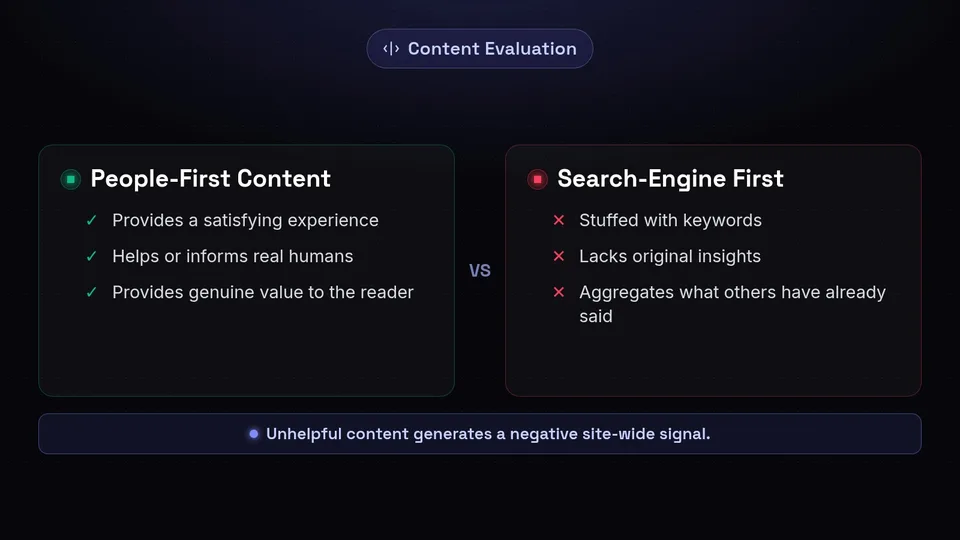
To fully grasp how your social media efforts are affected, we first need to dissect what the google helpful content system actually is. Introduced as a major algorithm update, this system is designed to reward content that provides a satisfying experience for visitors, while penalizing content that falls short of user expectations.
The Core Philosophy: People-First Content
Google's primary objective has always been to organize the world's information and make it universally accessible and useful. The helpful content update is a direct manifestation of this goal. It specifically targets "search-engine first" content—articles and pages created primarily to rank well in search engines rather than to help or inform real humans. If your content is stuffed with keywords, lacks original insights, or simply aggregates what others have already said without adding value, it is in the crosshairs of this update.
"The helpful content system aims to better connect people to helpful information by rewarding content where visitors feel they've had a satisfying experience." - Google Search Central
A Site-Wide Signal
One of the most critical aspects of the google helpful content update is that it generates a site-wide signal. This means that if Google determines a relatively high amount of unhelpful content exists on your site, it can negatively impact the ranking of all your content—even the high-quality pages. This is a game-changer for content creators. You can no longer afford to host low-quality "filler" content just to maintain a high publishing frequency. Every single page on your domain must justify its existence by providing genuine value to the reader.
Continuous Evaluation
Unlike some algorithm updates that happen as a one-time event, the helpful content system is a continuous machine learning process. It is always running, constantly evaluating and re-evaluating the quality of your website. This means that recovering from a helpful content penalty requires a sustained, long-term commitment to improving your site's overall quality. You cannot simply make a few quick fixes and expect an immediate rebound.
The Intersection of SEO and Social Media
For a long time, the debate raged on: do social signals (likes, shares, retweets) directly impact SEO rankings? While Google has explicitly stated that social signals are not a direct ranking factor in their core algorithm, the indirect relationship between seo social media is undeniable and increasingly crucial.
Content Distribution and Discovery
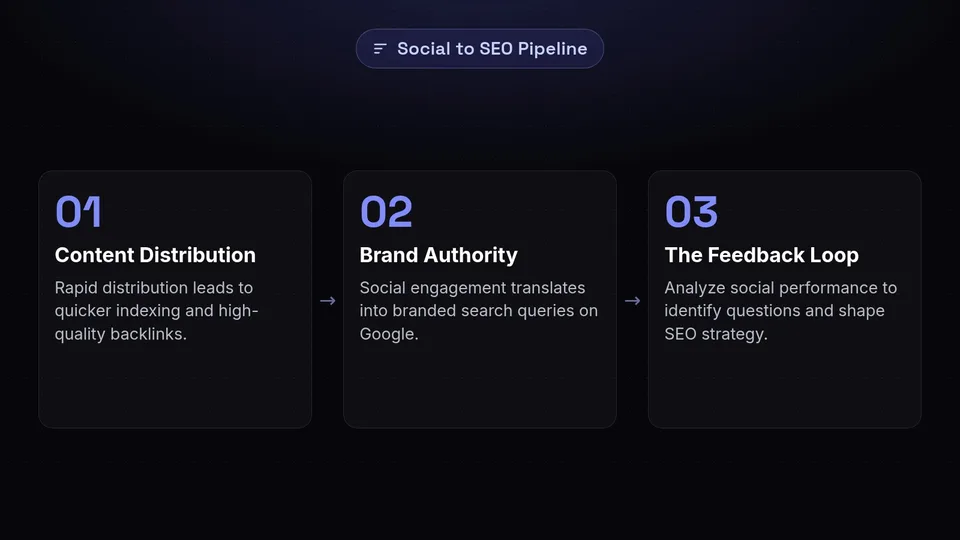
Social media is one of the most powerful content distribution engines available. When you publish a highly informative, well-researched article, sharing it on social media platforms puts it in front of a targeted audience immediately. This rapid distribution can lead to quicker indexing by search engines, as Googlebot often discovers new URLs through social links. More importantly, getting your content in front of the right eyes increases the likelihood of earning high-quality backlinks, which are a massive direct ranking factor.
Brand Authority and Search Volume
A robust social media presence builds brand awareness and authority. As your audience engages with your content on platforms like LinkedIn or X, they become familiar with your brand name. This familiarity translates into branded search queries on Google. When users actively search for your brand name alongside specific keywords (e.g., "SchedulifyX social media scheduling"), it sends a strong signal to Google that your brand is an entity of authority in that specific niche.
The Feedback Loop
Social media provides immediate, real-time feedback on your content. Which headlines resonate? Which topics generate the most discussion? Which posts drive the most social to web traffic? This data is invaluable for shaping your SEO strategy. By analyzing your social media performance, you can identify the exact questions your audience is asking and create long-form, SEO-optimized content that directly addresses those pain points, aligning perfectly with the google helpful content guidelines.
How the Update Impacts Social-to-Web Traffic

Now, let us connect the dots between the algorithm update and your social traffic. When you drive a user from a social media platform to your website, you are making a promise. The social post is the hook; the website content is the delivery. The google helpful content update rigorously polices how well you fulfill that promise.
The Danger of Clickbait
In the past, marketers could get away with sensationalized social media posts that led to mediocre content. The user would click, realize the content didn't match the hype, and immediately leave. While this resulted in a high bounce rate, it didn't necessarily destroy the site's overall SEO. Today, it does. If a large portion of your social to web traffic exhibits "pogo-sticking" behavior—arriving on your site and immediately leaving because the content is unhelpful or misleading—Google's algorithms take notice. This user behavior is a massive red flag that your content is not satisfying the user's intent.
User Experience (UX) as a Quality Indicator
When a user transitions from a fast, fluid social media app to your website, their expectations for User Experience (UX) are incredibly high. If your landing page is slow to load, bombarded with intrusive pop-up ads, or difficult to navigate on a mobile device, the user will bounce. The google helpful content system heavily factors in UX. A poor post-click experience for your social traffic signals to Google that your site is not prioritizing the human reader, putting your search rankings at risk.
Alignment of Intent
Social media traffic is often highly contextual. A user clicking a link from a LinkedIn post about "B2B Lead Generation Strategies" has a very specific intent. If they land on a generic homepage or a thinly veiled sales pitch instead of the promised educational content, their intent is frustrated. Google's systems are increasingly adept at understanding user intent. Ensuring that your social media messaging perfectly aligns with the depth and quality of the destination page is no longer just a best practice; it is an SEO necessity.
Quality Over Quantity: The New Traffic Paradigm
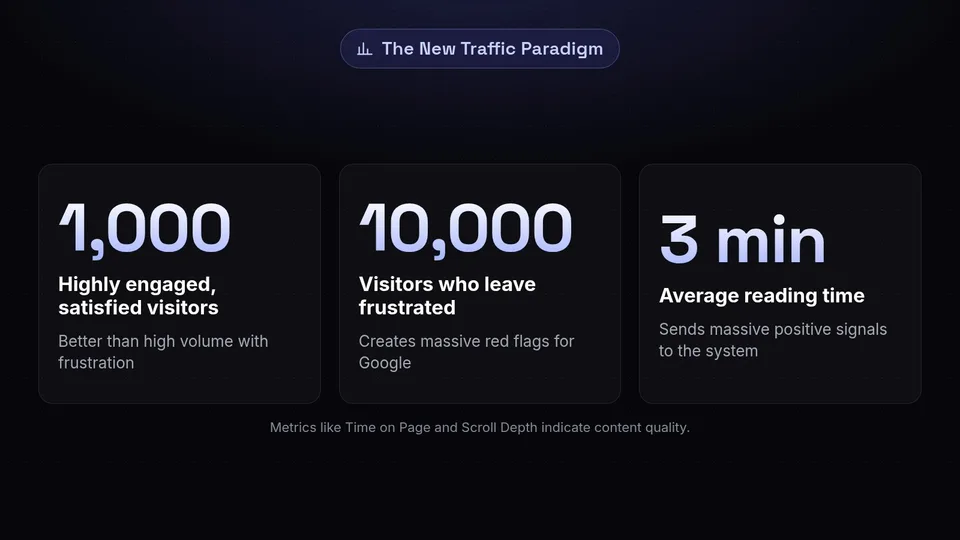
The days of chasing raw traffic volume at the expense of quality are over. The google helpful content update demands a shift in mindset: it is better to have 1,000 highly engaged, satisfied visitors than 10,000 visitors who leave your site frustrated within seconds.
Rethinking Your KPIs
If your primary Key Performance Indicator (KPI) for social media is simply "link clicks," you need to recalibrate. While driving social to web traffic is important, you must look deeper into the analytics. Metrics such as Time on Page, Pages per Session, and Scroll Depth are far more indicative of content quality. If your social traffic is spending an average of three minutes reading your article and clicking through to other pages on your site, you are sending massive positive signals to Google's helpful content system.
The "Pruning" Strategy
Because the helpful content system is a site-wide signal, you must aggressively manage your content inventory. If you have hundreds of old, outdated, or thin blog posts that were created solely for social media clicks years ago, they are likely dragging down your entire domain. Conduct a comprehensive content audit. Identify pages with low traffic, high bounce rates, and poor engagement. You have three choices for these pages: update and improve them to meet the new helpful content standards, consolidate them into a single, comprehensive guide, or delete them entirely and set up 301 redirects.
Creating "Destination" Content
To thrive in this new paradigm, your website must host "destination" content. This is content so valuable, comprehensive, and unique that users actively seek it out and bookmark it. When you share destination content on social media, you aren't just begging for a click; you are offering a high-value resource. This type of content naturally earns longer dwell times, lower bounce rates, and organic shares—all of which insulate your site against algorithm penalties.
Strategies to Align Social Media and SEO
To successfully navigate the intersection of seo social media, you need a cohesive strategy that treats both channels as two sides of the same coin. Here are actionable strategies to align your efforts and maximize the value of your social to web traffic.
1. The "Tease and Deliver" Method
Your social media posts should act as a compelling executive summary of the content on your website. Do not give away the entire premise in the social post, but provide enough immediate value that the user trusts your expertise. When they click through, the website content must immediately deliver on the specific tease. Use clear, descriptive headings (H2s and H3s) so the user can instantly find the information they clicked for. Do not bury the lede beneath paragraphs of fluff.
2. Optimize for Mobile Continuity
The vast majority of social media browsing occurs on mobile devices. Therefore, almost all of your social to web traffic will be mobile traffic. If your website is not flawlessly optimized for mobile, you are instantly failing the helpful content test. Ensure your text is legible without zooming, your buttons are easily tappable, and your page load speed is lightning fast. The transition from the social app to your website should feel seamless and native.
3. Incorporate Original Data and Subject Matter Expertise
Google has explicitly stated that it rewards content that demonstrates first-hand expertise and original insights (the "E" in E-E-A-T: Experience, Expertise, Authoritativeness, and Trustworthiness). Social media is the perfect place to gather this original data. Run polls on LinkedIn or X, ask your audience for their pain points, and compile the results. Use this proprietary data to create highly original, data-backed articles on your website. This type of content is inherently "helpful" because it cannot be found anywhere else on the internet.
4. Encourage Community Interaction on Your Site
Don't let the conversation end on social media. Encourage your social to web traffic to engage with your website directly. Open up the comments section on your blog and actively moderate and reply to them. Add interactive elements like calculators, quizzes, or downloadable templates. The more a user interacts with your webpage, the stronger the signal that your content is genuinely helpful and engaging.
Leveraging Social Signals for Content Validation
While we established that social signals aren't direct SEO ranking factors, they are the ultimate real-time validation mechanism for the google helpful content update. You can use social media as a testing ground to ensure your content will be deemed helpful before you fully commit to a massive SEO campaign.
Micro-Testing Content Themes
Before investing 20 hours into writing a 4,000-word definitive guide for SEO, test the core concepts on social media. Break your planned article down into a series of short-form posts, threads, or short videos. Monitor the engagement. Which specific sub-topics generated the most questions? Which points were highly debated? Use this real-time feedback to structure your long-form website content. If a topic flops on social media, it is highly likely it will fail to satisfy user intent on search engines as well.
Identifying the Language of Your Audience
Keyword research tools are essential, but they often lack context. Social media allows you to see exactly how your target audience speaks about their problems. Pay close attention to the specific phrasing, jargon, and questions used in the comments of your social posts. Incorporate this exact language into your website content. When your content speaks the same language as your audience, it feels significantly more helpful and relatable, which improves user satisfaction metrics.
Repurposing High-Performing Social Content
If you have a social media post that goes viral or receives exceptionally high engagement, that is a massive flashing sign that you have struck a nerve. Do not let that momentum die on the social feed. Expand that high-performing post into a comprehensive, SEO-optimized blog article. Because the topic has already been validated by your audience, the resulting social to web traffic is highly likely to find the expanded content helpful, satisfying Google's algorithms.
Measuring the Impact on Your Website
To truly master the relationship between seo social media and the helpful content update, you must become obsessed with analytics. You need to know exactly what happens after the click.
Setting Up Advanced Tracking
Basic Google Analytics setup is no longer enough. You must use UTM parameters on every single link you share on social media. This allows you to track exactly which social platform, which specific post, and which campaign drove the traffic. Create custom segments in your analytics platform to isolate your social to web traffic and compare its behavior against your organic search traffic.
Metrics to Monitor Daily
- Engagement Rate: In GA4, the bounce rate has been largely replaced by the Engagement Rate. This measures the percentage of sessions that lasted longer than 10 seconds, had a conversion event, or had two or more pageviews. A high engagement rate from social traffic is a strong indicator of helpful content.
- Average Engagement Time: How long are users actually looking at your page? If they click a link to a 2,000-word article and leave after 15 seconds, your content is failing the helpfulness test.
- Conversion Rate by Channel: Ultimately, helpful content should drive action. Are your social visitors subscribing to your newsletter, downloading your lead magnets, or signing up for your software? High conversion rates correlate strongly with high user satisfaction.
Diagnosing the Drop-Offs
If your analytics show that your social to web traffic has terrible engagement metrics, you must act quickly before it drags down your SEO. Ask yourself the hard questions: Did the social post over-promise? Is the website layout confusing? Is the content genuinely answering the user's implicit question? Use tools like heatmaps and session recordings to see exactly where users are getting frustrated and abandoning your page.
Conclusion: Future-Proofing Your Strategy with SchedulifyX
The era of treating social media and SEO as separate entities is officially over. The google helpful content system has permanently intertwined the two by placing an absolute premium on post-click user satisfaction. Driving social to web traffic is only half the battle; ensuring that traffic lands on high-quality, intent-matching, deeply valuable content is what will dictate your long-term digital success.
To survive and thrive in this environment, you must adopt a holistic approach to seo social media. You must stop writing for algorithms and start writing for people. You must use social media not just as a megaphone, but as a listening device to understand your audience's deepest needs. And most importantly, you must rigorously audit and elevate the quality of every single page on your website.
Managing this complex, multi-channel strategy requires precision, consistency, and the right tools. You cannot afford to publish haphazardly or lose track of your content distribution. This is where AI-powered solutions become indispensable.
Ready to take control of your social-to-web pipeline? With SchedulifyX, you can intelligently plan, schedule, and analyze your social media campaigns to ensure they perfectly align with your high-quality website content. Our AI-powered platform helps you determine the optimal times to post, crafts engaging captions that accurately reflect your content, and provides the analytics you need to verify that your social traffic is engaging deeply with your site. Don't let disorganized social media efforts jeopardize your SEO rankings. Future-proof your digital strategy and start driving highly engaged, algorithm-friendly traffic today with SchedulifyX.