How Often to Post Social Media: A Sustainable 2026 Guide
SchedulifyX Team · October 9, 2026
Struggling with your posting cadence? Discover how often to post social media across platforms in 2026 with a sustainable schedule you can actually keep.
The digital landscape is relentless. For social media managers, marketers, and business owners, the pressure to remain visible can often feel like running on a treadmill that never stops. The moment you publish a carefully crafted piece of content, the invisible clock resets, and the demand for the next post begins. This constant cycle leads to a pervasive sense of burnout and a recurring, vital question: exactly how often to post social media to achieve growth without sacrificing quality or your own wellbeing?
Historically, the advice was simple, albeit exhausting: post as much as possible. However, the mechanisms governing social media platforms have evolved significantly. Algorithms are no longer simple chronological feeds that reward sheer volume. Instead, they are highly sophisticated recommendation engines designed to serve users the most engaging, relevant, and high-quality content available. Consequently, flooding a platform with mediocre posts can actively harm your reach, as low engagement rates signal to the algorithm that your content is not worth distributing.
In this comprehensive guide, we will explore the shift from volume to value, break down the ideal cadence for each major platform, and examine the posting frequency 2026 demands. Most importantly, we will help you build a sustainable strategy—one that prioritises consistency over chaos, allowing you to maintain a reliable presence without burning out.
The Shift from Volume to Value
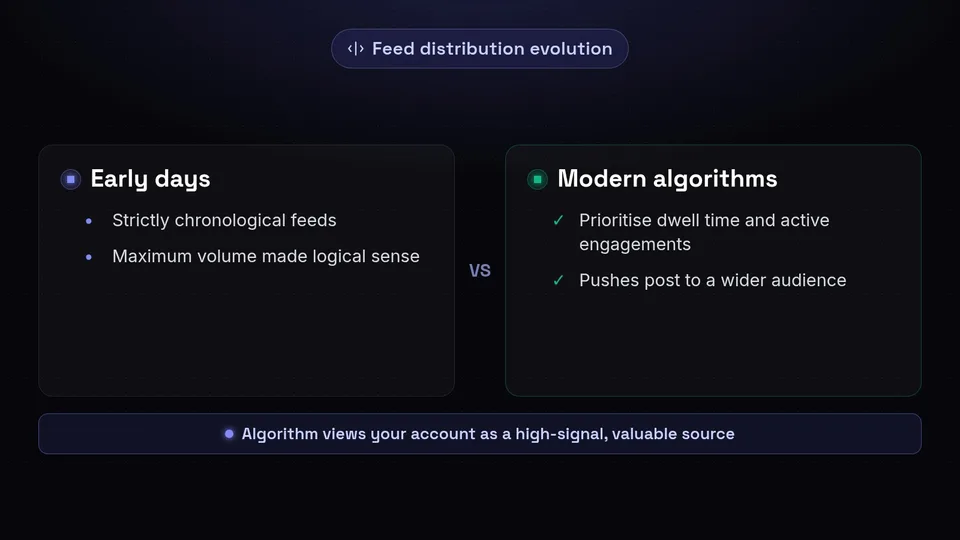
To understand the current social media ecosystem, we must first look at how platform algorithms distribute content. In the early days of social networks, feeds were strictly chronological. If you posted at 9:00 AM, anyone logging in at 9:01 AM would see your post at the top of their screen. In that environment, maximum volume made logical sense; more posts meant more opportunities to appear at the top of a user's feed.
Today, chronological feeds are largely a relic of the past. Modern algorithms prioritise 'dwell time'—the amount of time a user spends looking at a post—alongside active engagements like shares, saves, comments, and meaningful interactions. When you publish a post, the platform initially shows it to a small fraction of your audience. If this test group responds positively by lingering on the content or interacting with it, the algorithm pushes the post to a wider audience, and potentially to non-followers via recommendation feeds.
This mechanism fundamentally changes the mathematics of posting frequency. If you post five times a day, but the content is rushed and fails to capture attention, your engagement rate drops. The algorithm learns that your account generally produces low-interest content, which can suppress the reach of future posts—even the high-quality ones. Conversely, posting fewer times per week, but ensuring each post is deeply resonant, highly visual, or incredibly informative, trains the algorithm to view your account as a high-signal, valuable source of content.
Defining Your Baseline: How Often to Post Social Media
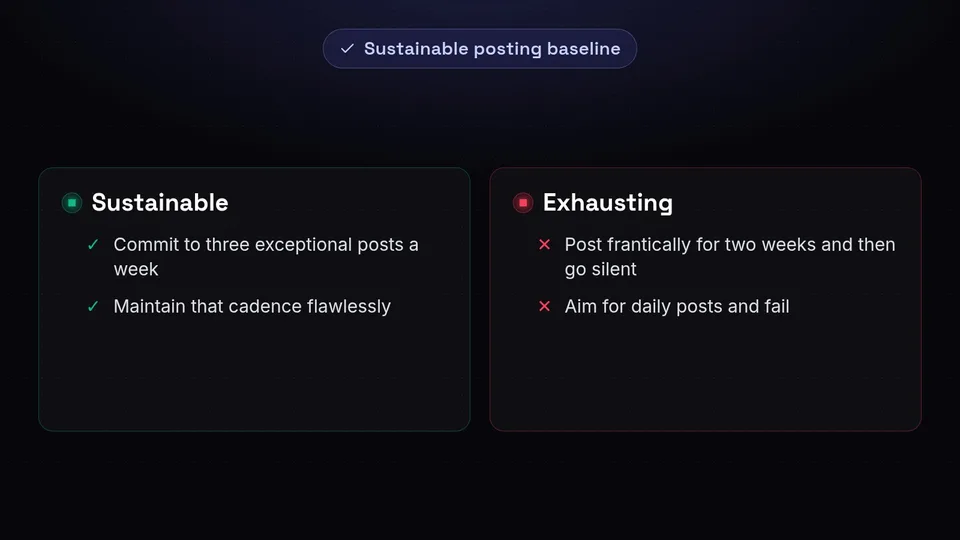
When determining how often to post social media, the most crucial metric is not what a platform theoretically allows, but what your team can consistently sustain. Consistency is the bedrock of digital trust. If an audience knows they can expect high-quality insights from you every Tuesday and Thursday, they begin to anticipate your content. If you post frantically for two weeks and then go silent for a month due to creative exhaustion, you break that trust and lose algorithmic momentum.
Before looking at platform-specific guidelines, conduct a realistic audit of your resources. Consider the time required for ideation, scripting, filming, designing, copywriting, and community management. A well-researched, multi-slide carousel or a professionally edited short-form video requires significantly more resource allocation than a brief text update. Your baseline frequency should be the maximum number of high-quality posts you can produce during your busiest weeks, not your quietest ones. It is far better to commit to three exceptional posts a week and maintain that cadence flawlessly than to aim for daily posts and fail.
The Platform-by-Platform Breakdown
While overarching principles of quality apply everywhere, each social network has its own unique rhythm, content lifespan, and user expectations. Tailoring your cadence to respect these platform dynamics is essential for maximising your reach and engagement.
Crafting Your Instagram Posting Schedule
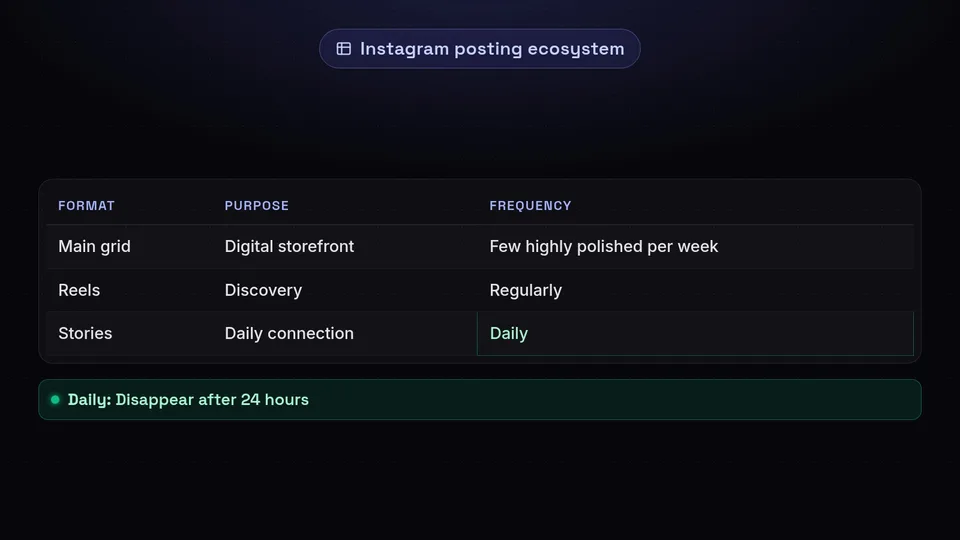
Developing an effective instagram posting schedule requires balancing the platform's multiple surfaces: the main feed, Stories, and Reels. Instagram operates as a multi-faceted ecosystem where different formats serve entirely different purposes.
The main grid (consisting of single images and carousels) acts as your brand's digital storefront. Because feed posts have a longer shelf life and are heavily scrutinised by the algorithm for quality, less is often more. Aiming for a few highly polished, valuable grid posts per week is generally more effective than daily mediocre uploads. Carousels, in particular, encourage users to swipe through, increasing dwell time and signalling high engagement to the algorithm.
Reels, on the other hand, are Instagram's primary engine for discovery and reaching non-followers. Because the Reels tab operates similarly to a continuous entertainment feed, the algorithm is constantly hungry for fresh video content. Incorporating regular Reels into your instagram posting schedule can significantly boost visibility, provided the videos are engaging within the first few seconds.
Finally, Instagram Stories are your tool for daily, ephemeral connection. Because Stories disappear after 24 hours and do not clutter your main grid, they offer the highest tolerance for frequency. Using Stories daily to share behind-the-scenes moments, quick updates, or interactive polls keeps your brand top-of-mind and maintains a continuous line of communication with your most dedicated followers without triggering algorithmic fatigue.
LinkedIn: The Professional Pacing
LinkedIn is a professional networking environment where users log on to advance their careers, learn industry insights, and network with peers. The mindset here is analytical and educational. Consequently, the content lifespan on LinkedIn is notably longer than on other platforms. A highly insightful, well-structured post can continue to gather momentum, comments, and reach for several days or even weeks after it is published.
Because the algorithm heavily rewards meaningful conversations and thoughtful commentary, posting too frequently can actually cause your own posts to cannibalise each other's reach. A steady, measured cadence—focusing primarily on weekdays when professional activity is highest—tends to yield the best results. Focus on deep-dive industry analyses, leadership lessons, and company culture updates. Ensure you allocate as much time to responding to comments and engaging with others' content as you do to drafting your own posts.
X (Formerly Twitter) and Threads: The Conversational Streams
Text-first platforms like X and Threads operate on the pulse of the present moment. These platforms are conversational, fast-paced, and highly ephemeral. A post here has a very short lifespan before it is pushed down the feed by newer updates.
Due to this rapid turnover, these platforms have a much higher tolerance for volume. However, this does not mean you should spam the feed with promotional links. Instead, the frequency should be driven by genuine conversation, industry commentary, and active participation in trending topics. Breaking up your content into engaging threads, replying to industry peers, and sharing quick, valuable observations allows you to maintain a high frequency organically. The goal is to be an active participant in an ongoing global conversation rather than a broadcaster shouting into the void.
TikTok and YouTube Shorts: The Video Velocity
The landscape of short-form video is driven by sophisticated recommendation algorithms, most notably TikTok's 'For You' page and the YouTube Shorts feed. These algorithms do not rely heavily on the social graph (who follows whom); instead, they serve content based strictly on user behaviour, watch time, and completion rates.
Because every single video is evaluated on its own merit and pushed to a new audience, there is a strong incentive to maintain a consistent flow of content. The more hooks, formats, and topics you test, the faster you can gather data on what resonates with the audience. However, the barrier to entry for video is higher than text. The lighting, audio clarity, pacing, and on-screen energy must be compelling. Therefore, while a higher frequency can accelerate discovery on these platforms, it must never come at the expense of audience retention. If a creator pushes out multiple videos a day but users consistently swipe past them within the first two seconds, the algorithm will quickly throttle the account's reach.
Facebook: Community and Connection
Facebook remains a dominant force, particularly for community building and local business engagement. The Facebook feed prioritises content that sparks conversation and meaningful interactions among friends and family. For brands, this means promotional broadcasts often struggle to gain traction.
A sustainable cadence on Facebook involves mixing community-focused content, educational videos, and engaging questions. Facebook Groups, in particular, reward active, daily participation, whereas a brand's main Page might only require a few well-crafted posts per week. The emphasis should be on fostering dialogue and creating a space where followers feel compelled to share their own thoughts in the comments.
Anticipating the Posting Frequency 2026 Demands

As we look toward the future, the posting frequency 2026 demands will be shaped heavily by the proliferation of artificial intelligence in content creation. With generative AI tools making it easier than ever to produce text and images, the sheer volume of content on social media platforms is expanding exponentially. This saturation means that simply showing up is no longer enough to guarantee visibility.
In a landscape flooded with automated, generic content, human authenticity, unique perspectives, and deep expertise will become the ultimate differentiators. Algorithms will continue to refine their ability to detect and demote low-effort, spammy content while elevating posts that demonstrate genuine human connection and originality.
Therefore, the strategy for 2026 is not to compete with machines on volume, but to double down on the human elements that algorithms cannot easily replicate. This means prioritising highly opinionated thought leadership, original research, behind-the-scenes storytelling, and interactive community building. The ideal frequency will be dictated by how often you can deliver this high-calibre, uniquely human content. Brands that attempt to artificially inflate their posting volume with generic, AI-generated filler will likely see diminishing returns, while those who curate their output carefully will cultivate deeply loyal audiences.
Building a Cadence You Can Actually Keep
Understanding the theory of frequency is only half the battle; the real challenge lies in execution. To build a posting cadence you can actually maintain long-term, you must implement efficient operational workflows.
1. Embrace Content Batching: Context switching is the enemy of productivity. Instead of trying to write, design, and publish a post every single day, dedicate specific blocks of time to batch your tasks. Spend one afternoon scripting videos, another day filming them, and a separate session writing captions for the entire month. Batching reduces cognitive load and ensures a consistent tone across your content.
2. Develop Content Pillars: Staring at a blank screen wondering what to post is a primary cause of inconsistency. Establish three to five core content pillars—broad themes that align with your brand values and audience interests. When you know that Mondays are for industry insights, Wednesdays are for product tutorials, and Fridays are for community highlights, the ideation process becomes significantly faster and more structured.
3. Repurpose Relentlessly: A single brilliant idea should not be confined to one post. A comprehensive blog article can be broken down into a multi-slide carousel, a series of short-form videos, an insightful text thread, and an infographic. Repurposing allows you to maintain a healthy posting frequency across multiple platforms without having to constantly reinvent the wheel.
4. Monitor and Adjust: Social media is not a set-and-forget endeavour. Regularly review your analytics to see which content formats and posting days yield the highest engagement. If you notice that your audience responds just as well to two high-quality posts a week as they do to four, you can confidently scale back your frequency, saving valuable time and resources without sacrificing results.
Empowering Your Strategy with SchedulifyX
Maintaining a strategic, platform-specific cadence requires robust organisation. Attempting to manage multiple networks, diverse content formats, and varying posting times manually is a direct route to the burnout we discussed at the beginning of this guide. This is where leveraging the right technology becomes essential.
As an AI-powered social media scheduling platform, SchedulifyX is designed to remove the friction from your content workflow. By allowing you to plan, organise, and automate your publishing across all major networks from a single, intuitive interface, SchedulifyX empowers you to execute your strategy flawlessly. You can batch your content creation, load your assets into the platform, and trust that your posts will be delivered exactly when your audience is most receptive.
Whether you are fine-tuning your instagram posting schedule, managing a complex multi-platform campaign, or simply trying to figure out how often to post social media without losing your weekends, the right tools make all the difference. By combining a sustainable, value-driven content strategy with the intelligent automation of SchedulifyX, you can build a resilient digital presence that thrives in 2026 and beyond. Discover how an AI-powered social media scheduling platform can transform your workflow by exploring SchedulifyX today.