State of Influencer Marketing in 2026: Stats & Trends
SchedulifyX Team · May 23, 2026
Discover the ultimate state of influencer marketing in 2026. Explore key influencer statistics, emerging trends, and strategies to maximize your brand's ROI.
The landscape of digital marketing has undergone a seismic shift over the past decade, but nothing compares to the maturation we are witnessing today. As we navigate through the year, understanding the state of influencer marketing 2026 is no longer just an option for brands—it is an absolute necessity. What once began as a peripheral tactic involving celebrity endorsements and sponsored blog posts has evolved into a multi-billion-dollar creator economy that dictates consumer behavior, shapes cultural narratives, and drives unparalleled return on investment (ROI).
In this comprehensive guide, we will dive deep into the most critical influencer statistics, dissect the emerging trends redefining the space, and provide actionable strategies to help your brand thrive. Whether you are a seasoned marketer or a business owner looking to scale, this article will equip you with the insights needed to leverage the creator economy effectively.
Introduction to the Creator Economy in 2026
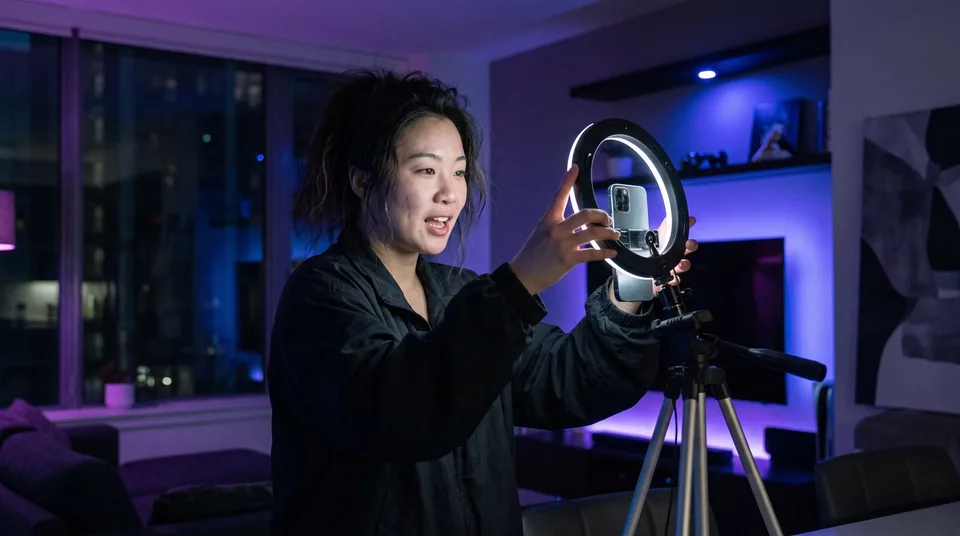
The creator economy in 2026 is characterized by hyper-segmentation, extreme authenticity, and technological integration. Gone are the days when a brand could simply pay a mega-influencer for a single static post and expect a massive influx of sales. Today's consumers are highly sophisticated; they can spot inauthentic partnerships from a mile away. They crave genuine connections, transparent reviews, and value-driven content.
Furthermore, the platforms themselves have evolved. Algorithms now prioritize watch time, engagement depth, and community interaction over superficial metrics like follower counts. This shift has democratized the playing field, allowing micro and nano-influencers to yield significant power and influence. As we look at influencer marketing 2026, the focus has shifted from "reach" to "resonance." Brands are now asking: How deeply does this creator connect with their audience, and how does that align with our core values?
Key Influencer Statistics Shaping 2026
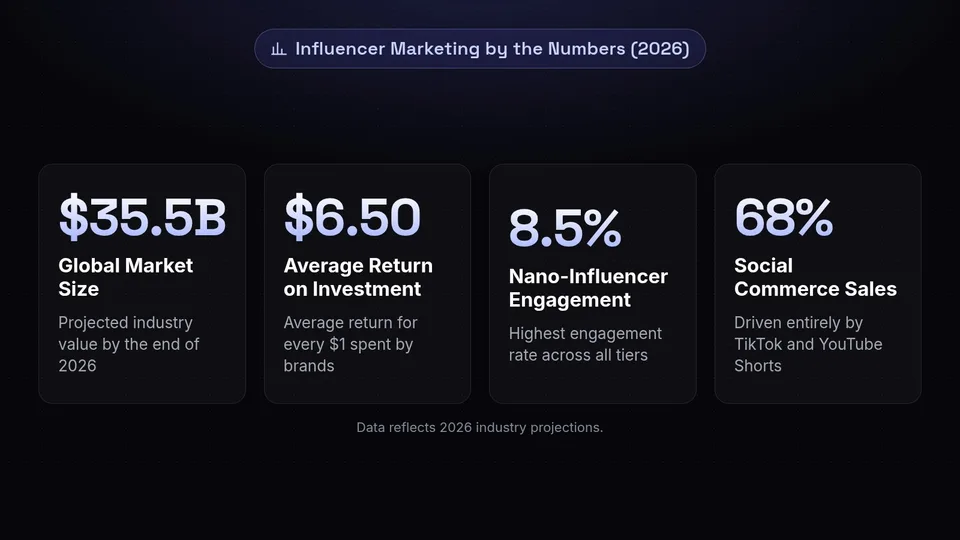
To truly grasp the magnitude of the industry, we must look at the data. The latest influencer statistics paint a picture of an industry that is not only growing but also becoming more efficient and measurable.
Market Growth and Valuation
The financial trajectory of influencer marketing continues to break records. As traditional advertising channels face declining ROAS (Return on Ad Spend) due to ad blockers and banner blindness, marketing budgets are being reallocated.
- Global Market Size: The influencer marketing industry is projected to reach a staggering $35.5 billion by the end of 2026, up from $21.1 billion in 2023.
- Budget Allocation: Over 72% of enterprise brands have dedicated more than a quarter of their total marketing budget exclusively to creator partnerships in 2026.
- ROI Metrics: For every spent on influencer marketing, brands are seeing an average return of $6.50, with top-performing campaigns in the beauty and tech sectors pushing returns as high as2.
Platform Dominance and Shift
While the major players remain familiar, how audiences use them has shifted dramatically. Short-form video continues to reign supreme, but long-form, community-driven content is making a massive comeback.
- TikTok and YouTube Shorts: These platforms account for 68% of all influencer-driven social commerce sales. TikTok's native shopping integration has revolutionized impulse buying.
- Instagram: Still a powerhouse, but with a pivot. 80% of Instagram influencer budgets are now spent on Reels and Stories rather than static feed posts.
- LinkedIn and B2B: B2B influencer marketing has exploded. Influencer campaigns on LinkedIn have grown by 140% year-over-year, proving that professional creators are highly effective at driving enterprise software and service sales.
Engagement Rates vs. Follower Counts
The data in 2026 officially crowns the micro-influencer as the king of engagement.
- Nano-Influencers (1K - 10K followers): Boast an average engagement rate of 8.5%, the highest across all tiers.
- Micro-Influencers (10K - 100K followers): Maintain a solid 5.2% engagement rate while offering scalable reach.
- Mega-Influencers (1M+ followers): Average a mere 1.1% engagement rate, highlighting their use primarily for broad brand awareness rather than direct conversions.
"In 2026, influence is no longer measured by how many people hear you, but by how many people listen and take action. The era of the vanity metric is officially dead." - Industry Analyst
Top Influencer Marketing Trends for 2026
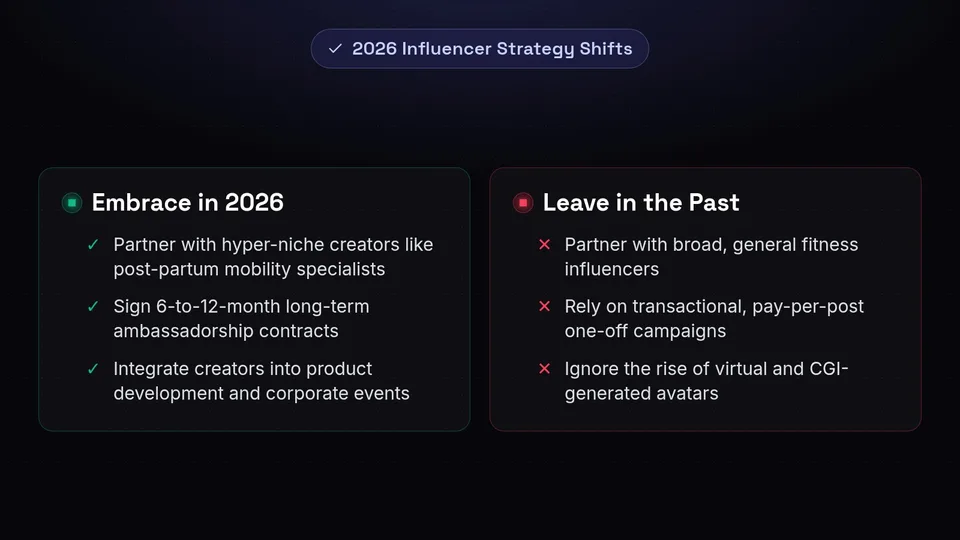
Hyper-niche, long-term partnerships are replacing broad, transactional influencer posts. Understanding the statistics is only half the battle. To stay ahead of the curve, brands must adapt to the prevailing trends shaping the digital ecosystem. Here are the most impactful trends defining influencer marketing 2026.
1. AI-Driven Creator Collaborations
Artificial Intelligence is no longer a novelty; it is the backbone of content creation. In 2026, creators are using AI tools to optimize their content, generate script ideas, and even edit videos at lightning speed. For brands, AI is being used to predict campaign outcomes before a single post goes live. Platforms are utilizing machine learning to match brands with creators whose audience psychographics perfectly align with the target demographic, eliminating the guesswork from influencer discovery.
2. Hyper-Niche Micro and Nano Influencers
The trend towards hyper-niche creators has accelerated. Instead of partnering with a general "fitness influencer," brands are partnering with "post-partum mobility specialists" or "vegan ultra-marathoners." These hyper-niche creators have incredibly dedicated communities. Because their content is so specialized, their product recommendations are treated as gospel by their followers, leading to unprecedented conversion rates.
3. The Rise of Virtual and CGI Influencers
Virtual influencers—CGI-generated avatars with distinct personalities and storylines—have moved from the fringes to the mainstream. In 2026, brands are not only collaborating with existing virtual influencers but are creating their own brand-owned avatars. These virtual creators offer brands 100% control over messaging, zero risk of real-world scandals, and the ability to operate 24/7 across multiple time zones and languages.
4. Long-Term Ambassadorships Over One-Off Posts
The transactional nature of "pay-per-post" is fading. Brands have realized that consumer trust takes time to build. Consequently, 2026 is the year of the long-term ambassadorship. Brands are signing 6-to-12-month contracts with creators, integrating them into product development, hosting them at corporate events, and treating them as true extensions of the internal marketing team. This prolonged exposure builds genuine brand affinity among the creator's audience.
5. Social Commerce and Shoppable Streams
The friction between discovery and purchase has been entirely eliminated. Live shopping, heavily popularized in Asian markets, has fully matured globally. Creators now host live streams where viewers can purchase products natively within the app without ever leaving the broadcast. Influencer-hosted live shopping events are yielding conversion rates up to 10 times higher than traditional e-commerce channels.
The Impact of AI on Influencer Campaigns
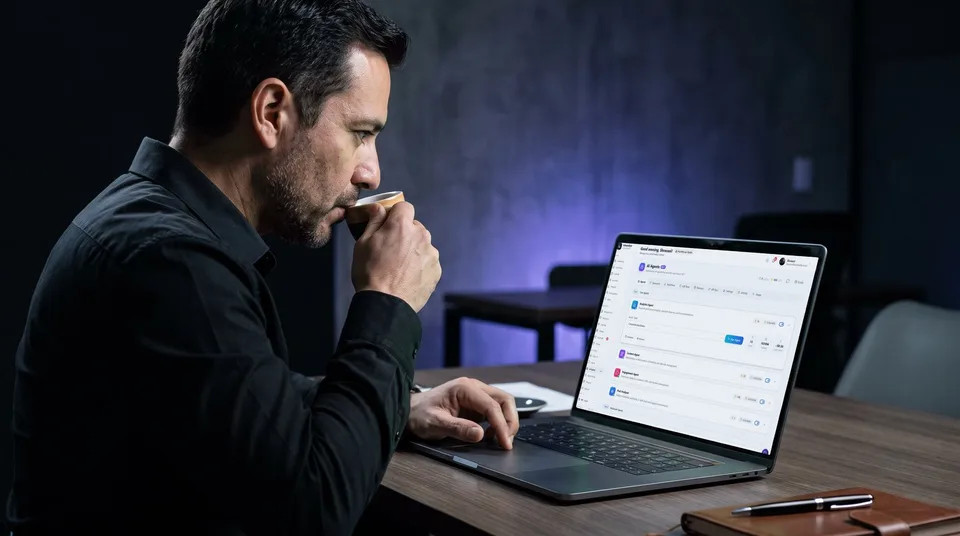
AI tools can analyze creator audiences and predict optimal posting times. We cannot discuss influencer marketing 2026 without doing a deep dive into Artificial Intelligence. AI has revolutionized every touchpoint of the influencer marketing lifecycle.
Discovery and Vetting: Historically, finding the right influencer required hours of manual searching and vetting. Today, AI algorithms analyze millions of profiles in seconds, evaluating metrics like audience sentiment, historical brand safety, and fake follower percentages. This ensures brands only invest in creators with authentic, engaged audiences.
Dynamic Briefing: Generative AI is now used to create highly personalized, dynamic creative briefs. By analyzing a creator's past top-performing content, AI suggests specific hooks, visual styles, and call-to-actions that are statistically most likely to resonate with that specific creator's audience.
Performance Prediction and Scheduling: This is where platforms like SchedulifyX truly shine. AI can now predict the optimal time to post a collaborative piece of content down to the minute, taking into account the specific time zones and active hours of a creator's unique audience. Furthermore, predictive analytics can estimate the ROI of a campaign before the budget is even finalized.
How to Build a Winning Influencer Strategy in 2026
Knowing the influencer statistics and trends is essential, but execution is what separates the market leaders from the laggards. Here is a step-by-step framework for building a winning influencer strategy in 2026.
Define Clear, Measurable KPIs
Before reaching out to a single creator, you must define what success looks like. Are you aiming for brand awareness, direct sales, app downloads, or user-generated content (UGC) acquisition? In 2026, vague goals like "increasing brand love" are insufficient. Tie your campaigns to hard metrics: Cost Per Acquisition (CPA), Click-Through Rate (CTR), and Return on Ad Spend (ROAS).
Prioritize Authenticity and Value Alignment
Consumers are highly skeptical of forced integrations. When selecting influencers, look beyond the numbers. Does this creator's personal brand align with your corporate values? Do they already use products similar to yours? The most successful campaigns in 2026 feature creators who genuinely love the product they are promoting. Allow creators creative freedom; they know their audience better than you do. A rigidly scripted ad will almost always underperform compared to a natural, creator-led integration.
Leverage Data for Matchmaking
Do not rely on gut feeling. Utilize data analytics tools to assess audience demographics. If you are selling a premium skincare product for women in their 40s, partnering with a 22-year-old lifestyle vlogger with millions of teenage followers will yield a terrible ROI, despite the massive reach. Dig into the creator's audience age, location, income bracket, and interests.
Implement Multi-Channel Amplification
A great piece of influencer content should not live and die on a single platform. Negotiate usage rights in your contracts so you can repurpose the creator's content across your own channels. Whitelist the creator's posts to run them as paid ads. Use their UGC in your email newsletters, on your website's product pages, and across your own social media feeds. Amplification is key to maximizing your investment.
Overcoming Challenges in Influencer Marketing
Despite its massive potential, influencer marketing is not without its hurdles. Navigating these challenges is crucial for sustained success.
Navigating Algorithmic Changes
Social media algorithms are notoriously volatile. A strategy that works perfectly in January might be obsolete by June. To mitigate this risk, brands must diversify their influencer portfolios. Do not put all your budget into one platform or one mega-creator. Spread your investment across various platforms (TikTok, Instagram, YouTube, LinkedIn) and across multiple creator tiers.
Ensuring FTC Compliance and Transparency
Regulatory bodies worldwide have cracked down hard on undisclosed sponsorships. In 2026, the penalties for failing to properly disclose a paid partnership are severe, both financially and in terms of brand reputation. Ensure that your contracts explicitly state the required disclosure guidelines (e.g., #ad, #sponsored) and actively monitor the live posts to ensure compliance.
Measuring True ROI
Attribution remains a complex issue, especially with the rise of dark social (private messaging apps, Discord servers, etc.) where a lot of word-of-mouth sharing occurs. To combat this, brands must use a combination of trackable affiliate links, unique promo codes, and post-purchase "How did you hear about us?" surveys to get a holistic view of a campaign's impact.
Conclusion: Future-Proof Your Strategy with SchedulifyX
The state of influencer marketing 2026 is dynamic, data-driven, and incredibly lucrative for those who understand how to navigate it. By staying abreast of the latest influencer statistics and adapting to emerging trends like AI integration, hyper-niche micro-influencers, and social commerce, your brand can build authentic connections that drive real bottom-line growth.
However, managing multiple influencer partnerships, tracking content deliverables, and optimizing posting schedules across various platforms can quickly become overwhelming. This is where technology steps in to do the heavy lifting.
With SchedulifyX, our AI-powered social media scheduling platform, you can seamlessly integrate your influencer campaigns into your broader social media strategy. SchedulifyX allows you to collaborate with creators, schedule amplified content at the precise moment their audiences are most active, and track cross-platform performance all from one intuitive dashboard. Don't leave your 2026 marketing success to chance.
Ready to dominate the creator economy? Start your free trial of SchedulifyX today and supercharge your influencer marketing strategy!