YouTube Shorts vs TikTok vs Reels: 2026 Comparison
SchedulifyX Team · August 6, 2026
Discover the ultimate 2026 comparison of YouTube Shorts, TikTok, and Reels. Learn about algorithms, demographics, monetization, and which delivers the best ROI.
In 2026, the battle for audience attention is definitively won and lost in vertical, bite-sized increments. As brands and creators continuously refine their digital marketing strategies, the debate over which platform dominates the vertical video space has never been more critical. If you are trying to navigate the complex landscape of youtube shorts vs tiktok, or weighing the nuances of tiktok vs reels 2026, you are not alone. The ecosystem has matured, algorithms have evolved with advanced AI, and monetization models have dramatically shifted.
This comprehensive short form video comparison will dissect the three major players: YouTube Shorts, TikTok, and Instagram Reels. We will explore their audience demographics, monetization programs, algorithmic differences, content longevity, discoverability, and ultimately determine which platform delivers the best Return on Investment (ROI) for creators and brands in 2026.
1. Audience Demographics: Who is Watching What in 2026?
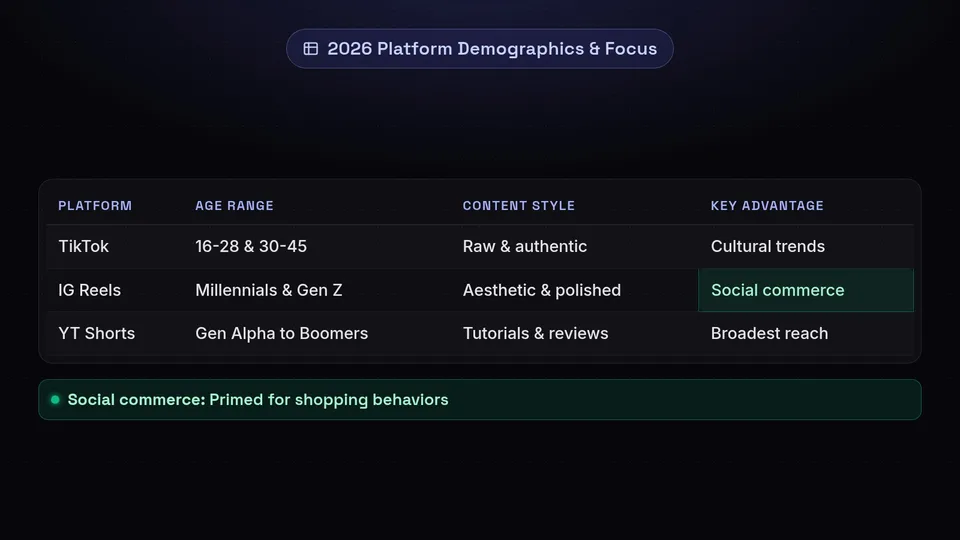
Understanding where your target audience spends their time is the foundational step in any successful social media strategy. In 2026, the demographic lines have blurred slightly as platforms mature, but distinct characteristics remain for each ecosystem.
TikTok: The Cultural Trendsetter
Historically known as the home of Gen Z, TikTok's demographic has aged up considerably by 2026. While it remains the undisputed cultural trendsetter for users aged 16 to 28, a significant portion of its daily active users now falls into the 30-45 age bracket. However, the behavior on TikTok remains highly specific: users come for entertainment, authentic storytelling, and niche communities (the "Toks"). If your brand relies on raw, unfiltered, and highly engaging cultural moments, TikTok is still a mandatory play.
Instagram Reels: The Millennial & Gen Z Bridge
When looking at tiktok vs reels 2026, Instagram Reels has solidified its position as the bridge between Millennials and Gen Z. Integrated seamlessly into the broader Instagram ecosystem, Reels captures an audience that values aesthetics, lifestyle content, and brand polish. The demographic here is slightly more affluent and more likely to engage with direct-to-consumer (DTC) brands. With Instagram's heavy push into social commerce, Reels viewers are highly primed for shopping behaviors.
YouTube Shorts: The Broadest Reach
YouTube Shorts benefits from the massive, established user base of YouTube. Its demographic is the most varied of the three, spanning from Gen Alpha to Baby Boomers. Because YouTube is fundamentally a search engine, users of all ages stumble upon Shorts while looking for tutorials, reviews, or entertainment. Shorts skew slightly more male compared to TikTok and Instagram, particularly in gaming, tech, and finance niches. If you want a truly global, age-agnostic audience, Shorts offers unprecedented scale.
2. Algorithm Differences: The Engine Behind Discoverability
The secret sauce of any video platform comparison lies in the algorithms. By 2026, AI-driven predictive modeling has transformed how content is served, but each platform optimizes for different user behaviors.
The TikTok For You Page (FYP): Interest-Graph Dominance
TikTok's algorithm remains the gold standard for the interest graph. It cares very little about who you follow; instead, it hyper-analyzes watch time, loop rates, and micro-interactions (like hovering over a video or sharing via DM). In 2026, TikTok's algorithm has become incredibly adept at categorizing content into micro-niches. It tests your content with a small batch of relevant users; if it performs, it scales exponentially. The focus here is purely on retention and engagement.
Instagram Reels: The Social-Graph Hybrid
Unlike TikTok, Instagram Reels operates on a hybrid model. It blends the social graph (people you follow and interact with) with the interest graph. The 2026 Reels algorithm heavily prioritizes "Sends" (shares via DM) and "Saves." Instagram wants content that sparks conversations among friends. If your video is highly shareable or educational enough to be saved for later, the Reels algorithm will push it to the Explore page, granting massive organic reach.
YouTube Shorts: Search-Intent and Watch History
The youtube shorts vs tiktok debate becomes most distinct when analyzing algorithms. YouTube Shorts relies heavily on a user's long-form watch history and search intent. If a user frequently watches 20-minute video essays on astrophysics, the Shorts algorithm will serve them bite-sized science content. Furthermore, Shorts are highly indexable. The algorithm rewards content that answers specific queries, making it a powerful tool for evergreen discoverability.
3. Content Longevity: The Lifespan of a Short Video
How long will your video continue to generate views after you hit publish? The lifespan of short-form content varies drastically across these three platforms, impacting your long-term ROI.
- TikTok (24 to 72 Hours): TikTok is a fast-moving stream. Content here is highly ephemeral. A video might go viral within the first 24 hours, peak at 48 hours, and be virtually dead by day four. While "delayed explosions" happen, TikTok requires a high volume of consistent posting to maintain visibility.
- Instagram Reels (7 to 14 Days): Reels have a slightly longer shelf life. Because they are integrated into user profiles, the Explore page, and hashtag feeds, a well-optimized Reel can continue to pull in views for a couple of weeks, especially if it continues to generate Saves and Shares.
- YouTube Shorts (Months to Years): This is where YouTube dominates the short form video comparison. Because Shorts are indexed by Google Search and YouTube Search, a well-titled, SEO-optimized Short can act as an evergreen asset. A Short you post in January 2026 could still be driving significant traffic and revenue in December 2026.
4. Monetization Programs: Where Can Creators Earn the Most?
For professional creators and brands, the bottom line matters. The monetization landscape in 2026 has matured, moving away from volatile "creator funds" toward sustainable revenue-sharing models.
YouTube Shorts: The Gold Standard of Revenue Share
YouTube integrated Shorts into the YouTube Partner Program (YPP), offering a 45% revenue share of advertisements played between Shorts in the feed. In 2026, this remains the most reliable and lucrative direct-monetization model for short-form creators. Because the payout is tied to actual ad revenue rather than a static pool of money, successful creators can earn a predictable, scalable income. Additionally, Shorts serve as a powerful funnel to drive viewers to highly lucrative long-form YouTube videos.
TikTok: Creativity Program and TikTok Shop
TikTok moved away from its original Creator Fund to the Creativity Program, which heavily rewards videos over one minute in length. While this pays significantly better than the old model, the real monetization engine for TikTok in 2026 is TikTok Shop. The platform has seamlessly integrated e-commerce, allowing creators to earn massive affiliate commissions by tagging products directly in their videos. For product-based businesses and affiliate marketers, TikTok is highly lucrative.
Instagram Reels: Brand Deals and Subscriptions
Instagram's direct monetization for Reels (like the old Reels Play Bonus) has evolved into a more creator-centric subscription model and virtual gifts. However, Instagram's true monetization power lies in its infrastructure for brand sponsorships. The platform's aesthetic nature and affluent demographic make it the preferred platform for lucrative brand deals. Creators on Instagram often command higher rates for sponsored Reels than they do on TikTok.
5. Discoverability and Search Engine Integration
As social media platforms increasingly function as search engines for younger generations, discoverability via SEO (Search Engine Optimization) is a critical factor in this video platform comparison.
"In 2026, nearly 50% of Gen Z and Millennials use social media platforms as their primary search engine, bypassing traditional text-based search for visual, video-first results."
YouTube Shorts wins the SEO battle hands down. Because YouTube is owned by Google, Shorts are frequently displayed in traditional Google search results. Optimizing your Shorts with targeted keywords, detailed descriptions, and relevant tags ensures long-term discoverability.
TikTok has made massive strides in search capabilities by 2026. The platform actively encourages creators to use text on screen, closed captions, and keyword-rich descriptions to categorize content. Users frequently search TikTok for "best restaurants in NYC" or "how to fix a leaky faucet."
Instagram Reels relies heavily on hashtags, audio tags, and location tags for discoverability. While Instagram's search function has improved, it still functions more as a discovery engine based on social connections rather than a true utility search engine like YouTube or TikTok.
6. ROI Comparison: Which Platform Delivers the Best Results?
Determining the best short video platform for your brand depends entirely on your specific Key Performance Indicators (KPIs). Let's break down the ROI based on common marketing goals in 2026:
Goal: Brand Awareness and Viral Reach
If your primary goal is to get as many eyeballs on your brand as possible, TikTok is the winner. The interest-graph algorithm allows for unprecedented organic reach, even for accounts with zero followers. The barrier to virality is lowest here.
Goal: Direct Sales and E-commerce Conversions
For direct-to-consumer brands, Instagram Reels and TikTok (via TikTok Shop) are tied, but they serve different purposes. Reels are excellent for high-ticket items, fashion, and lifestyle products where aesthetics matter. TikTok Shop is an absolute powerhouse for impulse buys, trending gadgets, and beauty products.
Goal: Evergreen Traffic and Ad Revenue
If you want to build a sustainable media asset that generates passive income and long-term traffic, YouTube Shorts is the undisputed champion. The integration with long-form video and Google Search provides a compounding ROI that the other platforms simply cannot match.
7. The Verdict: What is the Best Short Video Platform?
So, in the ultimate youtube shorts vs tiktok and tiktok vs reels 2026 showdown, who wins? The reality of digital marketing in 2026 is that omnichannel presence is no longer optional; it is mandatory.
There is no single "best" platform. Instead, the best strategy is a unified approach that leverages the unique strengths of each:
- Use TikTok to test new ideas rapidly, jump on cultural trends, and drive impulse e-commerce sales.
- Use Instagram Reels to nurture your existing community, collaborate with influencers, and maintain a polished brand aesthetic.
- Use YouTube Shorts to build an evergreen library of searchable content that funnels viewers to long-form videos and generates predictable ad revenue.
8. Cross-Platform Strategy: Maximizing Reach with SchedulifyX
Managing three distinct short-form video platforms can be incredibly time-consuming. Repurposing content is the key to maximizing your ROI without burning out your creative team. However, manually downloading, removing watermarks, writing platform-specific captions, and posting at optimal times across YouTube, TikTok, and Instagram is a logistical nightmare.
This is where AI-powered automation becomes your competitive advantage. To truly dominate the short-form video landscape in 2026, you need a centralized command center.
SchedulifyX is the ultimate AI-powered social media scheduling platform designed specifically for the modern video-first creator and brand. With SchedulifyX, you can:
- Auto-Publish Everywhere: Upload your raw vertical video once and schedule it to publish simultaneously on YouTube Shorts, TikTok, and Instagram Reels.
- AI-Optimized Captions: Let our advanced AI generate platform-specific captions, hashtags, and SEO tags tailored to the unique algorithms of each platform.
- Predictive Scheduling: SchedulifyX analyzes your audience data across all three platforms to determine the exact minute your viewers are most active, ensuring maximum initial engagement.
- Unified Analytics: Stop jumping between three different apps to check your views. Compare your short form video comparison data in one beautifully designed, centralized dashboard to see which platform is driving the highest ROI.
Conclusion
As we navigate 2026, the distinctions between YouTube Shorts, TikTok, and Instagram Reels have become highly specialized. TikTok owns culture and impulse commerce; Instagram owns aesthetics and social sharing; YouTube owns searchability and long-term revenue. By understanding these nuances, you can tailor your content to win on every front.
Don't let the complexity of multi-platform distribution slow down your growth. Take control of your vertical video strategy today. Sign up for SchedulifyX and let our AI-powered platform streamline your scheduling, maximize your reach, and skyrocket your ROI across YouTube Shorts, TikTok, and Instagram Reels.