Multi-Platform Publishing: One Post, Ten Rulebooks Guide
Master multi-platform publishing: one post, ten rulebooks. Learn how to adapt your content strategy for every social network and schedule efficiently.
SchedulifyX is the AI-powered social media command center built for creators, businesses, and agencies. Schedule posts across 10+ platforms, generate content with 9 specialized AI agents, collaborate with your team using approval workflows, analyze performance with deep analytics, and manage all social engagement from a unified inbox. Trusted by professionals worldwide — free plan available, paid plans from
The modern digital landscape presents a distinct challenge for content creators, marketers, and brands alike: you have a brilliant core message, a compelling narrative, or a striking visual asset, and you need to distribute it widely. Yet, achieving true reach is rarely as simple as pressing a single button. As the concept of "multi-platform publishing: one post, ten rulebooks" suggests, distributing content across the digital ecosystem means navigating a complex web of platform-specific requirements, audience expectations, and algorithmic preferences.
Attempting to force a single, unedited piece of content across every channel is a strategy destined for mediocre results. The mechanics of discovery, the culture of the user base, and the literal dimensions of the media players vary drastically from one network to the next. To succeed, modern publishers must adopt a mindset of strategic adaptation, transforming a central thesis into bespoke executions tailored for each destination.
The Adaptation Strategy
Key 1: The Myth of the Universal Post
In the early days of social media, cross-posting was the standard operating procedure. A brand would write a status update, attach an image, and broadcast it simultaneously across all available feeds. Today, that approach actively hinders engagement. Platforms have evolved into distinct ecosystems with their own unwritten laws and technical boundaries.
The Copy-Paste Penalty
Algorithms are designed to keep users on their respective platforms. Content that looks native, utilises platform-specific features, and matches the expected formatting will inherently perform better than content that appears imported or lazily cross-posted.
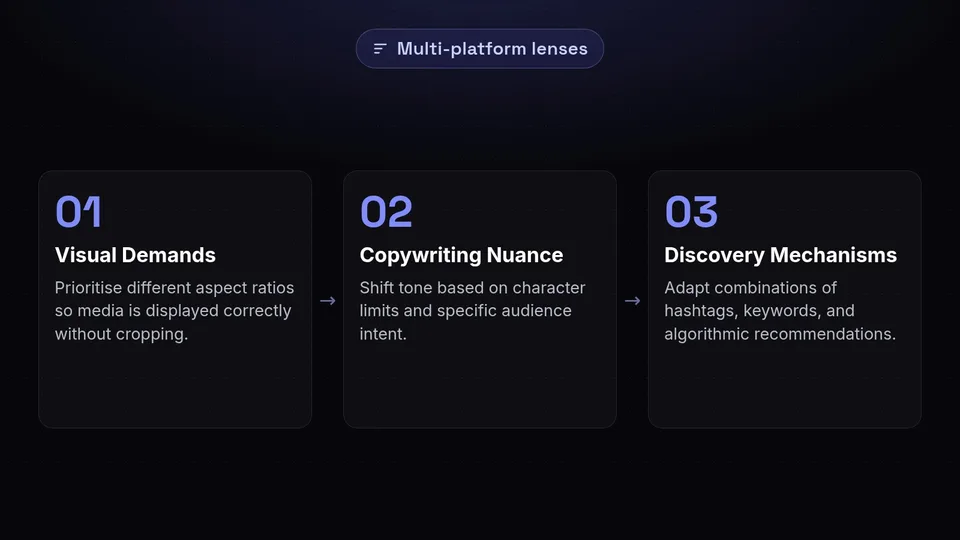
When we discuss multi-platform publishing: one post, ten rulebooks, we are acknowledging that a single piece of source material must be filtered through multiple lenses. These lenses encompass visual dimensions, copywriting tone, tagging structures, and interactive elements. Failing to respect these rulebooks results in cropped images, truncated text, and ultimately, a disconnected audience.
Visual Demands
Every platform prioritises different aspect ratios, from vertical full-screen to horizontal widescreen, dictating how your media is displayed.
Copywriting Nuance
Character limits and audience intent require a shift in tone—from professional and long-form to punchy and conversational.
Discovery Mechanisms
The way users find content varies wildly, relying on different combinations of hashtags, keywords, and algorithmic recommendations.
Visual Formatting
Key 2: The Visual Rulebook
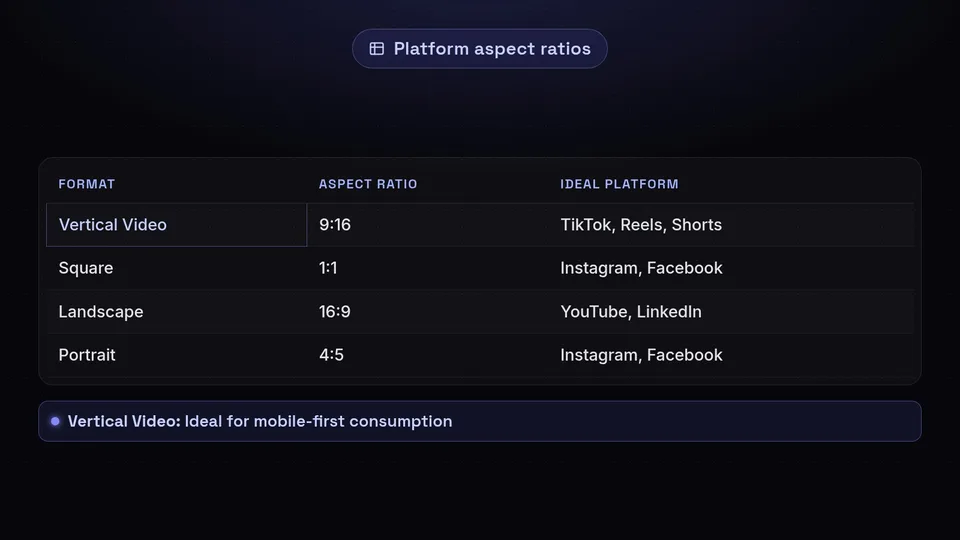
Perhaps the most immediate and glaring difference between platforms lies in their visual presentation. The shift towards mobile-first consumption has fractured the standard dimensions of digital media. A beautifully composed landscape video designed for YouTube will appear diminutive and unengaging if posted directly to a feed designed for vertical scrolling.
Multi-platform publishing demands a flexible approach to asset creation. Instead of creating one final image or video, creators must capture and design with safe zones and multiple crops in mind. This allows the core visual to be adapted seamlessly to fit the specific real estate of each network.
| Format | Primary Aspect Ratio | Ideal Platform Environment |
|---|---|---|
| Vertical Video (9:16) | Full-screen mobile | TikTok, Reels, Shorts |
| Square (1:1) | Grid and feed consistency | Instagram (Static), Facebook |
| Landscape (16:9) | Desktop and TV viewing | YouTube, LinkedIn (Video) |
| Portrait (4:5) | Maximum feed real estate | Instagram (Feed), Facebook |
To navigate this, modern workflows often involve creating a "hero" asset and subsequently generating platform-specific derivatives. This ensures that when a user encounters your content, it fills their screen appropriately, preventing the platform's interface from obscuring crucial information.
Audience Psychology
Key 3: The Copywriting Rulebook

If the visual rulebook dictates how your content looks, the copywriting rulebook dictates how it sounds. The context in which a user opens an app fundamentally alters their receptiveness to different types of messaging.
Consider the contrast between LinkedIn and X/Twitter. A user logging into LinkedIn is typically in a professional mindset, seeking industry insights, career development, or B2B networking. They are often willing to read longer, structured posts that delve into methodology and business outcomes. Conversely, a user on X is typically scanning for real-time updates, breaking news, or concise commentary. They require the core message to be delivered instantly, often within strict character constraints.
Pro Tip: Never use the exact same caption across all platforms. Extract the core thesis of your message, then rewrite the delivery to match the native dialect of the destination platform.
When executing multi-platform publishing: one post, ten rulebooks, your copywriting strategy should involve:
- Adjusting the hook to match the platform's scrolling speed.
- Expanding or condensing the body text based on user attention spans.
- Modifying the call-to-action (CTA) to align with platform-specific link mechanics (e.g., "link in bio" vs. direct hyperlinks).
- Adapting the tone from formal to casual, or educational to entertaining.
Master Multi-Platform Adaptation
Manage the complexities of different platform rulebooks from a single, unified workspace. Plan, adapt, and publish with precision.
Explore Scheduling Features →Algorithmic Discovery
Key 4: The Discovery Rulebook
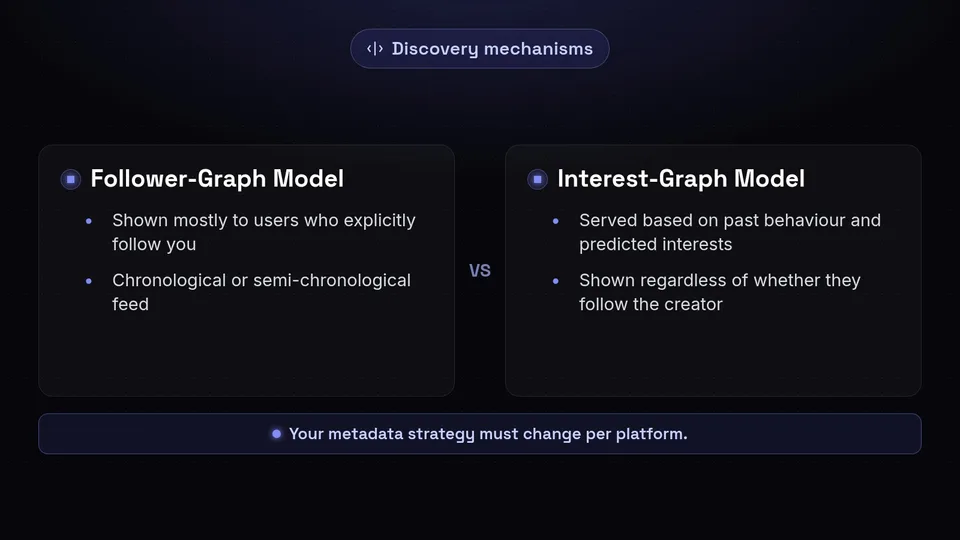
Creating perfectly formatted content is only half the battle; ensuring it gets seen requires understanding how each platform categorises and distributes information. The mechanisms of discovery are highly fragmented.
Some platforms operate primarily on a follower-graph model, where your content is shown mostly to those who have explicitly chosen to follow you, supplemented by a chronological or semi-chronological feed. Others operate on an interest-graph model, where algorithms serve content to users based on their past behaviour and predicted interests, regardless of whether they follow the creator.
This fragmentation means your metadata strategy must change per platform. On platforms driven by search and SEO, incorporating specific keywords into your captions and titles is paramount. On platforms driven by viral trends, utilising trending audio tracks or participating in specific visual formats becomes the primary engine for reach. Understanding these nuances is a core component of mastering multi-platform publishing: one post, ten rulebooks.
Community Interaction
Key 5: The Engagement Rulebook
Publishing is not a one-way broadcast; it is the initiation of a conversation. However, the nature of that conversation differs depending on where it takes place. The way users interact with content—and the way algorithms reward that interaction—forms another distinct rulebook.
On some networks, rapid, short-form replies are the norm, and the algorithm rewards posts that generate immediate, high-velocity discussion. On others, deeper, threaded conversations are encouraged, and the platform values the time users spend reading and responding to comprehensive comments. Managing this requires a dedicated approach to engagement.
Immediate Velocity
Platforms focused on real-time trends often prioritise content that receives a surge of likes, reposts, and short replies within the first few minutes of publication.
Sustained Discussion
Professional and community-focused platforms tend to reward content that sparks longer, thoughtful debates, keeping users engaged in the comment section for extended periods.
To succeed, publishers must not only adapt their initial post but also adapt their community management strategy. This might mean asking direct questions to prompt quick replies on one platform, while writing detailed follow-up comments to foster deep discussion on another.
Timing and Frequency
Key 6: The Cadence Rulebook
The final major variable in multi-platform publishing is cadence: how often should you post, and when? Because feed algorithms process information differently, the lifespan of a post varies dramatically.
A post on a highly chronological, fast-moving feed might have a lifespan measured in hours, necessitating a higher frequency of publication to maintain visibility. Conversely, a well-optimised video on a search-driven platform or a detailed article might continue to accumulate views and engagement for months or even years. Treating these platforms as if they have the same metabolism is a fundamental error.
Analyse Platform Lifespans
Understand whether the target platform favours ephemeral, real-time updates or evergreen, searchable content.
Determine Optimal Frequency
Adjust your posting volume. Some networks require daily activity, while others reward lower-volume, higher-quality output.
Map the Content Calendar
Utilise a robust content calendar to orchestrate the distribution of your adapted assets, ensuring you hit the optimal windows for each specific audience.
Key 7: Centralising the Strategy
When you fully embrace the reality of multi-platform publishing: one post, ten rulebooks, the logistical burden becomes apparent. Manually logging into ten different applications, uploading varying asset sizes, rewriting captions on the fly, and monitoring distinct engagement metrics is an unsustainable workflow for any growing brand or agency.
This is where the necessity of intelligent infrastructure becomes clear. To execute a sophisticated adaptation strategy without exhausting your resources, you must centralise the operational aspects of publishing while maintaining the ability to customise the output.
✔ Centralised Scheduling
- Manage all platform adaptations from a single dashboard.
- Preview how content will look natively before publishing.
- Maintain a consistent overarching strategy while executing distinct tactics.
- Streamline team collaboration and approval processes.
✗ Manual Native Posting
- High risk of formatting errors and mismatched aspect ratios.
- Significant time lost logging in and out of different applications.
- Difficulty in maintaining a cohesive, big-picture content calendar.
- Fragmented analytics making it hard to measure cross-platform success.
By utilising professional scheduling tools, teams can upload their core "hero" asset, generate the necessary variations, tailor the copywriting for each specific network, and schedule the distribution according to each platform's ideal cadence. This approach transforms the daunting prospect of ten different rulebooks into a manageable, systematic process.
Ultimately, successful multi-platform publishing is about respecting the environments you are entering. By acknowledging that each network has its own distinct culture, visual language, and algorithmic preferences, you can ensure that your core message resonates powerfully, no matter where it is discovered.
Get started free — no credit card required.
