The 2026 Social Media Landscape: Platforms Your Business Needs
SchedulifyX Team · August 29, 2026
Navigate the 2026 social media landscape. Discover which established, decentralized, and regional social media platforms your business should use—and ignore.
The 2026 Reality: Why Less is More

As we navigate through 2026, the digital marketing ecosystem has reached a point of unprecedented saturation and fragmentation. A few years ago, the prevailing strategy for brands was omnipresence—a frantic rush to maintain active profiles across every single app that gained momentary traction. Today, that approach is not just inefficient; it is a guaranteed recipe for brand dilution and team burnout.
When you look at a comprehensive list of social media platforms available today, the sheer volume is staggering. From AI-driven entertainment feeds to protocol-based decentralized networks, the options are endless. However, the most successful brands in 2026 have embraced a counterintuitive truth: less is more.
Avoid the trap of the traditional listicle format that gives twenty different apps equal weight and importance. The reality of modern digital marketing is that most businesses should only be active on two or three carefully selected platforms. Attempting to master the algorithms, cultural nuances, and content formats of ten different networks spreads your resources too thin. Instead, the focus must shift to deep, native engagement on the platforms where your specific target audience actually spends their time and money.
This comprehensive survey of the 2026 social platform landscape will break down the ecosystem into three distinct categories: the established giants, the decentralized frontier, and the regional powerhouses. For each, we will cut through the hype and state plainly who the platform suits, and equally importantly, who should skip it. By the end of this guide, you will have the clarity needed to select the best social media apps for your specific business goals, and you can leverage tools like social media scheduling to execute your strategy flawlessly.
The Established Set: Where the Masses Reside
The established social media apps are the bedrock of the internet. Despite endless predictions of their demise, these platforms have successfully integrated advanced AI, refined their algorithmic delivery, and maintained massive, highly engaged user bases. They are the default starting point for almost any digital strategy.
Meta's Core: Facebook and Instagram
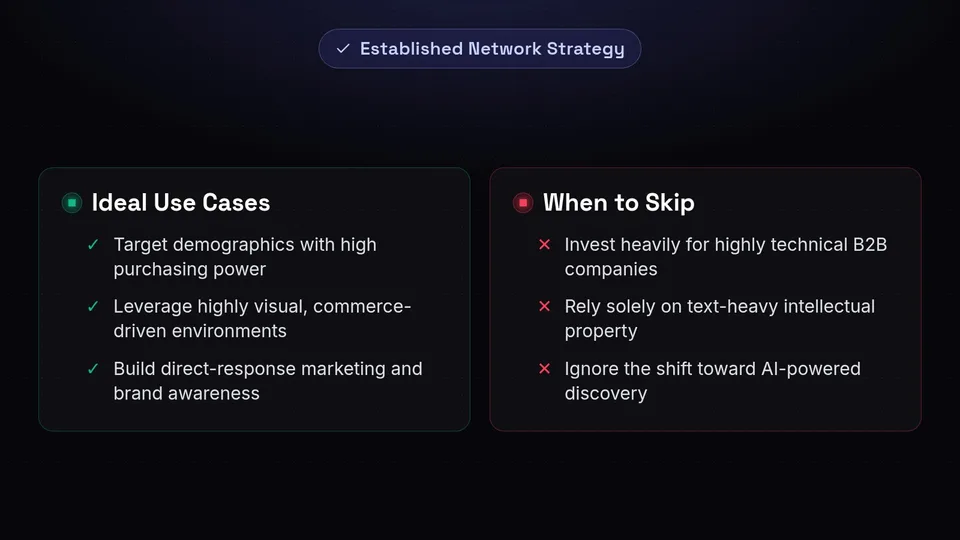
In 2026, Meta’s primary platforms function less like chronological social networks and more like AI-powered discovery engines. The integration of generative AI into content creation and ad targeting has made Facebook and Instagram incredibly powerful for direct-response marketing and brand building.
Demographics and User Behavior: Facebook's demographic continues to skew older, with the highest engagement coming from users aged 35 to 65+. However, this demographic holds the vast majority of global purchasing power. Facebook Groups remain highly active micro-communities. Instagram, meanwhile, has solidified its position as the digital mall for Millennials and Gen Z. It is a highly visual, commerce-driven environment where the transition from inspiration to purchase is nearly frictionless.
"The survival of Meta's platforms relies on their unparalleled ability to map user intent through passive consumption, making their ad targeting incredibly resilient even in a privacy-first web."
Who it suits: E-commerce brands, direct-to-consumer (DTC) products, local businesses, and lifestyle brands. If your product is highly visual or relies on impulse purchasing, Instagram is non-negotiable. If you are targeting homeowners, parents, or local communities, Facebook remains essential.
Who should skip it: Highly technical B2B SaaS companies, open-source projects, and brands whose primary value proposition is complex, text-heavy intellectual property. While you may need a baseline presence for legitimacy, investing heavy organic resources here will yield low ROI.
TikTok: The Entertainment Engine
TikTok is no longer just one of the many social media apps; it is a dominant search engine and a colossal e-commerce marketplace. The 2026 iteration of TikTok has moved far beyond short-form dancing videos. It is a primary source for product reviews, educational content, and cultural commentary.
Demographics and User Behavior: While Gen Z and Gen Alpha are the native inhabitants, TikTok's user base has aged up significantly. Users in their 30s and 40s now represent a massive, highly engaged cohort. The platform rewards authenticity, rapid trend adoption, and high-volume content production. The algorithm heavily favors "edutainment"—content that teaches the viewer something while keeping them visually stimulated.
Who it suits: Fast-moving consumer goods (FMCG), beauty and fashion brands, creators, and companies with dedicated, agile video production resources. If your brand has a strong personality and can produce raw, unpolished video content at scale, TikTok offers unmatched organic reach.
Who should skip it: Risk-averse corporate brands, heavily regulated industries (like traditional finance or pharmaceuticals) that require lengthy compliance approvals for every post, and businesses without the budget or talent to produce native vertical video consistently.
LinkedIn: The Professional Monopoly
LinkedIn has successfully shed its reputation as merely a digital resume repository. In 2026, it is the undisputed hub for professional networking, B2B influencer marketing, and industry thought leadership. The platform has optimized its feed to prioritize actionable professional advice and authentic career narratives over corporate press releases.
Demographics and User Behavior: The audience consists of professionals, decision-makers, and job seekers across all age groups. Users log in with a distinct mindset: they are looking to advance their careers, learn industry trends, or find business solutions. The purchasing power and B2B intent on LinkedIn are higher than on any other platform.
Who it suits: B2B companies, enterprise SaaS, recruiting firms, consultants, and founders looking to build personal brands. If your sales cycle involves multiple stakeholders and high-ticket contracts, LinkedIn is where your buyers are researching.
Who should skip it: Local B2C retail, low-cost consumer goods, and entertainment-focused brands. A local pizza shop or an indie video game developer will find very little organic traction among users looking for supply chain optimization tips.
YouTube: The Search and Video Behemoth
YouTube straddles the line between a social media platform, a streaming service, and a search engine. Its integration with Google's broader AI search capabilities in 2026 makes it an incredibly powerful tool for long-term brand visibility. Unlike the ephemeral feeds of other social media platforms, YouTube content has a shelf life of years.
Demographics and User Behavior: YouTube's demographic is virtually everyone with an internet connection. Behavior is intent-driven; users actively search for solutions, tutorials, and long-form entertainment. YouTube Shorts has successfully bridged the gap between short-form discovery and long-form retention.
Who it suits: Educational technology (EdTech), software companies requiring complex demonstrations, DIY brands, and anyone whose product benefits from long-form explanation. It is the ultimate platform for building deep, parasocial trust with an audience.
Who should skip it: Brands that rely solely on text or static images, and businesses that cannot commit to the high production value and consistency required to compete in the 2026 YouTube algorithm.
The Decentralized Group: The Fediverse Question
The most significant architectural shift in the 2026 social landscape is the maturation of the decentralized web, commonly referred to as the Fediverse. Built on open protocols like ActivityPub and AT Protocol, this ecosystem represents a fundamental shift in how social media operates. Instead of a single corporation controlling the network, the Fediverse is a collection of interconnected, independently hosted servers that can communicate with one another.
For businesses, the Fediverse promises data ownership and audience portability—the ability to move your followers from one app to another without starting from scratch. However, it also presents unique challenges regarding brand safety, analytics, and community management.
Threads: The Mainstream Bridge
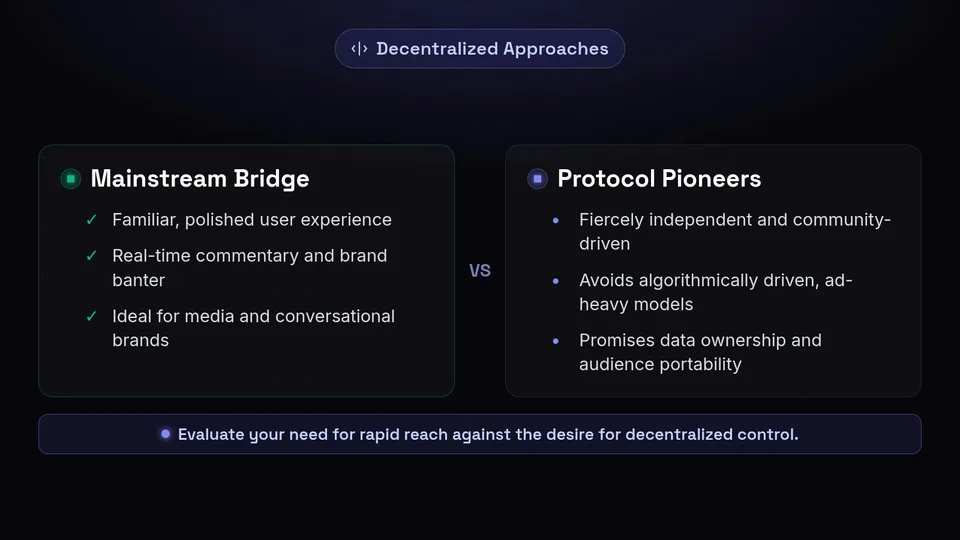
Meta's Threads has successfully positioned itself as the mainstream bridge to the Fediverse. Having fully integrated with ActivityPub, Threads offers the familiar, polished user experience of a corporate app while allowing users to interact with the broader decentralized network. It has largely replaced X (formerly Twitter) as the default public town square for real-time text updates.
Demographics and User Behavior: Threads users lean heavily toward media, journalism, tech, and pop culture. The platform thrives on real-time commentary, witty brand banter, and text-based discussion. It is less formal than LinkedIn but more structured than the wilder corners of the internet.
Who it suits: Media publishers, news organizations, brands with a strong, conversational voice, and companies that rely on real-time customer service or event commentary. If your brand thrived on text-based virality in the past, Threads is your new home.
Who should skip it: Highly visual brands (e.g., boutique interior design firms) that rely on high-resolution imagery to sell, and businesses without the resources to monitor and engage in fast-paced, real-time conversations.
Mastodon and Bluesky: The Protocol Pioneers
Mastodon (ActivityPub) and Bluesky (AT Protocol) remain fiercely independent and community-driven. While they have grown significantly, they have intentionally avoided the algorithmically driven, ad-heavy models of the established giants. These platforms are organized around specific interests, servers, and highly curated chronological feeds.
Demographics and User Behavior: The user base is heavily skewed toward developers, open-source advocates, academics, privacy enthusiasts, and tech-savvy early adopters. The culture is highly protective of its independence and deeply skeptical of traditional corporate marketing and native advertising.
Who it suits: Developer tools, privacy-focused SaaS, cybersecurity firms, and open-source projects. If your target audience is deeply embedded in tech infrastructure or values digital privacy above all else, establishing an authentic, non-salesy presence here is highly valuable.
Who should skip it: General consumer brands, fast fashion, and any business looking for traditional, scalable paid advertising. Attempting to run standard corporate marketing playbooks on Mastodon or Bluesky will likely result in immediate community backlash and blocking.
The Regional Titans: Ignored by Western Media

One of the most glaring blind spots in Western marketing literature is the sheer dominance of regional social media platforms. When examining a global list of social media platforms, it is a critical error to ignore the super-apps that control the digital lives of billions of users in the Global East and South. If your business has international expansion ambitions in 2026, these are the platforms you must understand.
WeChat and Xiaohongshu (China)
China's digital ecosystem operates entirely independently of the Western landscape. WeChat (Tencent) is the ultimate super-app—it is WhatsApp, Facebook, PayPal, and Uber combined into one indispensable tool. Xiaohongshu (Little Red Book) is often lazily compared to Instagram or Pinterest, but its 2026 iteration is a highly sophisticated social commerce platform driven by user-generated reviews and lifestyle curation.
Demographics and User Behavior: WeChat is ubiquitous across all demographics in China. Xiaohongshu skews heavily toward urban, affluent, female consumers aged 18 to 35. Users on Xiaohongshu exhibit incredibly high purchase intent, using the app as a trusted search engine for product recommendations, travel destinations, and luxury goods.
Who it suits: Global luxury brands, cosmetics, international tourism boards, and any Western company seriously entering the Chinese market. Xiaohongshu is particularly vital for brands targeting affluent Chinese consumers with high-quality, aesthetic products.
Who should skip it: Localized Western businesses (e.g., a regional US retail chain) and companies without the budget to hire native Chinese marketing agencies. Navigating the cultural nuances, localization requirements, and platform regulations requires dedicated, specialized teams.
LINE and KakaoTalk (Japan and South Korea)
In Japan and South Korea, the digital landscape is dominated by LINE and KakaoTalk, respectively. Much like WeChat, these started as messaging apps but have evolved into comprehensive platforms offering payments, gaming, content consumption, and brand interaction.
Demographics and User Behavior: Both apps boast near-total market penetration in their home countries. Users rely on them for daily communication, interacting with brands through official accounts, branded stickers, and integrated loyalty programs.
Who it suits: Brands expanding into Japan, Taiwan, Thailand (LINE), or South Korea (KakaoTalk). They are essential for localized customer service, direct marketing, and building brand affinity through cultural touchpoints like digital stickers and exclusive localized content.
Who should skip it: Brands whose operations and target demographics are strictly confined to North America or Europe. There is zero benefit to maintaining an empty presence on these platforms if you are not actively doing business in APAC.
How to Choose Your Core Stack
With this comprehensive survey of the 2026 landscape, the question remains: how do you choose the best social media apps for your specific business? The answer lies in ruthless prioritization and a deep understanding of your customer's journey.
First, identify where your target audience spends their time *with the intent to engage with your industry*. A CEO might scroll TikTok for entertainment at night, but they are looking for enterprise software solutions on LinkedIn during the day. You want to reach them when they are in the right mindset.
Second, evaluate your internal resources. Do you have a charismatic founder willing to record daily videos? TikTok or YouTube might be your primary channel. Do you have a brilliant team of writers but no video budget? Focus on LinkedIn, Threads, or a company blog. It is far better to be exceptional on two platforms than mediocre on five.
Finally, ensure your tech stack supports your strategy. Managing even two or three platforms requires robust organization, analytics, and automation. To see which networks integrate seamlessly with modern workflows, review our supported platforms to ensure your chosen stack can be managed efficiently.
- Step 1: Audit your current audience demographics and match them against the platform profiles above.
- Step 2: Assess your content creation capabilities (Video vs. Text vs. Image).
- Step 3: Select one primary platform for brand discovery and one secondary platform for community retention.
- Step 4: Ignore the rest until you have mastered your core stack.
Conclusion: Master Your Strategy with SchedulifyX
The 2026 social platform landscape is vast, complex, and constantly shifting. From the AI-driven feeds of the established giants to the protocol-based communities of the Fediverse and the indispensable regional titans, the options are limitless. However, success does not come from being everywhere at once. It comes from strategic selection, deep audience understanding, and consistent, high-quality execution.
Stop chasing every new app that makes headlines. Review this list of social media platforms, identify the two or three that perfectly align with your business goals, and commit to mastering them.
Managing a focused, high-impact social media strategy requires the right tools. That is where SchedulifyX comes in. Our AI-powered social media scheduling platform is built for the 2026 landscape, allowing you to seamlessly plan, optimize, and distribute your content across your chosen networks without the manual heavy lifting. Stop logging in and out of native apps, and start executing a strategy that actually drives revenue. Empower your marketing team today with SchedulifyX and take control of your digital presence.